Content Marketing Drives 20% More Leads for Small Biz 2026


Modern buyers conduct 70-90% of their research before ever speaking to a sales representative. This shift transforms how small businesses attract and convert customers. Content marketing builds the trust and authority buyers seek during their self-directed research journey. This guide explains how small businesses can leverage content marketing to increase qualified leads and establish lasting brand credibility in 2026.
Table of Contents
Key Takeaways
Point | Details |
Lead Generation | Strategic content marketing drives 20% more qualified leads by addressing buyer needs directly. |
Strategic Planning | Clear goals and audience targeting are essential for measurable content marketing success. |
Authentic Storytelling | Human-driven stories and genuine value differentiate brands in competitive 2026 markets. |
AI as Support | AI tools assist creation but human judgment and strategy remain vital for effectiveness. |
Metrics Focus | Tracking engagement and influence over volume improves ROI and content performance. |
Understanding Content Marketing and Its Role
Content marketing involves creating and sharing valuable, relevant content rather than direct selling. This approach fundamentally differs from traditional advertising. Where ads interrupt with sales pitches, content marketing educates and builds relationships.
Traditional advertising tells customers what to buy. Content marketing shows them how to solve problems. This shift creates trust before the sales conversation begins.
Small businesses use diverse content formats to connect with audiences:
Blog posts answering common customer questions
Video tutorials demonstrating product benefits
Email newsletters sharing industry insights
Downloadable guides solving specific problems
FAQ pages addressing buyer concerns
These formats suit small business resources while nurturing relationships. Each piece positions your brand as a helpful resource rather than a pushy vendor. The effective marketing strategies for small businesses you implement determine how quickly prospects move from awareness to action.
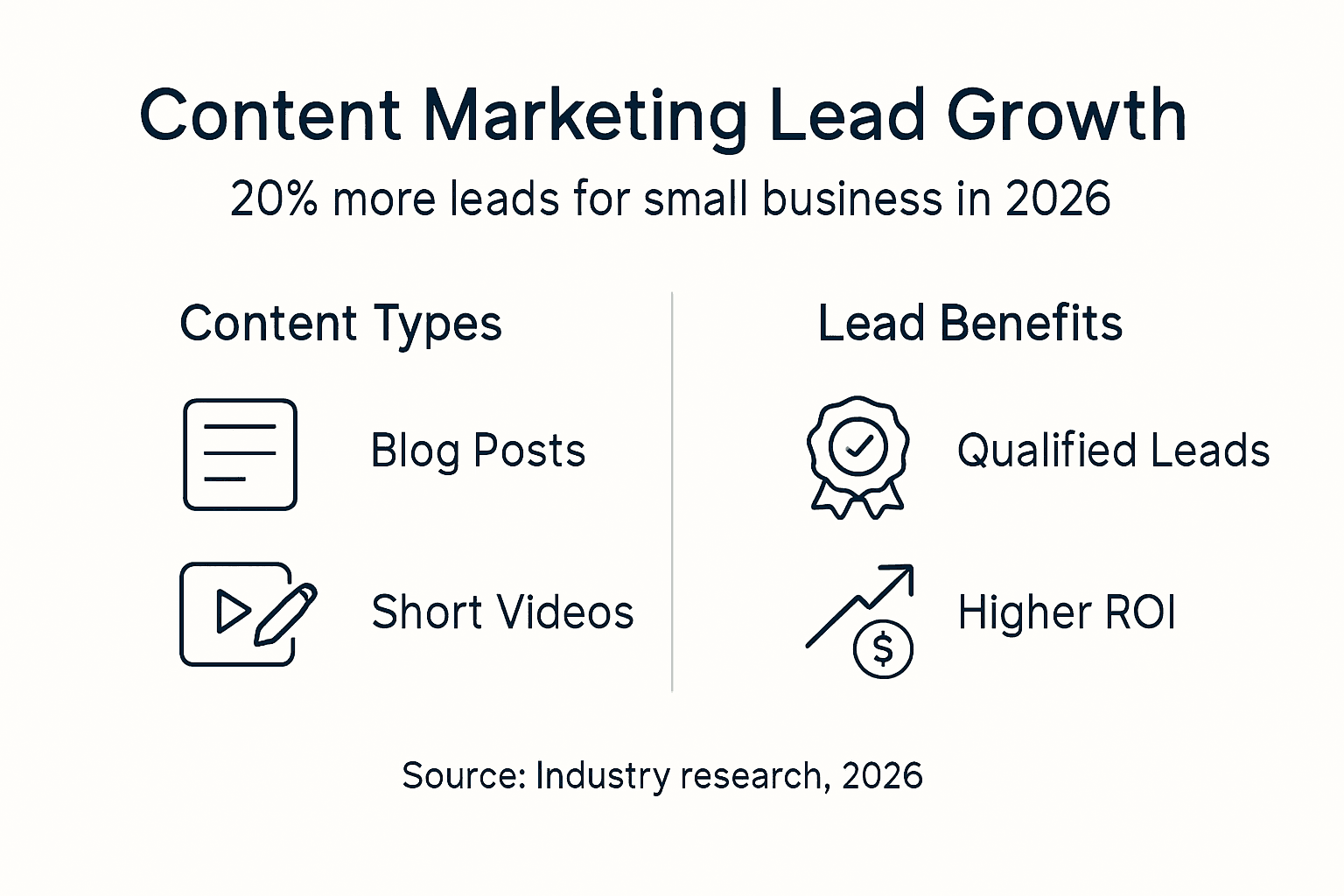
Content marketing works because it aligns with how people actually buy today. Buyers want to educate themselves first. Your content meets them where they are in that journey.
Why Content Marketing Matters in 2026
Buyers have fundamentally changed how they make purchasing decisions. They scroll through reviews, compare options, and educate themselves long before reaching out to vendors. This behavior makes your online presence the first impression that determines whether prospects ever contact you.
Content marketing builds the trust and authority these self-directed researchers seek. When your content answers their questions and solves their problems, you become the obvious choice. This positions you as an expert rather than just another option.
Digital buyers expect brands to provide value before asking for business. Content marketing delivers that value consistently across every touchpoint.
Organic visibility through content offers sustainable growth compared to costly paid advertising. Ads stop working when you stop paying. Quality content continues attracting and converting prospects months or years after publication. The digital marketing strategies for 2026 that succeed prioritize this long-term approach.
Authentic, valuable content aligns perfectly with evolving buyer expectations. People can spot promotional fluff instantly. They crave genuine insights that help them make informed decisions. Your content marketing strategy importance grows as competition increases and attention becomes scarcer.
Small businesses that invest in content marketing today build competitive advantages that compound over time. Each piece contributes to a library of trust that works around the clock.
The Business Benefits of Content Marketing for Small Businesses
Strategic content marketing increases qualified leads by 20% for small businesses. This improvement comes from attracting prospects who already understand your value proposition. They arrive pre-educated and ready to engage seriously.

Emotional engagement drives purchasing decisions more than logic. Research shows 95% of buying decisions involve emotional factors. Content that tells stories, addresses pain points, and demonstrates understanding creates these emotional connections. You move from vendor to trusted advisor.
Key business outcomes include:
Higher conversion rates from educated prospects
Lower customer acquisition costs over time
Improved customer retention through ongoing value
Enhanced brand authority in your market
Competitive differentiation beyond price
Content marketing costs 62% less than traditional advertising while generating 3x more leads. This efficiency makes it particularly valuable for small businesses with limited marketing budgets. Every dollar invested works harder and longer.
The social media marketing benefits for small businesses multiply when paired with strong content. Social platforms amplify your message while content provides substance worth sharing. Together they create a powerful growth engine.
Measurable ROI improvements appear across multiple metrics. Customer lifetime value increases as content nurtures relationships beyond the initial sale. Referral rates climb when satisfied customers find your content worth sharing. The effective marketing tactics that drive these results start with consistent, valuable content delivery.
Common Misconceptions About Content Marketing
Many small business owners hesitate to invest in content marketing due to persistent myths. Understanding the reality behind these misconceptions helps you avoid costly mistakes.
Myth #1: Content marketing is free or easy. Reality: Content marketing requires careful strategy, quality content, and consistent effort. Creating valuable content demands time, expertise, and often financial investment. The “free” label ignores these real costs.
Myth #2: AI can replace human strategy and creativity. Reality: AI tools assist with research, drafting, and optimization. However, human judgment remains crucial for strategy, authenticity, and emotional connection. Buyers easily spot content that lacks genuine human insight.
Myth #3: Content marketing is just indirect advertising. Reality: Effective content builds trust and measurably influences sales decisions. It educates rather than pitches. This educational approach creates long-term customer relationships that pure advertising cannot achieve.
Pro Tip: Start small with one content type done exceptionally well rather than spreading efforts thin across many formats. Quality always beats quantity in content marketing.
The content marketing misconceptions you avoid determine your strategy’s effectiveness. Understanding what content marketing truly requires prevents disappointment and wasted resources. The digital marketing plan guide approach helps you set realistic expectations and allocate resources appropriately.
Successful content marketing balances strategic planning with authentic execution. It demands patience, consistency, and willingness to learn from results.
How to Develop a Content Marketing Strategy for Your Small Business
Small businesses that define clear, measurable goals generate 20% more qualified leads. Your strategy starts with specific objectives tied to business outcomes.
Step 1: Define clear, measurable business objectives. Link content goals directly to revenue targets, lead generation numbers, or customer retention rates. Vague goals produce vague results.
Step 2: Identify and understand your target audience. Create detailed buyer personas. Document their challenges, questions, and decision-making processes. Your content must address real needs.
Step 3: Choose content types and topics relevant to audience needs. Match formats to how your audience consumes information. B2B buyers might prefer detailed guides while consumers want quick videos.
Step 4: Plan multi-channel distribution. Social media alone limits your reach. Include email, your website, partner sites, and relevant industry platforms. Each channel serves different audience segments.
Step 5: Regularly measure performance and optimize. Track metrics monthly. Adjust based on what actually drives results rather than vanity metrics like page views.
Strategy Element | Key Considerations |
Goals | Tie to revenue, leads, or retention |
Audience | Document pain points and preferences |
Content Types | Match audience consumption habits |
Distribution | Multi-channel approach required |
Measurement | Monthly reviews and adjustments |
Pro Tip: Start with content that answers your five most frequently asked customer questions. This guarantees relevance and provides immediate value.
The digital marketing plan guide for small businesses framework helps structure your approach. Combine it with effective strategies for small business marketing to maximize impact.
Your content home base matters too. The best website builder for small business ensures your content displays professionally and loads quickly. Technical foundations support content effectiveness.
Measuring and Optimizing Content Marketing Success
Tracking the right metrics separates effective content marketing from wasted effort. Focus on measurements that connect directly to business outcomes.
Key metrics to monitor:
Engagement rates showing content resonance
Customer acquisition cost trends over time
Customer retention improvements from content
Qualified lead volume increases
Conversion rate changes by content type
Benchmark your ROI against industry standards and your own past performance. Small businesses typically see positive ROI within six to twelve months. Comparing against yourself shows improvement trends more valuable than industry averages.
Use analytics tools to track multi-channel content impact. Google Analytics reveals which content drives conversions. Email platforms show engagement patterns. Social media insights highlight shareability. Combined, these tools paint a complete picture.
Metric Category | What to Track | Why It Matters |
Engagement | Time on page, shares, comments | Shows content relevance |
Acquisition | Lead sources, cost per lead | Reveals efficiency |
Conversion | Content-assisted sales | Proves revenue impact |
Retention | Repeat engagement rates | Indicates relationship strength |
Focusing on influence and engagement metrics improves effectiveness beyond mere content volume. Publishing more content without measuring impact wastes resources. Regular analysis enables smart content refinement and budget optimization.
The digital marketing strategy guide for sales growth approach emphasizes measurement throughout execution. Set quarterly reviews to assess performance and adjust tactics. This discipline transforms content marketing from expense to investment.
Discover Proven Digital Marketing Solutions for Your Business
Ready to transform your content marketing from theory to results? M50 Media provides expert-led planning and coaching designed specifically for small businesses navigating digital marketing complexity. Our proven strategies help you attract more qualified leads and build lasting brand authority.
Explore our comprehensive digital marketing plan guide to structure your approach. Need personalized guidance? Schedule a free marketing SOS call to discuss your unique challenges. Our business coaching services provide ongoing support as you implement and refine your content strategy.
Frequently Asked Questions
What types of content should small businesses focus on in 2026?
Start with blog posts answering customer questions and short-form videos demonstrating your expertise. These formats balance creation effort with audience preferences. Email newsletters nurture relationships while downloadable guides capture leads effectively.
How much time should I expect to invest in content marketing weekly?
Plan for 8-12 hours weekly minimum for consistent results. This includes content creation, distribution, engagement, and measurement. Starting smaller with one quality piece weekly works better than sporadic larger efforts.
Can AI replace human creativity in content marketing?
No, AI assists with research, drafting, and optimization but cannot replace human strategy and authentic storytelling. Buyers connect with genuine human experiences and insights. Use AI to enhance efficiency while maintaining your unique voice and perspective.
How soon can I expect to see results from content marketing?
Most small businesses notice increased engagement within three months and measurable lead generation within six months. Content marketing builds momentum over time. Consistency matters more than perfection, especially in early stages.
What metrics are best for tracking my content marketing success?
Focus on qualified lead volume, customer acquisition cost, and content-assisted conversions. These connect directly to revenue impact. Engagement metrics like time on page and shares indicate content quality. The digital marketing plan guide helps you establish baseline measurements and track improvement over time.
Recommended
Comments