Digital Marketing Strategy Guide for Sales Growth 2026


Sifting through endless marketing trends can leave even the most driven Canadian entrepreneur wondering where to begin. Every smart move starts with a clear look at your current business health and well-defined goals. A strong marketing strategy outlines your long-term vision and shapes every digital effort moving forward. This guide reveals how to set realistic objectives, choose the right channels, and measure what truly matters for online sales growth.
Table of Contents
Quick Summary
Key Insight | Explanation |
1. Assess Current Business Metrics | Understand current revenue, customers, and top products to tailor your strategy effectively. |
2. Define Clear Marketing Objectives | Set specific, measurable goals like increasing sales by a percentage within a timeframe for better focus. |
3. Choose Relevant Digital Channels | Select marketing channels based on audience behavior and campaign objectives for maximum reach. |
4. Develop a Compelling Campaign Message | Craft a focused message that resonates emotionally with your target audience for greater impact. |
5. Regularly Analyse and Optimise | Continuously monitor metrics to refine tactics and enhance campaign performance for improved ROI. |
Step 1: Assess Your Business and Set Objectives
Before you launch into tactics and campaigns, you need a solid foundation. This section walks you through understanding where your business stands today and what you want to achieve by 2026.
Start by getting honest about your current situation. What’s your revenue right now? How many customers do you have? Which products or services generate the most profit? Which channels (email, social media, your website) drive the most traffic? If you don’t have this data, now’s the time to dig through your analytics.
Next, define your target audience clearly. Who are your ideal customers? What problems do they solve? Where do they hang out online? The more specific you get, the better your marketing will work later. Generic messaging reaches nobody.
A solid marketing strategy outlines your long-term vision, including your target market, buyer personas, and key goals—which guides all your marketing efforts.
Now identify your competitors. You don’t need to obsess over them, but you should know who they are, what they’re doing well, and where gaps exist in the market. These gaps are your opportunities.
Here’s what setting clear objectives looks like:
Increase online sales by 45% in the next 12 months
Grow your email subscriber list from 2,000 to 8,000 contacts
Reduce customer acquisition cost by 30%
Improve website conversion rate from 2% to 3.5%
Build brand awareness in a new geographic region
Your goals should be measurable, time-bound, and realistic. “Get more sales” doesn’t cut it. “Increase revenue from e-commerce by €50,000 by Q4 2026” does.
Align these objectives with your broader business mission. If your goal is to become the premium option in your market, aggressive discounting campaigns won’t work. If you’re trying to scale fast, you need a strategy that focuses on acquisition, not retention alone.
Pro tip: Write your three to five core objectives down right now, then share them with your team. When everyone knows what you’re aiming for, decisions become easier—you’ll naturally filter tactics that don’t serve those goals.
Step 2: Select Effective Digital Marketing Channels
Now that you know where your business stands and what you want to achieve, it’s time to pick the channels that will actually get you there. The right channels connect you with your audience where they already spend time.
Start by understanding your audience’s behaviour. Are your customers scrolling social media at lunch? Checking email on their commute? Searching Google for solutions? Where do they prefer to learn about new products? This shapes everything.
Consider your objectives from Step 1. Different channels excel at different jobs. If you want brand awareness, social media and content marketing work well. If you need immediate sales, paid search and email drive faster conversions. If you’re building long-term trust, SEO and blogs are your friends.
Selecting the right marketing channels involves understanding your goals, audience, competitors, and budget to maximise reach and lead generation. You won’t use every channel, and that’s fine.
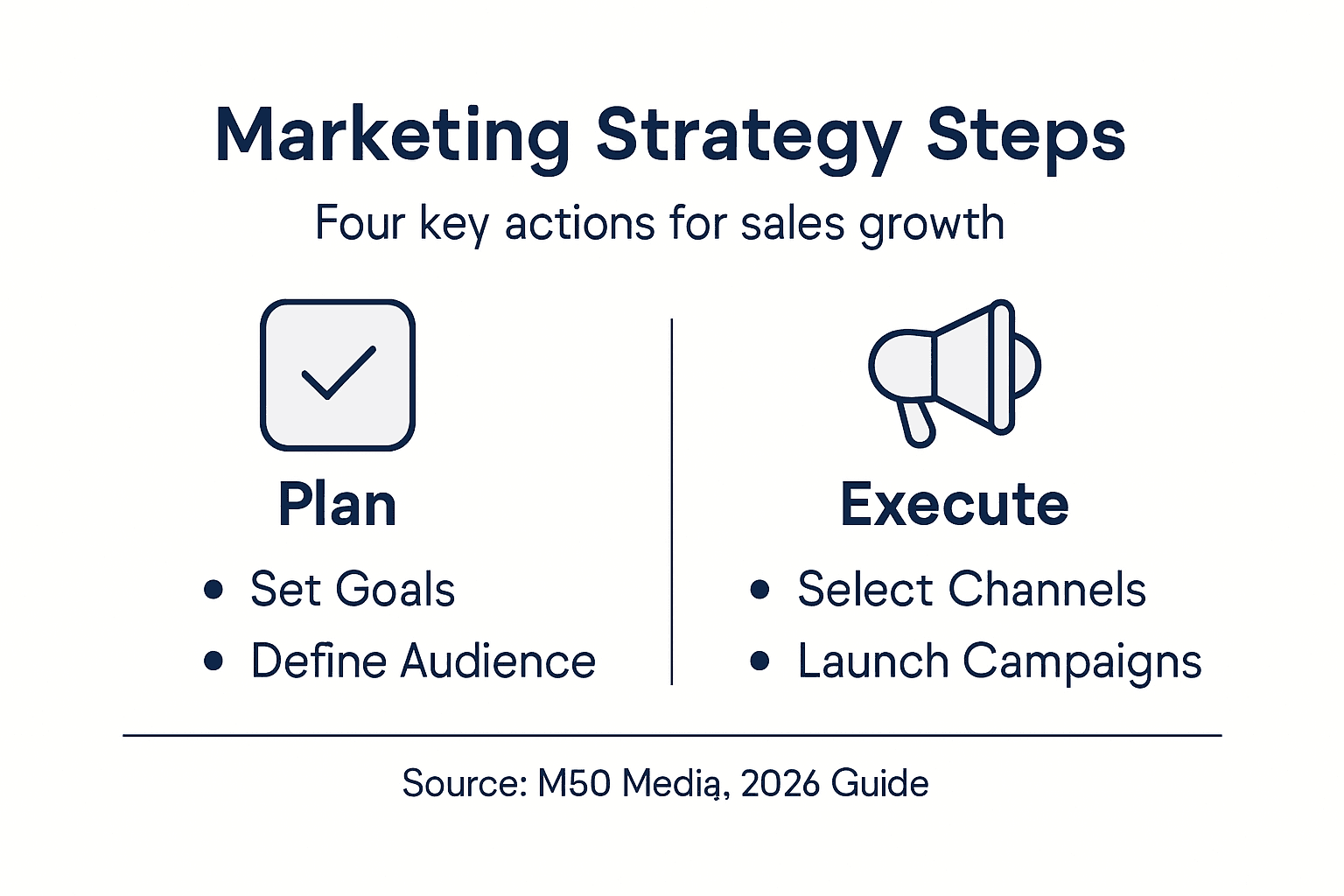
Here’s a quick breakdown of popular channels:
Here’s a summary comparing popular digital marketing channels and their typical business benefits:
Channel | Primary Benefit | Best For |
Social media | Community building | Brand awareness, engagement |
Email marketing | High engagement | Customer retention, repeat sales |
Search engine optimisation | Sustainable traffic | Long-term growth, organic reach |
Paid advertising | Immediate visibility | Quick sales, targeting |
Content marketing | Authority building | Customer education, SEO |
Affiliate marketing | Performance-based expansion | Broadening reach, cost control |
Social media: Build community, test content ideas, reach younger audiences
Email marketing: Nurture existing customers, drive repeat purchases, maintain high engagement rates
Search engine optimisation: Attract qualified traffic long-term, build organic credibility
Paid advertising: Get immediate visibility, target specific demographics precisely
Content marketing: Establish authority, answer customer questions, drive organic traffic
Affiliate marketing: Expand reach through partners, pay only for results
The most effective approach combines multiple channels tailored to your business, creating a cohesive strategy that maximises marketing effectiveness and customer engagement.
Test your choices before committing heavily. Spend a small budget on three different channels for 30 days. Measure which brings the cheapest, highest-quality customers. Double down on winners and pause losers.
Remember your budget matters here. A bootstrapped startup can’t spend equally on every channel. A small budget often performs better on one or two channels where you can dominate than spread thin across five.
Pro tip: Map your audience journey from awareness to purchase, then assign channels to each stage—social media for awareness, email for nurturing, retargeting ads for decision-making—so your channels work together instead of competing.
Step 3: Develop and Launch Campaigns
This is where your strategy becomes real. You’ll take your objectives and channels, then build actual campaigns that speak to your audience and drive results.

Start by defining your campaign message. What’s the single idea you want to communicate? Don’t try to say everything at once. Pick one core benefit or problem you’re solving. Your message should resonate emotionally with your target audience and feel authentic to your brand.
Create a content calendar. Map out what you’ll post, send, or advertise each week for the next two to three months. This prevents last-minute scrambling and ensures consistency across channels. Include promotional content, educational content, and community-building content so you’re not just selling.
Data-driven marketing tactics and personalized digital experiences are essential for campaign success and ensuring alignment with your business objectives. Test different headlines, images, and calls to action to see what resonates.
Here’s your launch checklist:
Finalise your messaging and creative assets (images, copy, videos)
Set up tracking so you can measure results from day one
Schedule your first week of content across all channels
Brief your team on the campaign so everyone knows what’s happening
Launch with a soft test on a small audience first
Monitor performance daily for the first week, then weekly after that
Clear messaging, targeted audience identification, and ongoing performance tracking allow you to adapt tactics and maximise growth outcomes throughout your campaign.
Don’t wait for perfection before launching. Campaigns improve through testing and learning, not through endless planning. Launch, measure, adjust, repeat.
Budget your spend strategically. Allocate more money to channels performing well and less to underperformers. Some platforms reward you for consistency, so don’t pull the plug too early if results are slow initially.
Pro tip: Set up automated reporting so you see campaign performance metrics delivered to your inbox weekly—this keeps you accountable, helps you spot trends early, and makes it easier to justify marketing spending to stakeholders.
Step 4: Analyse Results and Optimise Performance
You’ve launched your campaigns. Now comes the part that separates successful businesses from those that spin their wheels. You need to look at what actually happened and adjust accordingly.
Start by pulling together your key metrics. What matters most depends on your goals, but most businesses track conversion rates, cost per acquisition, click-through rates, and return on ad spend. If you wanted brand awareness, look at reach and impressions. If you wanted sales, focus on revenue and profit per campaign.
Use this table as a quick guide to key metrics to monitor and how they inform your optimisation process:
Metric | What It Reveals | Typical Action Triggered |
Conversion rate | Effectiveness of funnel | Revise offers or messaging |
Cost per acquisition | Marketing spend efficiency | Reallocate budget or adjust bids |
Click-through rate | Creative/content performance | Test new visuals or copy |
Return on ad spend | Overall campaign profitability | Pause or scale campaigns |
Engagement rate | Audience interest level | Refine content strategy |
Marketing analytics involves collecting and interpreting campaign data to evaluate effectiveness and ROI across your efforts. Use tools like Google Analytics to track website behaviour, or your platform’s native analytics dashboard for social and email metrics.
Here’s what to analyse each week:
Which campaigns brought the cheapest customers?
Which content got the most engagement?
Where did you lose people in the sales funnel?
Which channels outperformed your expectations?
What does your data say about your audience preferences?
Compare actual results against your targets from Step 1. If you aimed for a 3% conversion rate and you’re hitting 2.1%, dig deeper. Was the traffic quality poor? Did your messaging miss? Was your offer unclear?
Real-time data testing and dynamic campaign adjustments allow you to optimise spending for maximum ROI in a competitive digital landscape. Don’t wait for perfect data before making changes. Test small changes, measure results, and scale what works.
Data-driven decision-making helps you optimise targeting, improve customer experience, and allocate your marketing budget where it actually generates results.
Then optimise. Pause the underperformers. Increase budget to winners. Refine your messaging based on what clicked. Change your audience targeting if certain segments convert better. Small changes compound into major improvements.
Schedule a monthly review meeting. Look at trends over time, not just weekly blips. One bad week doesn’t mean the campaign is broken.
Pro tip: Create a simple dashboard with your five most important metrics updated weekly so you’re always monitoring performance instead of discovering problems months later.
Elevate Your Sales Growth with a Tailored Digital Marketing Strategy
Struggling to transform your digital marketing insights into measurable sales growth? This guide highlights the challenges of setting clear objectives, selecting effective channels, and optimising campaigns—common hurdles every small business faces. If you want to increase revenue, reduce customer acquisition cost, and boost brand awareness with strategies that truly connect with your target audience, help is within reach.
Discover how M50 Media can support your journey by providing expert coaching and carefully curated digital marketing products designed to supercharge your campaigns and deliver real results. Explore our broad selection at All Products | Karl Lundgren M50. Ready to start growing smarter today Visit us at M50 Media and unlock your business’s full sales potential.
Frequently Asked Questions
How can I assess my current business situation for digital marketing?
To assess your current business situation, review key metrics like revenue, customer count, and the performance of your products or services. Collect data from your analytics platforms to identify which channels drive the most traffic and engagement.
What should my digital marketing objectives be by 2026?
Your digital marketing objectives should be specific, measurable, and realistic. For example, aim to increase online sales by 45% in the next 12 months or grow your email subscriber list from 2,000 to 8,000 contacts within a year.
How do I select the right digital marketing channels for my business?
Select digital marketing channels by understanding where your target audience spends their time and aligning your objectives with the strengths of each channel. Conduct tests with a small budget over 30 days to determine which channels yield the best customer acquisition.
What types of campaigns should I develop to achieve sales growth?
Develop campaigns that focus on clear messaging centred around one core benefit you want to communicate. Create a content calendar to ensure consistent posting across all channels and include promotional, educational, and community-building content.
How can I analyse results from my marketing campaigns effectively?
Analyse your campaign results by tracking key metrics like conversion rates, cost per acquisition, and return on ad spend. Regularly compare these metrics against your initial objectives to identify areas for improvement and make data-driven adjustments.
What steps can I take to optimise my digital marketing performance?
To optimise your digital marketing performance, focus on refining your messaging and reallocating your budget based on channel performance. Schedule monthly reviews to track trends and adjust strategies based on consistent data, aiming to improve results over time.
Recommended
Comments