How to launch a campaign that actually works

TL;DR:
Most small business campaigns fail due to shaky foundations, not bad ideas, so focus on planning carefully.
Start with one clear objective, a realistic budget, and a well-defined audience to build effective campaigns.
Consistent monitoring, testing, and weekly optimizations will significantly improve results and return on investment.
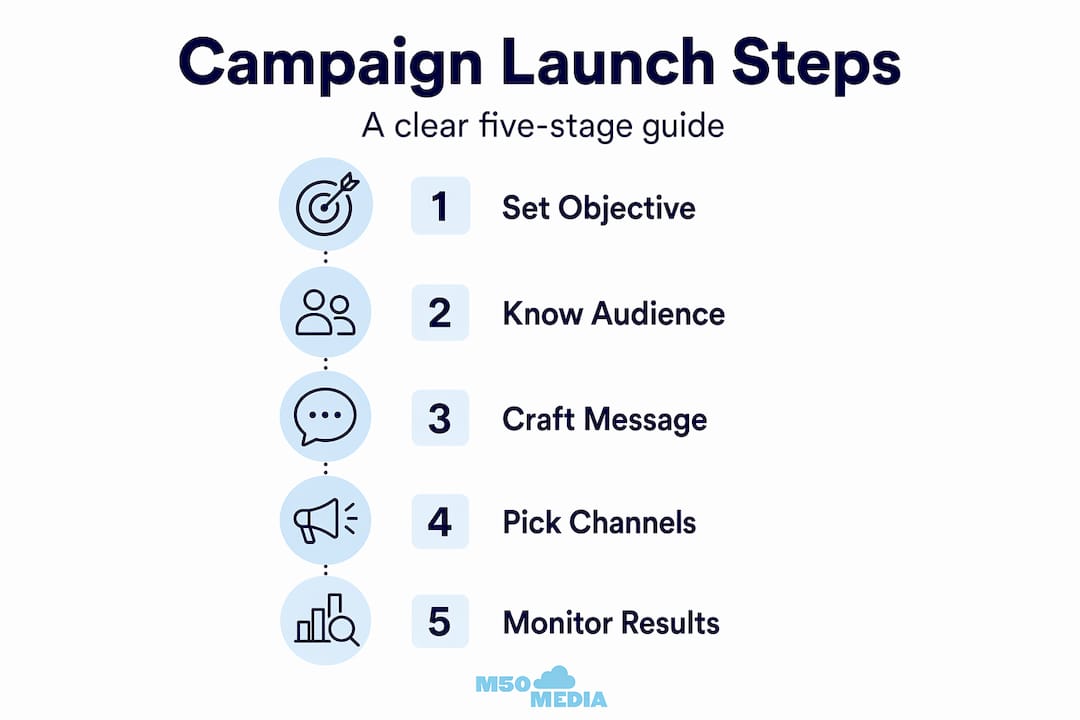
So you’ve got a great product, a decent budget, and a whole lot of enthusiasm. You hit “launch” on your campaign and then… crickets. Sound familiar? If figuring out how to launch a campaign felt like assembling IKEA furniture without the instructions, you’re definitely not alone. Most small business campaigns stumble not because the idea is bad, but because the foundation is shaky. The good news? There’s a repeatable process that separates the campaigns people bookmark from the ones people scroll past. Let’s walk through it together.
Table of Contents
Key takeaways
Point | Details |
Start with one clear objective | Follow the Rule of One: a single focused goal produces sharper messaging and better ROI. |
Know your audience deeply | Research demographics, interests, and behaviours before writing a single word of copy. |
Set up tracking before launch | UTM parameters and conversion pixels must be live before you spend a dollar. |
Focus on 3 to 5 channels | Spreading budget across too many platforms dilutes results and drains your wallet. |
Measure what actually matters | Prioritise MQLs, conversion rates, and ROMI over vanity metrics like likes and impressions. |
How to launch a campaign: start with a solid foundation
Before you write a single word of ad copy or pick a colour palette, you need a plan. (Yes, we know. Boring. But bear with us — this part is what separates the campaigns that crush it from the ones that haemorrhage budget for two weeks and produce nothing.)
The single most common mistake small businesses make is trying to do too much with one campaign. The Rule of One recommends one campaign, one primary objective. Mixing brand awareness with a flash sale with a loyalty push? That’s a recipe for fragmented messaging and a very sad spreadsheet at month’s end.
Here’s what your foundation needs to cover:
One primary objective. Is this about brand awareness? Lead generation? Re-engaging past customers? Pick one.
A realistic budget. Match your spend to your goal. A $500 budget is fine for a local lead-gen push, but not for a national brand awareness play.
A detailed audience profile. Go deeper than “women aged 25 to 45.” Map out their interests, daily routines, pain points, and buying behaviours. The more specific, the better your targeting.
Channel discipline. Small businesses see better results focusing on 3 to 5 high-impact channels rather than spreading thin across a dozen platforms.
Once you have your objective locked, build your audience profile like you’re writing a character for a Netflix series. Where do they spend time online? What keeps them up at night? What would make them click without even thinking? That level of specificity will carry through every creative decision you make. Need a head start? M50media’s digital marketing plan guide walks through this foundation in practical detail.
Pro Tip: Write your campaign objective in one sentence. If you need more than one sentence, you have more than one objective. Go back and choose.
Budget range | Recommended channels | Realistic expectation |
Under $1,000/month | Email, organic social, local SEO | Brand awareness, list building |
$1,000 to $5,000/month | Email + paid social (1 to 2 platforms) | Lead generation, retargeting |
$5,000+/month | Multi-channel paid + content + SEO | Full-funnel acquisition |
Craft your message and pick your channels
Now that you know who you’re talking to, let’s talk about what you’re going to say and where you’re going to say it. This is where most small businesses either nail it or totally whiff.

Your message is not about you. Seriously. Nobody wakes up thinking about your brand. They wake up thinking about their own problems. Your job is to position your product or service as the solution to something they already care about. Use emotional storytelling when it fits. Add credibility elements like testimonials or results. Keep it clear, keep it relevant, and for the love of all things holy, keep it consistent across channels.
Speaking of channels, here’s a quick framework to think about the types of media available to you:
Owned media: Your website, email list, blog. You control it completely.
Paid media: Social ads, Google Ads, sponsored content. Amplifies reach fast but costs money.
Earned media: Press mentions, word of mouth, organic shares. Hard to control but enormously valuable.
Shared media: Social media posts, community groups, co-marketing. Great for engagement and reach.
For most small businesses, the winning combo is owned plus paid, with earned media as a bonus when your content is genuinely good. If email is part of your mix (and it should be), check out M50media’s email campaign examples for real-world inspiration. For social platforms, leaning into formats your audience already loves, whether that’s short-form video, carousel ads, or well-crafted stories, beats generic posts every single time. You can also dig into this social media advertising guide for specific tactics.
Pro Tip: Write your message from your customer’s perspective first. Start with their problem, then introduce your solution. Flip the script and watch your click-through rates climb.
Organise your execution like a pro
Alright, the strategy is set, the messaging is dialled in. Now comes the part that separates the planners from the “we’ll figure it out as we go” crowd (hint: the second group usually regrets it around week two). Execution without organisation is just chaos with a budget.
Here’s a numbered approach that works:
Build a timeline. Map out three phases: pre-launch (setup and testing), launch (active campaign period), and post-launch (review and optimisation). Assign dates to everything.
Assign responsibilities. Even if you’re a team of one, write down who owns what. Creative? Copy? Ad management? Reporting? Get it documented.
Set up your tracking infrastructure. This is non-negotiable. UTM parameters, conversion pixels, and dedicated landing pages must be live before you spend a dollar. Launching without them means you’re flying completely blind.
Create a contingency plan. What happens if an ad underperforms in the first 72 hours? What if a post goes sideways? Have a simple crisis response plan ready. Even a one-page document is enough.
Set baselines. Know your average conversion rate, cost per lead, and click-through rate before the campaign starts. You can’t measure improvement without a starting point.
Pro Tip: Create a simple campaign launch checklist and make it a team ritual. Run through it the day before every launch. It catches the stuff that slips through the cracks when everyone’s moving fast.
Here’s a quick comparison of what tracked campaigns deliver versus untracked ones:
Campaign type | Ability to optimise | Budget efficiency | Learning value |
Fully tracked (UTM + pixels) | High | Strong | Compounding |
Partially tracked | Limited | Moderate | Inconsistent |
Untracked | None | Poor | Negligible |
Monitor, optimise, and measure success
You launched. Confetti! But the work is just beginning. The “set and forget” approach to campaigns is the marketing equivalent of leaving your oven on and going to a movie. Things will go sideways, and you need to be there to catch it.
Here’s what to actually watch:
Marketing Qualified Leads (MQLs). 39.4% of marketers now prioritise MQLs as a key metric, moving away from surface-level engagement numbers.
Conversion rates. Healthy benchmarks sit between 2% and 6%, and email open rates should land in the 18% to 28% range.
Return on Marketing Investment (ROMI). Are you getting more out than you’re putting in? This is the ultimate gut-check metric.
Cost Per Lead (CPL). Watch this alongside conversion rate, not in isolation.
The measurement window matters too. Lead gen campaigns typically need 30 to 90 days of data before you can draw reliable conclusions. Brand awareness is a longer game. Don’t panic-pause a campaign after three days because the numbers look slow.
One of the sneakiest traps in campaign monitoring is interpreting a single metric as a win. A high CTR paired with skyrocketing cost per lead is not a success. It’s a red flag. Always look at the full picture. Companies that combine consistent measurement with disciplined optimisation generate up to 40% more revenue than those that don’t. And according to research, consistent analytics use delivers 57% better ROI for small businesses. That’s not a small number.
Pro Tip: Do a weekly 15-minute campaign health check. Review your top three KPIs, flag anything outside your baseline, and make one small adjustment. Small, frequent optimisations beat big, infrequent overhauls every time.
Metric | Vanity version | Quality version |
Engagement | Likes and follows | Comments, shares, DMs |
Traffic | Total page views | Time on page, scroll depth |
Leads | Form fills | MQLs, sales-qualified leads |
Ad performance | High CTR | CTR + low CPL + high conversion |
My honest take after years of campaign launches
I’ve watched dozens of small businesses launch campaigns with real potential, only to see them fizzle out because nobody was minding the store. The number one culprit? The “set and forget” mindset. You build a campaign, you launch it, and then you check in two weeks later wondering why the leads aren’t rolling in. Marketing doesn’t work that way. Not anymore.
Here’s the uncomfortable truth: small businesses can absolutely out-perform much bigger competitors. Not by outspending them, but by out-focusing them. A boutique candle brand that obsessively monitors one Facebook campaign and tweaks it weekly will often beat a national brand running a bloated multi-channel mess with no clear owner.
What I’ve learned is that the magic is in the consistency of optimisation, not the brilliance of the launch. Your first version of any campaign is basically a hypothesis. The data tells you how wrong you were. And that’s fine! That’s the whole point. Every campaign I’ve been part of that delivered real results went through multiple rounds of adjustment before it clicked.
My advice? Pick one objective. Track everything from day one. Commit to weekly reviews. And resist the urge to judge a campaign by its first week’s numbers. Patience plus data is a combination that wins more often than any clever creative idea. Check out these social media campaign examples if you want to see what disciplined optimisation actually looks like in practice.
— Karl
Let’s make your next campaign a real one
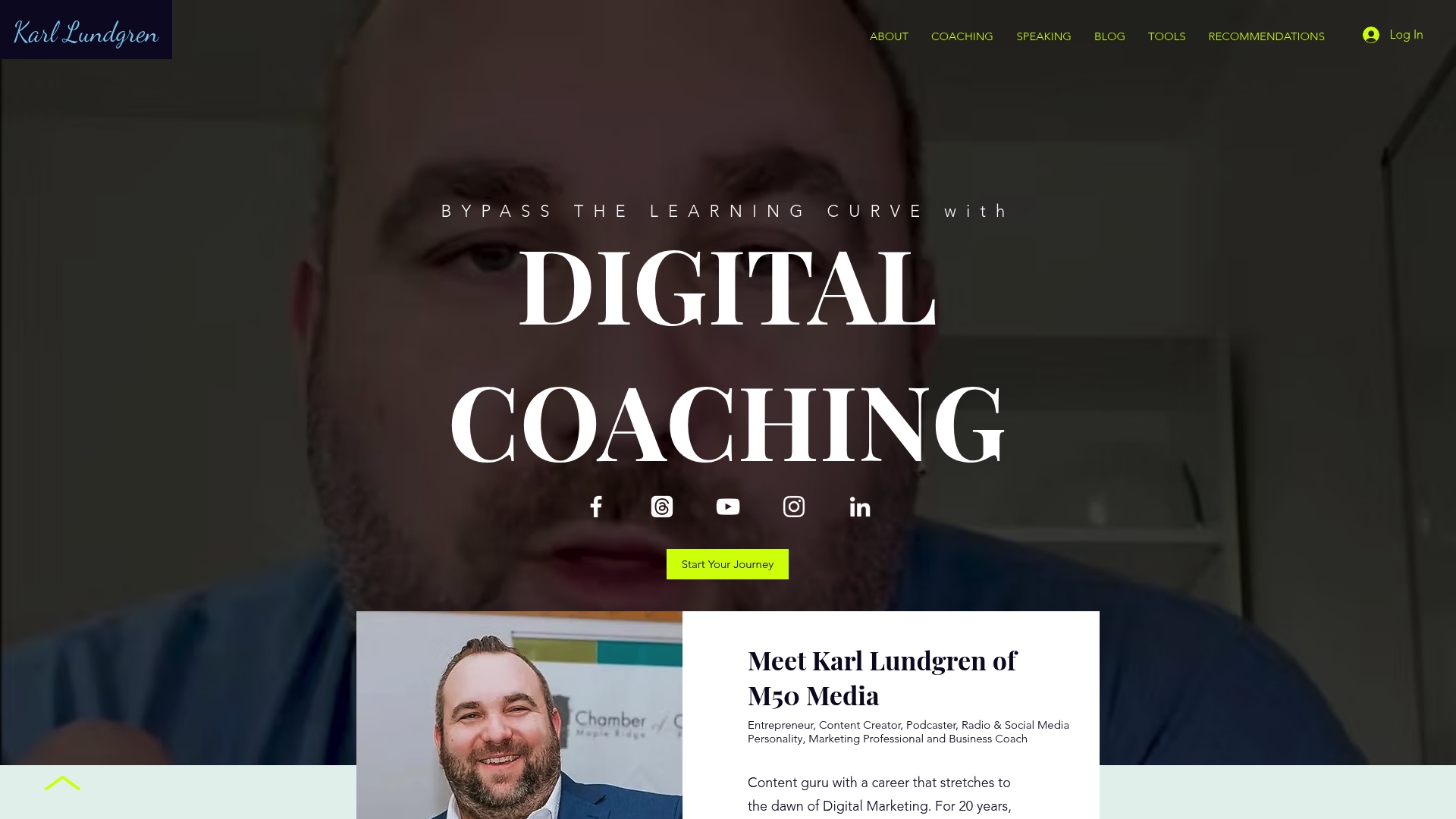
If reading this made you realise your last campaign was missing a few of these pieces, you are not alone and you are absolutely fixable. At M50media, Karl works directly with small business owners to take the guesswork out of campaign planning, execution, and optimisation. Whether you need a full campaign strategy or just someone to gut-check your current approach, there’s a way to get help without spinning your wheels.
Start with a free Marketing SOS call and walk away with clarity on exactly where your campaign is leaking. If you’re looking for something deeper, one-on-one coaching is available to build your marketing confidence and your results at the same time. You’ve already done the hard part by showing up and reading this far. The next step is easier than you think.
FAQ
What is the first step to launch a campaign?
Define a single, clear objective before anything else. The Rule of One says one campaign should focus on one goal to keep your messaging sharp and your budget efficient.
How many channels should a small business use?
Focus on 3 to 5 high-impact channels suited to your audience. Spreading budget across too many platforms reduces control, makes measurement harder, and tends to produce weak results across the board.
How long should I run a campaign before evaluating it?
For lead generation, give it 30 to 90 days before drawing firm conclusions. Brand awareness campaigns run longer. Checking results after three days and calling it a failure is a very common and very expensive mistake.
What metrics should I track?
Prioritise MQLs, conversion rates, and ROMI over vanity metrics. 39.4% of top-performing marketing teams focus on MQLs as their primary indicator of campaign health in 2026.
Do I need technical setup before launching?
Yes, absolutely. UTM parameters, conversion pixels, and dedicated landing pages should all be in place before you go live. Without them, you have no way to know what’s working, and optimising a campaign without data is basically just guessing with money.
Recommended
Comments