Role of Blogs in Branding: Building Trust and Visibility

Updated: Feb 19

Many small business owners find that creating valuable online content often feels confusing and time consuming. Blogging has changed from casual journals to powerful branding tools that help companies show expertise, connect with customers, and build trust. For entrepreneurs in ecommerce around the world, understanding blogging and branding fundamentals means unlocking new ways to stand out. This guide highlights how authentic storytelling, strategic content, and visual consistency can turn your blog into a dynamic platform for both engagement and recognition.
Table of Contents
Key Takeaways
Point | Details |
Purpose of Blogging | Blogs serve to build trust, increase visibility, and establish authority for brands. |
Effective Content Strategy | Consistent, audience-focused content combined with SEO techniques enhances brand engagement and visibility. |
Common Branding Mistakes | Avoid inconsistent messaging, neglect of audience insights, and inauthentic communication to strengthen brand reputation. |
Importance of Content Types | Diversifying content formats across platforms enhances brand identity and fosters audience connection. |
Blogging and Branding Fundamentals Explained
Blogs have transformed from simple online journals into powerful branding tools that enable businesses to establish credibility, engage audiences, and showcase expertise. They represent a strategic communication channel that goes far beyond traditional marketing approaches.
The fundamental purpose of business blogging revolves around three core objectives:
Building Trust: Creating transparent, valuable content that demonstrates industry knowledge
Increasing Visibility: Improving search engine rankings and attracting potential customers
Establishing Authority: Positioning your brand as a thought leader in your specific sector
Modern branding through blogging requires a systematic approach. Academic knowledge translation strategies highlight how consistent, high-quality content can open communication channels with diverse audiences. Successful blogs aren’t just about selling - they’re about providing genuine value and solving real problems for your target market.
Effective blog strategies typically incorporate:
Consistent publishing schedules
Targeted, audience-specific content
Authentic storytelling
Multimedia integration
Search engine optimization techniques
These elements work together to create a compelling narrative that transforms your blog from a simple website section into a dynamic brand communication platform.
Pro tip: Develop a content calendar that aligns your blog topics with your audience’s current interests and pain points, ensuring consistent and relevant publishing.
Content Types That Strengthen Brand Identity
Building a powerful brand identity requires strategic content creation that resonates with target audiences across multiple platforms. Global brand communication strategies emphasize the importance of diverse content formats that effectively engage and connect with viewers.
Successful brand content typically encompasses several key types:
Blog Posts: In-depth articles demonstrating industry expertise
Video Content: Engaging visual storytelling
Infographics: Complex information presented in digestible visual formats
Case Studies: Detailed narratives showcasing real-world problem-solving
Social Media Posts: Quick, platform-specific content that maintains brand voice
The most effective brand content shares several critical characteristics. Visual consistency plays a pivotal role, with multi-channel brand communication approaches highlighting the importance of maintaining uniform design elements across all platforms.

Here’s a summary of how different content types contribute to brand identity:
Content Type | Unique Branding Benefit | Ideal Platform |
Blog Posts | Demonstrate expertise and depth | Company blog, LinkedIn |
Video Content | Boost engagement and authenticity | YouTube, Instagram, TikTok |
Infographics | Simplify complex data visually | Website, Pinterest, LinkedIn |
Case Studies | Build trust with real examples | Blog, Sales materials |
Social Media Posts | Sustain ongoing audience connection | Twitter, Facebook, Instagram |
Content strategy requires careful consideration of audience preferences and emerging digital trends. Brands must adapt their storytelling techniques to remain relevant, using formats that speak directly to their target demographic’s preferences and consumption habits.
Authentic, value-driven content builds deeper connections than traditional advertising messages.
Understanding your audience’s content consumption patterns allows for more targeted and impactful brand storytelling. This means creating content that not only looks good but provides genuine value and insight.
Pro tip: Develop a content matrix that maps different content types to specific audience segments and buyer journey stages to maximize engagement and relevance.
How Blogs Build Trust and Authority
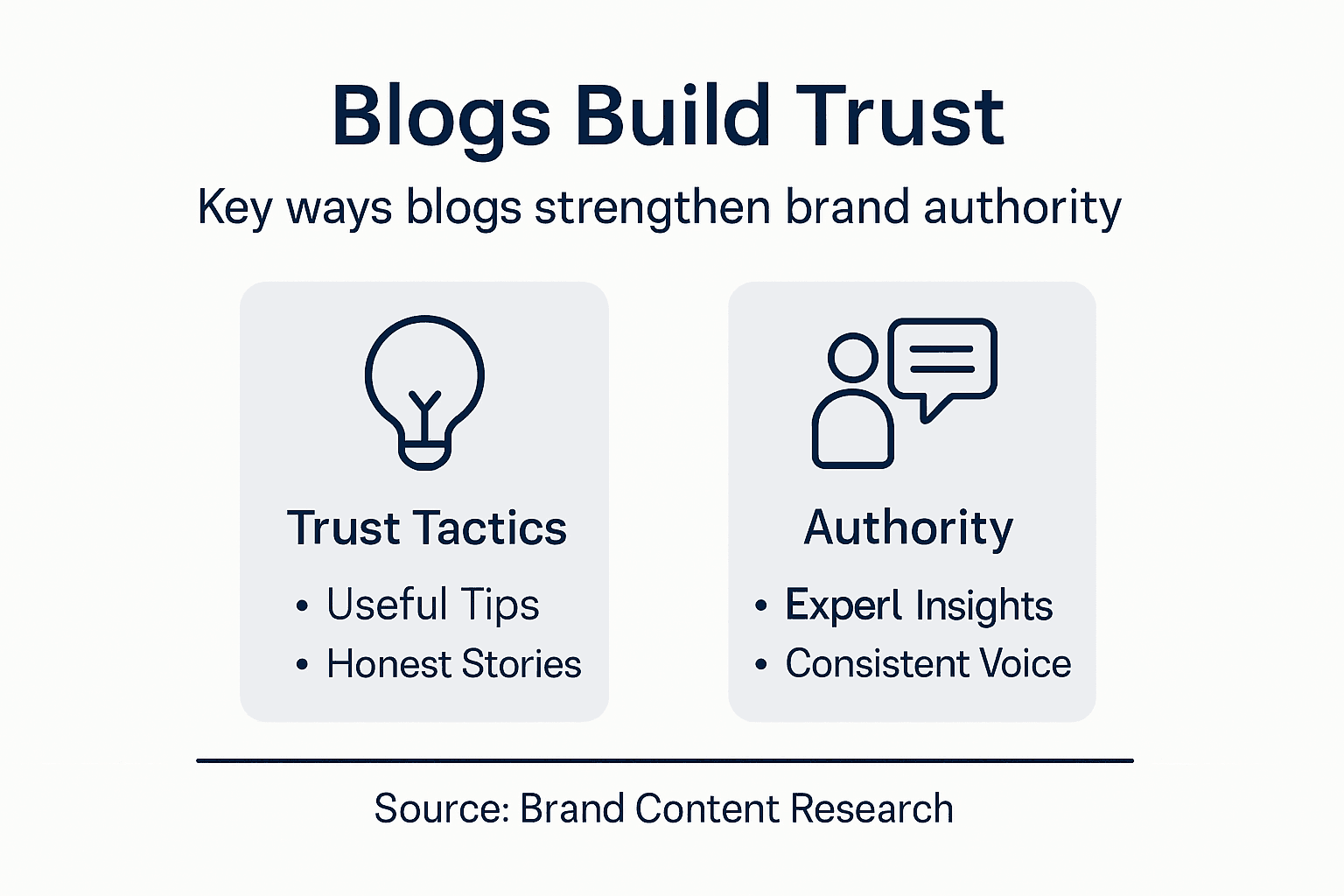
Blogs have emerged as powerful platforms for establishing credibility and demonstrating expertise in today’s digital landscape. Academic communication strategies reveal that consistent, transparent content can significantly enhance an organization’s perceived trustworthiness.
The key mechanisms through which blogs build trust include:
Demonstrating Expertise: Sharing in-depth, well-researched insights
Transparency: Offering genuine, unfiltered perspectives
Consistency: Maintaining regular, high-quality content production
Personal Connection: Humanizing the brand through authentic storytelling
Problem-Solving: Addressing audience challenges directly and comprehensively
Credibility emerges from more than just information delivery. It requires a nuanced approach that combines technical knowledge with relatable communication. Successful blogs go beyond surface-level discussions, diving deep into complex topics while maintaining clarity and accessibility.
Trust is earned through consistent, valuable communication that prioritizes the audience’s needs over promotional messaging.
Effective blog strategies involve understanding your audience’s pain points and delivering targeted, actionable insights. This means creating content that not only educates but also empowers readers to solve real-world challenges.
Pro tip: Develop a content review process that ensures each blog post provides unique value, addresses specific audience questions, and maintains a consistently high standard of expertise.
Driving Visibility Through SEO and Search
Search engine optimization represents a critical strategy for amplifying brand visibility and attracting targeted audience engagement. Research visibility techniques demonstrate that strategic content optimization can dramatically improve discoverability across digital platforms.
Key SEO strategies for blog content include:
Keyword Research: Identifying precise terms your audience searches
Quality Content: Creating comprehensive, valuable information
Metadata Optimization: Crafting compelling titles and descriptions
Internal Linking: Connecting related content strategically
Mobile Responsiveness: Ensuring seamless viewing across devices
Technical optimization goes beyond simple keyword insertion. Successful SEO requires understanding search engine algorithms and creating content that genuinely answers user queries. This means developing in-depth, authoritative pieces that provide real value to readers.
Search engines reward content that demonstrates expertise, relevance, and user engagement.
Understanding search intent is crucial. Effective blogs anticipate and directly address the specific questions and challenges their target audience encounters, positioning themselves as go-to resources in their respective domains.
Pro tip: Develop a systematic keyword research process that combines search volume data, user intent analysis, and your unique brand expertise to create highly targeted content.
Common Mistakes That Undermine Branding
Branding missteps can quietly erode years of carefully built reputation, transforming potential opportunities into significant setbacks. Branding challenges in competitive markets reveal that organizations frequently undermine their own visibility through predictable yet avoidable errors.
The most critical branding mistakes include:
Inconsistent Messaging: Sending mixed signals across different platforms
Generic Positioning: Failing to differentiate from competitors
Neglecting Audience Insights: Misunderstanding target market needs
Visual Identity Stagnation: Using outdated design elements
Inauthentic Communication: Creating content that feels forced or artificial
Strategic differentiation requires more than surface-level changes. Brand performance research demonstrates that successful brands continuously evolve, aligning their identity with stakeholder expectations and market dynamics.
This table compares frequent branding mistakes and their potential impact:
Mistake Type | Negative Effect on Brand | Example Scenario |
Inconsistent Messaging | Audience confusion | Contradictory statements online |
Generic Positioning | Poor competitive standing | Similar to all industry rivals |
Neglecting Audience Needs | Loss of relevance | Outdated or irrelevant content |
Visual Identity Stagnation | Reduced memorability | Using obsolete logos or colours |
Inauthentic Communication | Eroded trust | Forced or exaggerated messaging |
Authentic branding isn’t about perfection – it’s about consistent, genuine communication that resonates with your audience.
Many organizations fall into the trap of mimicking competitors instead of developing a unique voice. True brand strength emerges from understanding your distinct value proposition and communicating it with unwavering clarity and conviction.
Pro tip: Conduct a quarterly brand audit that critically examines your messaging, visual identity, and audience perception to identify and address potential disconnects.
Unlock the Power of Blogging to Build Trust and Boost Visibility for Your Brand
Many businesses struggle with creating consistent, authentic content that truly connects with their audience and improves search engine rankings. This article highlights key challenges such as demonstrating expertise, maintaining transparency, and leveraging SEO to increase your brand’s digital presence. If you find yourself facing these hurdles or seeking a strategic approach to elevate your brand identity, you are not alone.
At M50 Media, we understand how crucial it is to build trust and authority through well-crafted blogs. Our coaching and digital marketing solutions, including our detailed M50 Blog, provide actionable insights and personalized strategies tailored for small businesses. By partnering with us, you gain access to proven methods that align with your unique goals and pain points, helping you engage your target audience more effectively.
Ready to transform your blog into a powerful branding tool that drives real results?

Explore expert guidance and hands-on marketing education at M50 Media today. Start building authentic trust and improving your online visibility now with proven strategies and ongoing support.
Frequently Asked Questions
How do blogs help in building trust for my brand?
Blogs help in building trust by providing consistent, transparent, and valuable content that demonstrates expertise in your industry.
What are the key elements of effective business blogging?
Effective business blogging includes consistent publishing schedules, targeted audience-specific content, authentic storytelling, multimedia integration, and search engine optimization techniques.
How can I optimize my blog for better visibility?
You can optimize your blog for visibility through keyword research, creating quality content, optimizing metadata, using internal linking, and ensuring mobile responsiveness.
What common mistakes should I avoid when blogging for branding?
Common mistakes to avoid include inconsistent messaging, generic positioning, neglecting audience insights, using outdated visual identity, and inauthentic communication.
Recommended
Comments