Role of Branding: Driving Small Business Loyalty


Many small business owners across Canada and the United States struggle to define what branding really means. It is easy to believe branding is just a logo or clever tagline, but branding is the entire experience your customers have with your business. Misunderstanding this concept can lead to missed opportunities, inconsistent service, and lost customers. This article reveals the broader scope of branding, addresses common misconceptions, and shows how strategic branding drives customer loyalty and long-term business success.
Table of Contents
Key Takeaways
Point | Details |
Branding is More Than a Logo | True branding encompasses the entire customer experience, creating emotional connections through consistent service and values. |
Focus on Internal Alignment | Prioritize brand orientation to ensure consistency and understanding of brand values throughout the team. |
Consistency is Key | Maintain uniformity in messaging and interactions to build trust and foster long-term customer loyalty. |
Audit and Improve | Regularly assess all customer touchpoints and address inconsistencies to strengthen your brand identity and customer retention. |
Defining branding and common misconceptions
Branding isn’t a logo or a catchy tagline—and that’s where most small business owners get it wrong. Branding is the entire experience your customers have with your business, from their first touchpoint through every interaction that follows.
At its core, branding involves establishing brand awareness and creating lasting emotional bonds with your customers. It’s about what people feel when they think of your business, not just what they see. Think of it like a relationship: the logo is the first hello, but the actual connection comes from trust, consistency, and how you treat them over time.
Here’s what real branding actually encompasses:
Customer experience and how interactions feel
Organisational values and what you stand for
Consistent messaging across all touchpoints
Promises you make and deliver on repeatedly
Both functional and emotional benefits you provide
Now, the misconceptions. These trip up most small business owners because they sound reasonable on the surface.
The Big Branding Myths
The first myth: branding equals logo design. Your logo matters, but it’s just one small piece. You could have the world’s most beautiful logo and still lose customers if your service is inconsistent or your staff doesn’t smile when answering the phone.
The second myth: branding is the same as marketing or advertising. Marketing promotes what you sell; branding shapes how people feel about your business. Understanding branding’s strategic role reveals it encompasses strategy, customer experience, and organisational behaviour—far deeper than any advertisement.
To clarify how branding, marketing, and advertising differ for small businesses, see this comparison:
Aspect | Branding | Marketing | Advertising |
Main Focus | Shaping perception and loyalty | Promoting products or services | Driving awareness of offers |
Time Horizon | Long-term impact | Short- to medium-term results | Immediate, short-term boost |
Key Activities | Defining values, identity, trust | Campaigns, promotions, outreach | Paid media placements |
Success Metric | Customer loyalty and recognition | Lead generation, sales increases | Traffic or campaign reach |
The third myth: branding is purely visual. Nope. Yes, colours and design matter, but so do your tone of voice, how quickly you respond to emails, and whether you follow through on promises. A competitor with better aesthetics will beat you if they’re inconsistent.
The fourth myth: branding is a one-time project. It’s not. Branding is continuous work that evolves as your business grows and market conditions change.
Real branding creates long-term customer loyalty that goes far beyond initial design elements—it’s the foundation of repeat business and referrals.
For small business owners, the stakes are high. You don’t have massive marketing budgets like big corporations. Your brand is your competitive advantage. When your branding is solid, customers choose you even when competitors are cheaper.
The good news? You already have the tools you need. Your values, your customer service, your consistency—these build genuine brand loyalty that advertising can’t buy.
Pro tip: Start by auditing your current customer experience across all touchpoints (phone calls, emails, social media, in-person visits) and identify where you’re inconsistent; fixing these gaps often matters more than redesigning your logo.
Types of branding for small businesses
Small businesses don’t get the luxury of massive branding budgets, but that’s actually an advantage. You can be more agile, more personal, and more authentic than the big guys. The key is understanding which branding approaches work best for your specific situation.
Branding in SMEs includes multiple interconnected elements that work together to build competitive advantage. Rather than thinking of branding as one monolithic thing, think of it as layers you build strategically.
The Four Core Types
You’ve got four main branding components to consider:
Brand orientation: Your internal mindset and commitment to brand-building
Brand identity: How you visually and verbally present yourself
Brand marketing: Your promotional efforts across channels
Brand performance: The measurable results and customer loyalty you generate
Brand orientation starts inside your business. It’s the decision to care about your brand as a strategic asset, not just a logo. When your entire team understands your brand values, consistency happens naturally.
Brand identity is what people actually see and hear. Your colours, fonts, messaging tone, and visual style. This layer is what sticks in customers’ minds when they interact with you.
Brand marketing is how you communicate your brand to the world. This includes social media marketing strategies that reach your audience where they actually spend time, email campaigns, content, and word-of-mouth tactics.
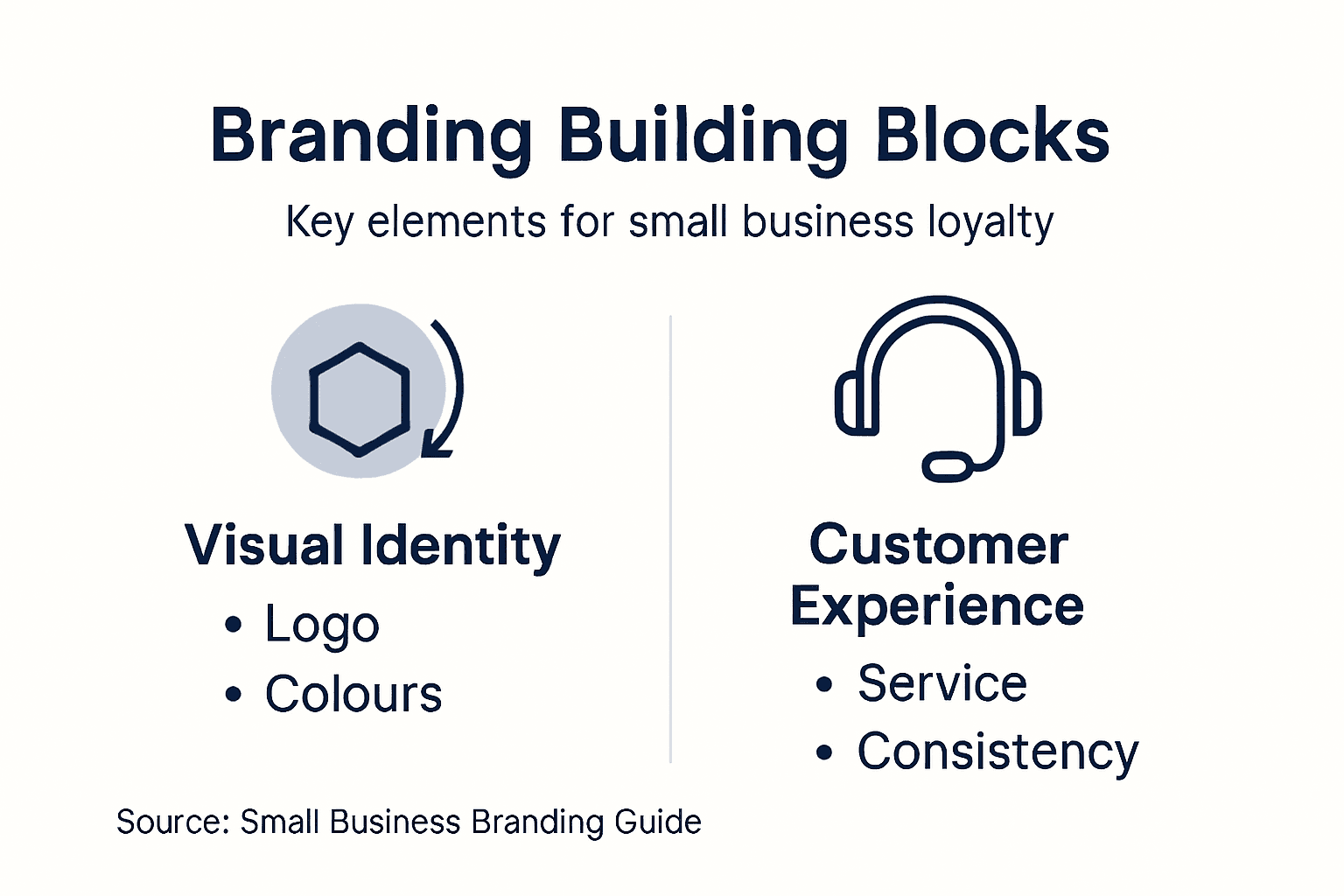
Brand performance measures whether your efforts work. It’s tracking repeat customers, referrals, customer lifetime value, and whether people choose you over competitors.
Here’s a summary of the four core branding types and what each delivers for small businesses:
Branding Type | What It Involves | Key Outcome |
Brand Orientation | Internal alignment and mindset | Consistency in delivery |
Brand Identity | Visuals, voice, and presentation | Memorable public recognition |
Brand Marketing | Multi-channel communication | Audience engagement and reach |
Brand Performance | Measuring brand success | Loyal, returning customers |
Which Type Matters Most?
Here’s the truth: they’re all essential, but most small business owners neglect brand orientation. You can’t build real brand loyalty if you’re inconsistent internally. When your team doesn’t understand your values, they can’t represent them to customers.
Start with brand orientation and identity together. Get clear on what you stand for, then visually and verbally express it everywhere. Then layer in strategic brand marketing.
The strongest small business brands are built by internal alignment first, external messaging second—customers feel the difference.
You don’t need separate budgets for each type. These overlap. A well-designed social media post (brand identity and marketing combined) that reflects your values (brand orientation) builds loyalty that shows in your metrics (brand performance).
Pro tip: Audit each of these four elements this week: Are you internally aligned on values? Is your visual identity consistent? Are you marketing in the right channels? Are you tracking results? Start with whichever feels weakest.
Key elements of an effective brand identity
Your brand identity is the visual and verbal personality of your business. It’s what makes customers recognise you instantly and remember you fondly. Unlike branding itself, which lives in people’s minds, brand identity is the actual toolkit you use to build that mental image.

Think of it this way: branding is the feeling; brand identity is the toolbox. And the good news? You can control your toolbox completely.
The Core Components
Every strong brand identity shares these essential elements:
Brand name: Clear, memorable, and relevant to what you do
Logo: Visual symbol that represents your business instantly
Colour palette: Consistent colours that become associated with you
Typography: Specific fonts that reflect your personality
Tone of voice: How you communicate and the words you choose
Brand messaging: Core statements about what you offer and why
Effective brand identity relies on unique elements like logos and colour schemes that differentiate you from competitors and facilitate quick recognition. The strength of your identity directly impacts whether customers remember you when they need your services.
Your logo doesn’t need to be fancy. It needs to be distinctive. Your competitor’s logo shouldn’t be confusable with yours. A simple mark or lettermark works fine if it’s consistent and applied everywhere.
Colour matters more than most small business owners realise. When customers see your colour, they should think of you. Not feel confused about whether it’s you or someone else. Pick two or three colours maximum and stick with them across websites, social media, business cards, and packaging.
Typography shapes perception. A playful font feels different than a serious one. A rounded font feels approachable; angular feels modern. Choose fonts that match your brand personality and use them consistently.
Your tone of voice is underrated. How you talk to customers—friendly or formal, witty or straightforward, casual or professional—becomes part of your identity. Customers recognise you through your words as much as your visuals.
Consistent application of your brand identity across all touchpoints builds trust and makes you instantly recognisable, even without seeing your logo.
The magic happens when all these elements work together. A cohesive brand identity isn’t random; it’s intentional. Every choice reinforces who you are and what you stand for.
Pro tip: Create a simple one-page brand style guide documenting your logo, colours (with hex codes), fonts, and tone of voice rules, then share it with anyone creating content for your business to ensure consistency.
Branding’s impact on customer retention
Here’s the uncomfortable truth: acquiring a new customer costs five to twenty-five times more than keeping an existing one. Yet most small business owners pour energy into chasing new customers while neglecting the ones they already have. Strong branding flips this equation.
When customers feel connected to your brand, they stay. They buy again. They recommend you to friends. They become your competitive moat—the thing competitors can’t easily copy or undercut.
How Branding Drives Loyalty
Branding builds retention through three interconnected mechanisms:
Trust: Consistent branding signals reliability and professionalism
Emotional bonds: Strong brands create feelings customers want to repeat
Perceived value: Good branding justifies your pricing and keeps customers from comparison shopping
Branding significantly influences customer retention by fostering trust and emotional bonds that make customers want to return. When customers trust you, they don’t constantly evaluate competitors. They simply come back.
Think about brands you’re loyal to personally. You probably don’t switch based purely on price. You stay because you like how the brand makes you feel, or because you trust it works. That’s the power you’re building.
The Retention-Profitability Connection
Retaining customers isn’t just about ego—it’s about your bottom line. A customer who returns three times generates more revenue than two separate first-time customers. Relationship marketing and customer satisfaction build long-term relationships that increase customer lifetime value significantly.
This means your brand investment pays dividends over years, not weeks. A customer acquired once but retained for five years is far more valuable than five customers acquired once each.
When your branding is weak or inconsistent, customers compare you constantly. They shop price. They jump to competitors offering discounts. When your branding is strong, customers become less price-sensitive because they value the relationship you’ve built.
Where Most Businesses Fail
Companies lose customers not because they stop being good—but because they stop being consistent. A customer has a great experience, then the next interaction feels different. The website looks different. The staff tone changes. The messaging shifts.
Inconsistent branding creates doubt. Doubt kills loyalty faster than a single bad experience ever could.
Strong branding transforms customers from transaction-focused buyers into relationship-focused advocates who return repeatedly and refer others.
The brands with the highest retention rates obsess over consistency. Every interaction reinforces the same values, personality, and promises. That consistency builds a bond stronger than any discount could.
Pro tip: Map every customer touchpoint this month—phone calls, emails, social media, in-person visits, invoicing—and document where your brand experience feels inconsistent, then prioritise fixing the highest-traffic touchpoints first.
Practical steps and common mistakes to avoid
Ready to build your brand strategically? Start small, think big, and stay consistent. You don’t need a massive budget or a branding agency. You need a clear plan and discipline.
The Action Steps
Follow this sequence to build your branding foundation:
Define your brand purpose and values: Why does your business exist beyond making money? What do you stand for?
Identify your target customer: Who are you serving? What do they care about?
Establish your positioning: What makes you different? Why should they choose you?
Create your visual identity: Logo, colours, fonts that reflect who you are
Develop your messaging framework: Core statements about what you offer and why it matters
Apply consistently everywhere: Website, social media, emails, in-person, packaging
Measure and refine: Track what’s working and adjust
Practical branding steps include defining clear brand identity and establishing consistent communication across all channels. This foundation supports sustainable growth far beyond initial setup.
The Mistakes That Derail Small Businesses
Most branding failures don’t happen because owners lack ideas. They happen because of these avoidable errors:
Treating branding as purely visual. Your logo matters, but your brand is not your logo. It’s your entire promise. A beautiful logo backed by inconsistent service creates resentment, not loyalty.
Starting without strategy. Jumping straight to design without defining your positioning is backwards. You’re decorating a house without building the foundation first.
Neglecting your current customers. Too many owners chase new customers while ignoring the ones paying their bills. Your brand should delight existing customers first, then attract new ones.
Switching tactics constantly. Branding requires patience. Most owners quit before their consistency pays off. You need at least six months of consistent application before judging results.
Ignoring employee engagement. Your staff represents your brand more than any advertisement. If employees don’t understand or believe in your brand values, customers will sense the disconnect.
The difference between successful and failed branding isn’t budget—it’s consistency and commitment to your positioning.
Avoid these traps and you’re already ahead of ninety percent of small businesses. Your competitors are likely making at least three of these mistakes right now.
Pro tip: Choose just one branding element to improve this month—consistency in email tone, or applying your colour palette everywhere, or training staff on brand values—then master that before adding complexity.
Elevate Your Small Business Loyalty Through Strategic Branding
Building strong brand loyalty requires more than a logo or a tagline. The article highlights key challenges such as inconsistent customer experiences, lack of internal brand alignment, and underappreciation of brand orientation. Many small business owners struggle to create the lasting emotional bonds that keep customers coming back. If you want to transform your brand into a trusted asset that fuels repeat business and referrals, it is crucial to focus on every touchpoint and ensure consistency in your brand identity and messaging.

Discover how M50 Media can empower you with expert marketing coaching and strategic digital tools tailored for small businesses working to build brand trust and loyalty. Start by aligning your brand orientation, refining your visual and verbal identity, and mastering customer engagement through proven digital marketing techniques. The time to invest in your brand’s future is now because loyal customers drive long-term growth and profitability. Visit M50 Media to learn more about building your brand the right way and experience the difference that strategic branding makes in customer retention.
Frequently Asked Questions
What is the main purpose of branding for small businesses?
Branding helps small businesses establish emotional connections with customers, shaping their perceptions and fostering loyalty over time.
How can effective branding improve customer retention?
Effective branding builds trust and emotional bonds, making customers less price-sensitive and more likely to return, ultimately increasing customer lifetime value.
What are the core components of brand identity?
The core components of brand identity include the brand name, logo, colour palette, typography, tone of voice, and brand messaging.
How can small businesses audit their branding efforts?
Small businesses can audit their branding by evaluating customer experiences across touchpoints, checking for consistency in values and messaging, and identifying areas for improvement.
Recommended
Comments