Understand brand awareness to boost your business success

TL;DR:
Brand awareness involves recognition and recall, building trust and competitive advantage for small businesses.
Consistent messaging, visual identity, and repeated exposure across chosen channels are key to strengthening awareness.
Measuring awareness with free tools and understanding its long-term value improves marketing effectiveness.
Think brand awareness is just slapping your logo on everything and calling it a day? Oh, sweet summer child. That’s a bit like saying a Hallmark Christmas movie is just about snow — sure, the snow is there, but it’s definitely not the whole story. Brand awareness is one of the most powerful (and most misunderstood) forces in marketing, and if you’re running a small business or e-commerce shop, getting a real handle on it could be the difference between crickets and a loyal customer base that actually shows up. This guide breaks it all down: what brand awareness really means, why it matters, how to build it, and how to measure whether it’s working.
Table of Contents
Key Takeaways
Point | Details |
Brand awareness basics | Understanding what brand awareness truly means gives you a stronger foundation for all marketing efforts. |
Elements to watch | Recognize, recall, and reputation are key components to track and strengthen for visibility. |
Consistent strategies work | Repeated messaging across channels builds familiarity and trust with customers. |
Measure and adjust | Regularly review how your brand is perceived and refine tactics to maximize impact. |
What is brand awareness and why does it matter?
Let’s get the definition nailed down first, because a lot of people use this term loosely. Brand awareness is the degree to which consumers recognise and recall a brand, its products, or its attributes compared to competitors. It has two distinct layers: brand recognition (identifying a brand when prompted, like seeing a logo) and brand recall (remembering a brand without any prompts at all).
Think of brand recognition as knowing someone’s face at a party. Brand recall is remembering their name before you even get to the party. Both matter, but recall is the gold standard. It means your brand has genuinely taken up residence in someone’s head, rent free.
Why does this matter so much for your business? Here’s the thing: people buy from brands they trust, and trust is built through familiarity. You can have the most incredible product on the planet, but if nobody knows you exist, you’re basically shouting into a void.
“Awareness is the first domino. Knock it over, and the rest of the customer journey becomes a whole lot easier.”
For small businesses especially, brand awareness creates competitive advantages that don’t require a massive budget. Here’s a quick look at what strong awareness actually does for you:
Builds trust before the first sale even happens
Reduces the effort needed to convert a lead into a customer
Creates word-of-mouth momentum, which is free marketing (yes, please!)
Helps you stand out in crowded marketplaces where buyers have endless choices
Supports repeat purchases because customers come back to brands they recognise
Makes your paid advertising more effective since people already know who you are
So no, brand awareness is not a “nice-to-have” fluffy marketing concept. It is foundational infrastructure. Without it, everything else costs more and works less. Simple as that.
Key elements of strong brand awareness
Understanding why brand awareness matters sets the stage for recognising what actually makes it strong. Let’s dive into those specific elements.
We already covered the brand recognition vs. recall distinction, but strong brand awareness is actually built from several interconnected pieces working together. Think of it like a band. You need more than just a drummer (looking at you, logo-obsessed marketers).
Here are the core elements that make brand awareness genuinely powerful:
Element | What it means | Example metric to track |
Brand recognition | Identifying your brand when shown a visual cue | Survey: “Have you heard of [Brand]?” |
Brand recall | Remembering your brand without prompts | Survey: “Name a brand that sells X” |
Visual identity consistency | Logo, colours, fonts used the same way everywhere | Audit your platforms quarterly |
Messaging consistency | Same tone and value proposition across all channels | Content audit every 6 months |
Reputation and sentiment | What people feel about your brand | Monitor reviews, social mentions |
Share of voice | How often your brand is mentioned vs. competitors | Social listening tools |
Each of these elements builds on the others. Your visual identity helps people recognise you. Your consistent messaging helps them recall you. Your reputation determines whether they choose you. It is a whole ecosystem, not a single checkbox.

One thing that trips up a lot of small business owners is thinking that consistency means boring. It absolutely does not! You can be wildly creative, funny, and distinctive while still showing up with the same visual palette and tone every single time. In fact, the most memorable brands (think Wendy’s Twitter, or Apple’s clean minimalism) are wildly consistent and wildly engaging.
Pro Tip: You don’t need an expensive agency to start measuring awareness. Tools like Google Search Console (free), Google Alerts (free), and even a simple monthly survey sent to your email list can give you a solid baseline. Start tracking now, even if your numbers are small. You’ll thank yourself in six months.
How to build brand awareness: proven strategies
With the elements of awareness clarified, the next step is building and reinforcing them through concrete strategies.
Here’s the honest truth: building brand awareness is less about finding one magic trick and more about showing up repeatedly, across the right channels, with a consistent message. Research shows that 5-7 impressions are needed before a consumer actually recalls a brand. That means one Instagram post is not going to cut it. You need a system.
Here’s a step-by-step approach to building awareness in a way that actually works:
Define your brand identity first. Before you post a single piece of content, get crystal clear on your visual identity, your tone of voice, and your core message. What do you want people to feel when they encounter your brand? Decide that, then build everything else around it.
Start building your brand online with a clean, consistent presence on the platforms where your audience actually hangs out. (Spoiler: it’s probably not every platform. You don’t need to be on TikTok if your customers are primarily 55-year-old contractors. Know your people.)
Create valuable, shareable content consistently. Blogs, videos, podcasts, social posts — whatever format suits your audience. The goal is to be useful enough that people share your stuff, which multiplies your reach organically. Explore content marketing tips to build a content engine that works without burning you out.
Invest in SEO so people can actually find you when they search for what you sell. This is a longer game, but it pays off enormously. A well-optimised blog post can drive traffic for years.
Build local or community partnerships. Collaborate with complementary businesses, sponsor local events, or guest post on industry blogs. Community involvement is one of the most underrated brand awareness strategies for small businesses.
Consider micro-influencer partnerships. You don’t need a celebrity. A local foodie blogger with 5,000 engaged followers in your city can be far more effective than a national influencer with a million disengaged ones.
Use paid advertising strategically to amplify what’s already working organically. Run retargeting ads to warm up audiences who’ve already visited your site.
Here’s a handy comparison to help you match strategy to your situation:
Strategy | Best for | Budget required | Time to see results |
Content marketing / blogging | All business types | Low | 3-6 months |
Social media engagement | B2C, lifestyle brands | Low to medium | 1-3 months |
SEO | All business types | Low to medium | 6-12 months |
Local partnerships | Brick-and-mortar, service businesses | Very low | 1-2 months |
Paid advertising | E-commerce, product-based businesses | Medium to high | Immediate |
Influencer partnerships | Product-based, lifestyle, food, fashion | Variable | 1-3 months |
Understanding the role of blogs in branding is also worth your time. A blog isn’t just content. It’s a trust-building machine that works around the clock while you sleep. Not bad for something that costs mostly time.
Pro Tip: Focus your energy on the one or two channels where your target audience is most active. A mediocre presence everywhere is far worse than a great presence somewhere. Pick your lane and commit to it for at least 90 days before evaluating.
Measuring and tracking your brand awareness efforts
After learning how to build awareness, it’s time to measure your efforts to know what’s working and where to improve.
Here’s something a lot of marketers skip: if you’re not tracking, you’re guessing. And guessing is expensive. The good news? You don’t need a massive analytics budget to get meaningful data on your brand awareness. You just need to know what to look for.
Key metrics to track regularly:
Direct website traffic: People who type your URL directly into their browser already know who you are. A rising number here is a strong awareness signal.
Branded search volume: Use Google Search Console to see how many people are searching your business name specifically. Growing branded searches mean growing awareness.
Social media mentions and shares: How often are people tagging you, sharing your posts, or talking about you without being prompted?
Follower growth rate: Not just the total count, but the rate at which it’s growing month over month.
Email open rates: People who open your emails recognise your brand enough to click. Track this over time.
Survey responses: Run a quarterly “how did you hear about us?” survey to your audience or email list.
Free and low-cost tools to get you started:
Google Search Console (free, tracks branded search)
Google Analytics (free, tracks direct traffic and more)
Google Alerts (free, monitors your brand name mentions across the web)
SEO tools like SEOQuake (free browser extension for quick site audits)
Mentionlytics or Brand24 (affordable social listening platforms)
Survey tools like Typeform or Google Forms (free tier available)
Remember that 5-7 impressions are needed before someone reliably recalls your brand. That means your measurement plan needs to account for the full journey, not just one touchpoint. If you’re seeing engagement at multiple stages — social mentions, branded searches, and direct visits — that’s your awareness flywheel starting to spin. And tracking content marketing impact on leads alongside your awareness metrics will give you a fuller picture of your marketing ROI.
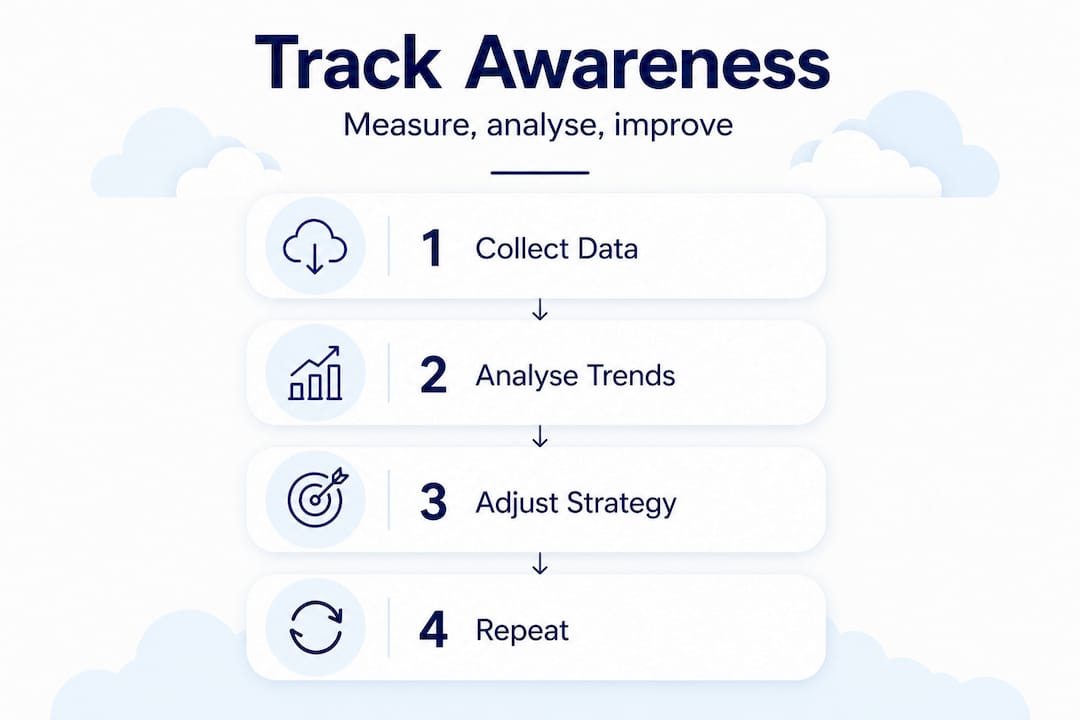
The iterative approach is simple: measure, analyse, adjust, and repeat. Don’t blow up your entire strategy because one thing didn’t work in week two. Give tactics time, track the right numbers, and make data-informed tweaks along the way.
Why most businesses underestimate brand awareness — and what to do differently
Here’s my hot take, and I stand by it: most small businesses undervalue brand awareness because it doesn’t feel like it’s directly making money. They want the sale. They want the conversion. They want the ROI they can point to in a spreadsheet. Brand awareness? That feels fluffy. Intangible. Hard to justify.
But that thinking is costing them. A lot.
When you skip the awareness stage and jump straight to “buy now” ads, you’re talking to strangers at a party and immediately asking for their credit card number. It’s awkward. It doesn’t work well. And it’s expensive because cold traffic converts terribly.
The businesses that invest consistently in brand awareness over time are the ones that find their paid advertising getting cheaper, their organic traffic growing, and their referrals increasing — not because they got lucky, but because familiarity breeds trust, and trust breeds conversions. It is a long game, but the compounding effect is very, very real.
Another mistake I see constantly? Shiny-object marketing. A business owner reads about a new platform, panics, and pivots their entire strategy to chase the latest trend. Six weeks later, they do it again. The result is a brand that looks completely different depending on where you find it, has no consistent message, and has built zero recognition with anyone.
The antidote is almost painfully boring: pick your core small business marketing strategies, commit to them, show up consistently, and resist the urge to reinvent yourself every month. The brands that win aren’t necessarily the most creative. They’re often just the most consistent.
Brand awareness is an investment, not an expense. And unlike that espresso machine you justified as “necessary for productivity,” this one actually pays you back.
Ready to elevate your brand awareness?
You’ve now got a solid foundation: what brand awareness really is, why it’s the bedrock of everything else, how to build it strategically, and how to measure whether it’s actually working. That’s genuinely a lot more than most business owners ever take the time to understand!
But knowing and doing are two very different things. If you’d like a real conversation about where your brand awareness stands right now and what to prioritise next, book a free marketing SOS call with the M50 Media team. No fluff, no hard pitch. Just practical marketing guidance tailored to your business. And if you’re ready to go deeper, explore the digital coaching services available to help you build a brand that genuinely stands out. Your future customers are already out there. Let’s make sure they can find you.
Frequently asked questions
What is the difference between brand recognition and brand recall?
Brand recognition is identifying a brand when shown its logo or name, while brand recall is remembering the brand without any prompts at all. Recall is the stronger indicator of true brand awareness.
How can a small business measure brand awareness on a budget?
You can track direct website traffic, monitor social media mentions, run simple email surveys, and use free analytics tools like Google Search Console and Google Alerts to get a clear picture without spending a dime.
Why is repetition important for building brand awareness?
Consumers typically need 5-7 impressions before they reliably remember your brand, which means a single touchpoint rarely does the job. Consistent, repeated exposure across multiple channels is what actually builds recall.
Is it possible to improve brand awareness without paid advertising?
Absolutely! Content marketing, social media engagement, community involvement, and local partnerships can all grow your brand awareness organically without spending a dollar on ads. It takes longer, but the results are often more durable.
Recommended
Comments