Harness video marketing to boost your small business: 93% ROI
- karl7209
- Mar 21
- 8 min read

Video marketing isn’t just for enterprises with massive budgets anymore. Small businesses using video report a 93% positive ROI, yet many owners still hesitate, believing it’s too expensive or complicated. The truth is simpler: with smartphones and free editing tools, you can create compelling videos that drive real results. This guide shows you exactly how to leverage video marketing strategically, from choosing the right content types to measuring what actually matters for growth.
Table of Contents
Key Takeaways
Point | Details |
SMB video ROI | Small businesses report a strong return on investment from video marketing when using smartphones and free editing tools. |
Short authentic videos | Short authentic videos that address real customer problems outperform slick corporate productions. |
Track key metrics | Track views, engagement, and leads to gauge growth and marketing impact. |
Channel integration boosts reach | Integrating video with other marketing channels amplifies reach and overall impact. |
Why video marketing matters for small businesses
The numbers tell a compelling story. 91% of businesses use video marketing, and among those who do, 93% report positive ROI. For small businesses specifically, video isn’t a luxury; it’s become essential for competing in crowded markets. When potential customers scroll through their feeds, video content stops them in their tracks far more effectively than static images or text alone.
The retention advantage is staggering. Video content achieves 95% message retention compared to just 10% for text, while boosting conversions by over 80%. That means your marketing message actually sticks when delivered through video, translating directly into sales and customer action. Small businesses leveraging video content for growth consistently outpace competitors relying solely on traditional content formats.
“Video marketing accelerates revenue growth by helping small businesses reach audiences who prefer visual, engaging content over reading lengthy product descriptions or service explanations.”
Consider these compelling reasons to prioritise video:
Brand visibility multiplies when platforms favour video content in their algorithms, giving you organic reach that text posts rarely achieve
Customer engagement deepens as viewers spend more time with your brand, building familiarity and trust through visual storytelling
Complex concepts simplify when demonstrated visually, making it easier to explain your products or services effectively
Search rankings improve because Google prioritises pages with video content, especially when properly optimised
Social sharing increases dramatically, as people share videos at rates far exceeding other content types
The misconception that video requires expensive equipment or professional crews keeps many small businesses on the sidelines. Reality proves otherwise. Your smartphone likely shoots better video than professional cameras from a decade ago, and free editing apps provide everything needed to create engaging content. The barrier isn’t technical capability; it’s simply getting started.
Core video marketing strategies for small businesses
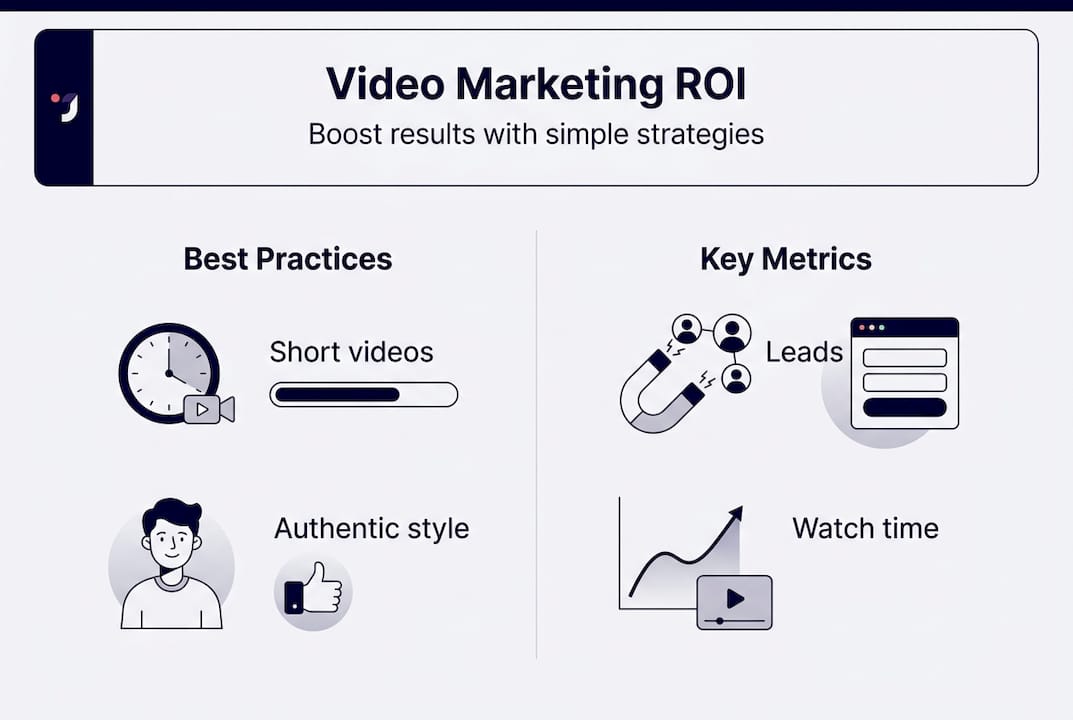
Success with video marketing doesn’t require a film degree or production studio. 59% of small businesses produce video content in-house using smartphones, focusing on short, authentic videos that resonate with their audiences. The shift towards genuine, relatable content means your DIY approach often outperforms slick corporate productions that feel disconnected from real customer experiences.
Authenticity trumps polish every time. Consistent value-first content outperforms highly polished content in both engagement and trust metrics. Customers want to see the real people behind your business, understand your genuine expertise, and connect with your authentic personality. A slightly shaky smartphone video where you’re genuinely helping someone solve a problem beats a perfectly lit corporate video that says nothing meaningful.
Here’s your strategic roadmap for creating effective video content:
Start with explainer videos that demonstrate how your products or services solve specific customer problems, keeping them under 90 seconds for maximum retention
Capture customer testimonials on your phone immediately after successful projects, when enthusiasm is genuine and stories are fresh
Create behind-the-scenes content showing your process, team, or how products are made to build transparency and connection
Develop educational content that positions you as an expert, teaching concepts related to your industry without overtly selling
Produce regular updates maintaining a consistent posting schedule, even if that’s just one quality video per week
Optimise for silent viewing by adding captions, since most social video plays without sound initially
Include clear calls-to-action directing viewers to specific next steps, whether visiting your website, booking a call, or making a purchase
Integrating video into your broader digital marketing plan ensures consistency across channels. Your video content should reinforce the same messages, values, and positioning you communicate through other marketing efforts. This cohesive approach, part of effective marketing strategies for small businesses, builds recognition and trust faster than scattered, inconsistent messaging.
Pro Tip: Record multiple short videos in a single session rather than trying to create one video at a time. Set up your space once, batch-record five to ten clips addressing different topics, then edit and release them over several weeks as part of your content marketing strategy.
Effectively measuring and integrating video marketing
Measuring video success requires focusing on metrics that actually drive business outcomes. Views alone mean nothing if they don’t convert to customers. The real indicators of effective video marketing are engagement rates showing people watch beyond the first few seconds, leads generated through video calls-to-action, and ultimately sales attributed to video touchpoints in your customer journey.

Measure views, engagement, and leads rather than chasing vanity metrics that look impressive but don’t correlate with revenue. A video with 10,000 views but zero conversions failed, whilst a video with 500 views generating 20 qualified leads succeeded brilliantly. Track the metrics that matter to your bottom line, not those that simply feed your ego.
Meaningful metrics | Vanity metrics |
Watch time percentage (how much people actually view) | Total view count alone |
Click-through rates on calls-to-action | Likes and superficial reactions |
Lead form completions from video | Follower count increases |
Revenue attributed to video touchpoints | Share counts without context |
Cost per acquisition through video campaigns | Impressions without engagement |
Integration multiplies video’s effectiveness exponentially. Integrate video with SEO, email marketing, and PR for optimal results rather than treating video as an isolated tactic. Embedding videos on your website improves dwell time and search rankings. Including videos in email campaigns can boost click rates by over 200%. Sharing video content through PR efforts generates backlinks and authority.
Your online marketing advantages compound when video works alongside other channels:
Email campaigns with embedded video thumbnails achieve higher open rates and dramatically better click-through performance
Website landing pages featuring video convert visitors at rates 80% higher than pages without video content
Social media posts incorporating video receive 48% more views and significantly more shares than image-only posts
Paid advertising campaigns using video creative typically achieve lower cost-per-click and better conversion rates
SEO strategies benefit from video content that increases time-on-page signals and generates natural backlinks
When planning your digital advertising efforts, consider how video assets can enhance performance across all channels. A single well-produced video can be repurposed into multiple formats: full-length for YouTube, 60-second cuts for Instagram, 15-second teasers for stories, and silent versions with captions for LinkedIn.
Pro Tip: Create a simple spreadsheet tracking which videos drive the most leads and sales, not just views. Review this data monthly to identify patterns in topics, formats, and lengths that resonate best with your specific audience, then double down on what’s working.
Budgeting and tools to make video marketing work for you
Budget concerns stop many small businesses from starting with video, yet the financial reality is far more accessible than most assume. 46% of small businesses allocate up to one-third of their marketing budget to video, with many finding that under $5,000 per year proves effective. You don’t need Hollywood budgets; you need strategic spending on the right tools and occasional expertise.
Starting costs can be minimal. Your existing smartphone likely shoots 4K video, free apps like CapCut or iMovie handle editing, and natural lighting costs nothing. Investing $200 in a basic tripod, lapel microphone, and ring light covers your essential gear. From there, budget growth should align with proven results, not aspirational plans.
Approach | Cost range | Pros | Cons |
DIY smartphone | $0-$500 | Authentic, immediate, no learning curve | Limited polish, time-intensive editing |
Semi-professional | $2,000-$5,000 | Better quality, professional editing software | Steeper learning curve, equipment investment |
AI-driven tools | $300-$1,500/year | Fast production, template-based, consistent output | Can feel generic, less authentic |
Outsourced production | $1,000-$10,000+ per video | Highest quality, professional storytelling | Expensive, less frequent content possible |
Artificial intelligence tools are transforming video creation accessibility. AI tools help reduce costs by automating editing, generating captions, and even creating videos from text prompts. However, human authenticity remains key to engagement, so use AI as a productivity enhancer rather than a complete replacement for genuine human connection.
Cost-effective tools worth exploring include:
Canva Video for template-based social media videos with professional graphics and transitions
Descript for editing video by editing text transcripts, making cuts incredibly intuitive
Loom for quick screen recordings and webcam videos, perfect for tutorials and explanations
InShot for mobile editing with professional features accessible on your smartphone
Animoto for turning photos and video clips into polished marketing videos quickly
Your digital advertising budget should include allocation for promoting your best-performing videos through paid channels. Organic reach is valuable, but strategic paid promotion ensures your strongest content reaches your ideal audience. Even $10 daily on Facebook or Instagram ads can significantly expand video reach when properly targeted.
Consider your overall marketing technology stack when budgeting. If you’re already evaluating website builders for small business, choose platforms with strong video hosting and optimisation capabilities built in. Integration saves money long-term by reducing the need for multiple separate tools.
Pro Tip: Allocate 70% of your video budget to content creation and 30% to promotion. The best video in the world achieves nothing if your target audience never sees it, so budget for strategic distribution alongside production costs.
How M50 Media supports your video marketing success
Implementing these video marketing strategies effectively requires both knowledge and accountability. That’s where expert guidance makes the difference between sporadic efforts and consistent results.

M50 Media’s coaching services provide personalised support tailored to your specific business, audience, and goals. Rather than generic advice, you’ll receive strategic guidance on which video types to prioritise, how to integrate video into your existing marketing, and exactly how to measure success. Whether you’re just starting with video or looking to optimise existing efforts, expert coaching accelerates your progress.
Need immediate direction? Book a free marketing SOS call to discuss your biggest video marketing challenges and get actionable next steps. These focused sessions help you cut through confusion and start implementing strategies that drive real business growth. Explore more resources and insights on the M50 Media blog to continue building your marketing expertise.
What is the role of video marketing for small businesses?
Why should small businesses invest in video marketing?
Video marketing delivers measurable ROI through improved brand visibility, higher engagement rates, and better conversion performance compared to text or image content alone. Small businesses using video consistently outperform competitors who rely solely on traditional marketing formats.
How much should a small business budget for video marketing?
Most small businesses succeed with annual video marketing budgets under $5,000, especially when producing content in-house using smartphones and free editing tools. Allocate roughly 70% to creation and 30% to strategic promotion for optimal results.
What types of videos work best for small businesses?
Short explainer videos, authentic customer testimonials, behind-the-scenes content, and educational videos demonstrating expertise perform best. Keep videos under 90 seconds for social media, focus on solving specific customer problems, and prioritise authenticity over production polish.
How do you measure video marketing success?
Track meaningful metrics like watch time percentage, click-through rates on calls-to-action, leads generated, and revenue attributed to video touchpoints. Avoid vanity metrics like total views or likes that don’t correlate with actual business outcomes.
Which platforms should small businesses use for video marketing?
Your platform choice should align with where your target audience spends time. YouTube works well for longer educational content, Instagram and Facebook excel for short engaging videos, LinkedIn suits professional B2B content, and TikTok reaches younger demographics effectively.
Recommended
Comments