What is digital branding: A 2026 guide for small business
- Naina Randhawa
- Mar 10
- 10 min read


Many small business owners believe digital branding is just choosing the right logo or colour palette. That’s a costly misconception. Digital branding encompasses your entire online identity, from messaging and user experience to reputation management across every digital touchpoint. This guide clarifies what digital branding truly means, distinguishes it from traditional methods, corrects common myths, and provides a practical framework you can apply immediately to build a strong, consistent brand that drives growth and loyalty.
Table of Contents
Key takeaways
Point | Details |
Digital branding extends beyond visuals | It includes messaging, user experience, and reputation management across all online platforms. |
Digital differs from traditional branding | Digital offers interactivity, personalization, and measurable data that static methods cannot provide. |
Common myths hinder effective branding | Many overlook strategic consistency, authentic engagement, and ongoing evolution as essential components. |
A structured framework simplifies planning | Following identity, messaging, experience, and engagement steps ensures cohesive brand development. |
Practical implementation drives results | Leveraging key channels with consistent messaging builds trust and visibility efficiently. |
Definition and key components of digital branding
Digital branding is the strategic process of shaping how your business is perceived online. It’s not just about aesthetics. Your brand encompasses messaging tone, user experience quality, and how you manage your reputation across digital platforms. Every interaction a customer has with your website, social media profile, email campaign, or digital advertisement contributes to their overall impression of your business.
Consistency across these touchpoints builds recognition and trust. When your visual identity, voice, and values align seamlessly, customers remember you and feel confident engaging with your business. Digital branding actively manages reputation in an environment where reviews, comments, and online conversations shape perceptions instantly.
Effective digital branding differentiates you from competitors by communicating what makes your business unique. It’s how you express your values, connect emotionally with your audience, and deliver on promises consistently. The key components include:
Visual identity: logos, colour schemes, typography, and imagery that create instant recognition
Messaging and voice: the tone, language, and stories that convey your values and resonate with your audience
User experience: how easy, enjoyable, and memorable interactions are across your digital properties
Reputation management: proactive monitoring and response to customer feedback and online conversations
Strategic positioning: clearly articulating your unique value and place in the market
These elements work together to create a cohesive brand experience. Miss one, and your brand feels incomplete or confusing.
Digital branding vs. traditional branding: Key differences
Traditional branding relies on static, physical touchpoints like print advertisements, billboards, business cards, and signage. These methods broadcast messages to broad audiences with limited ability to measure impact or adjust quickly. Digital branding operates in a fundamentally different environment.
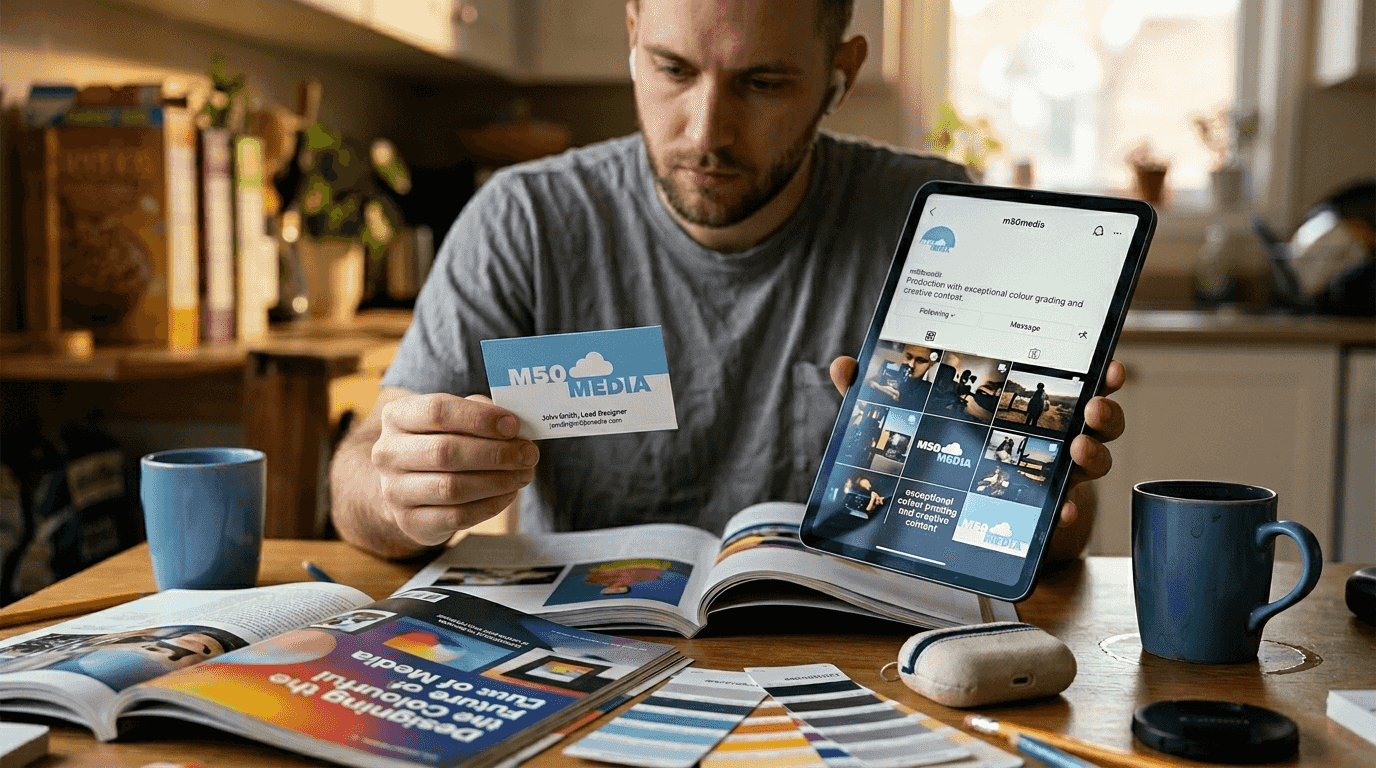
Digital platforms enable interactive, data-driven engagement that traditional methods cannot match. You communicate directly with customers through social media comments, email responses, and website chat. This two-way interaction builds relationships and trust in ways print materials never could.
Personalisation is another critical difference. Digital tools let you tailor messages and experiences to individual preferences, behaviours, and purchase history. Traditional branding delivers the same message to everyone, regardless of their specific needs or interests.
Data analytics transform how you develop and refine your brand. Website analytics, social media insights, and email metrics reveal what resonates with your audience and what doesn’t. You adjust strategies in real time based on evidence, not guesswork. Traditional branding offers minimal measurement and requires months to assess campaign effectiveness.
Aspect | Traditional Branding | Digital Branding |
Interaction | One-way broadcast | Two-way conversation |
Personalisation | Generic messaging | Tailored to individual preferences |
Measurement | Limited, delayed feedback | Real-time analytics and insights |
Flexibility | Static, slow to change | Dynamic, rapidly adjustable |
Cost | High production and distribution | Scalable, often lower barrier to entry |
Key differences include:
Speed: Digital campaigns launch instantly; traditional requires production time
Reach: Digital targets global audiences precisely; traditional focuses on local or broad demographics
Engagement: Digital fosters ongoing relationships; traditional creates momentary impressions
Adaptability: Digital pivots based on performance data; traditional commits to long print runs or media buys
Understanding these distinctions helps you allocate resources effectively and leverage digital’s unique strengths.
Common misconceptions about digital branding
Many small business owners stumble because they misunderstand what digital branding truly involves. Over 70% mistakenly believe it’s just logos or visual design. That narrow view causes them to overlook strategic and experiential elements that build lasting customer relationships.
Here are the most damaging misconceptions:
Digital branding is a one-time project: Many treat branding like a task you complete and forget. In reality, it’s an ongoing strategic effort requiring regular updates to reflect market changes, customer feedback, and evolving business goals.
Visuals are all that matter: Flashy graphics grab attention momentarily, but without consistent messaging, authentic voice, and positive user experience, they fail to build trust or loyalty.
Branding is only for large companies: Small businesses benefit immensely from clear, consistent branding. It levels the playing field, helping you compete against bigger players by establishing credibility and memorability.
Social media presence equals digital branding: Social media is one channel within a broader branding ecosystem. Your website, email communications, customer service interactions, and online reviews all contribute to your brand perception.
Branding doesn’t impact sales directly: Strong branding builds trust, which drives purchase decisions and customer retention. Customers pay more and remain loyal to brands they recognise and trust.
Pro Tip: Audit your digital touchpoints quarterly. Check whether your website, social profiles, and email campaigns communicate consistent values, tone, and visuals. Inconsistencies confuse customers and weaken trust.
Neglecting these realities causes missed opportunities. Businesses invest in attractive websites but fail to maintain consistent messaging, or they post sporadically on social media without strategic purpose. Effective digital branding integrates all elements cohesively to create a unified, trustworthy identity.
Digital branding conceptual framework
A structured framework simplifies digital branding by breaking it into manageable steps. Follow this sequence: Identity, Messaging, Experience, Engagement. Each step builds on the previous one, creating a cohesive brand that resonates with your audience.
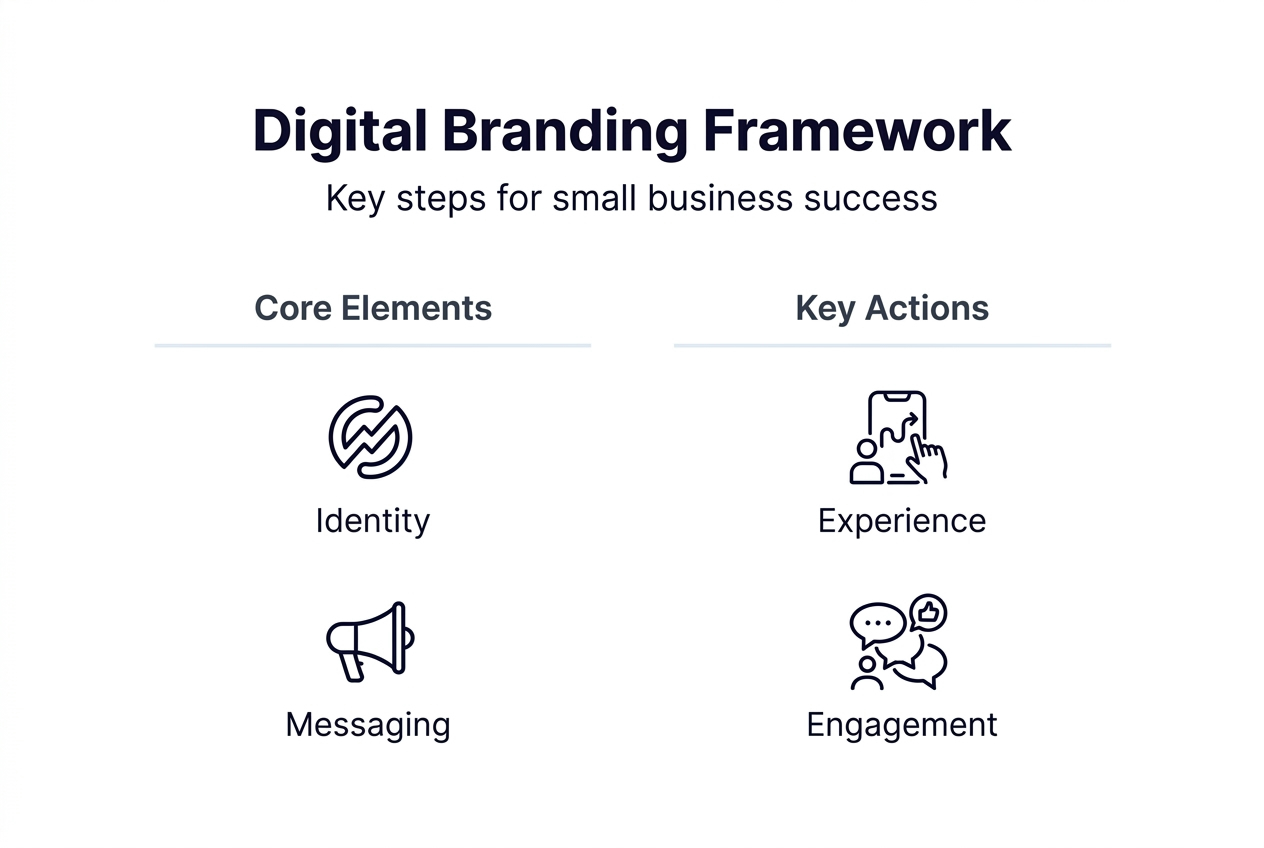
Identity defines who you are as a business. Clarify your core values, mission, and the personality you want to project. Establish visual standards including logos, colour palettes, and typography that reflect your values. Consistency here ensures customers recognise you instantly across platforms.
Messaging communicates your unique value to your target audience. Develop a clear brand voice that matches your identity, whether professional, friendly, authoritative, or playful. Craft key messages that explain what you offer, why it matters, and how you differ from competitors. Every piece of content should reinforce these messages.
Experience focuses on how customers interact with your brand online. Design your website for intuitive navigation, fast loading, and mobile responsiveness. Ensure social media profiles are complete, active, and engaging. Every touchpoint should feel seamless and reflect your brand’s quality standards.
Engagement fosters ongoing relationships through authentic communication. Respond promptly to comments, messages, and reviews. Share valuable content that educates or entertains your audience. Encourage conversations that build community and loyalty.
Using a stepwise framework reduces time to brand recognition by 30% and improves consistency across all channels. Here’s how these steps connect:
Framework Step | Key Activities | Expected Outcome |
Identity | Define values, mission, visual standards | Clear, recognisable brand foundation |
Messaging | Develop voice, key messages, content themes | Consistent communication across channels |
Experience | Optimise website, social profiles, user interactions | Seamless, positive customer touchpoints |
Engagement | Respond, share content, build community | Ongoing relationships and loyalty |
This framework ensures you address all critical branding dimensions systematically rather than haphazardly.
Implementation: How to build digital branding for your small business
Building a strong digital brand requires deliberate action across key channels. Start with the platforms where your audience spends time: your website, social media, and email marketing. Each channel plays a distinct role in your overall branding strategy.
Your website serves as your digital headquarters. Ensure it loads quickly, looks professional, and clearly communicates who you are and what you offer. Use consistent visuals and messaging that match your brand identity. Make navigation intuitive so visitors find information effortlessly.
Social media platforms let you engage directly with customers and showcase your brand personality. Choose platforms where your target audience is active rather than trying to maintain a presence everywhere. Post regularly with content that educates, entertains, or inspires while staying true to your brand voice.
Email marketing nurtures relationships by delivering personalised value directly to subscribers. Maintain consistent branding in email templates, subject lines, and content tone. Segment your audience to send relevant messages that respect their interests and needs.
Leveraging key channels with consistent messaging improves brand visibility and trust significantly. Follow these practical steps:
Audit existing digital assets to identify inconsistencies in visuals, messaging, or user experience
Create brand guidelines documenting your visual standards, voice, and key messages for reference
Update all digital properties to align with your brand guidelines, starting with high-traffic touchpoints
Develop a content calendar ensuring regular, strategic communication across channels
Monitor customer feedback and engagement metrics to refine your approach continuously
Pro Tip: Create templates for social media posts, email newsletters, and website updates that incorporate your brand elements. Templates save time while ensuring consistency, even when multiple team members contribute content.
Authenticity matters more than perfection. Customers connect with brands that feel genuine and human. Share behind-the-scenes glimpses, acknowledge mistakes openly, and celebrate customer successes. If immediate challenges arise, book a free Marketing SOS call to get expert guidance tailored to your situation.
Regularly review your branding performance. Are customers recognising you more easily? Are engagement rates improving? Adjust based on what the data reveals. Digital branding is iterative, not static.
Ongoing evolution and future trends in digital branding
Digital platforms and consumer preferences shift constantly. What worked last year may feel outdated today. Successful brands adapt continuously to maintain relevance and competitiveness. Failing to evolve means losing ground to more agile competitors.
New tools emerge regularly, offering deeper personalisation and better customer insights. Artificial intelligence enables sophisticated audience segmentation and predictive analytics. Video content dominates engagement metrics across platforms. Interactive experiences like polls, quizzes, and live streams create memorable brand moments.
Staying current with digital platforms enables personalization advantages that strengthen customer relationships. Regularly audit your brand presence across all digital channels. Check whether your messaging still resonates, your visuals feel fresh, and your user experience meets current expectations.
Adapt your messaging to reflect cultural and market shifts. Social issues, economic conditions, and industry trends influence how customers perceive brands. Remaining tone-deaf to these changes damages credibility. Stay informed and adjust your communication accordingly.
Future-proofing your brand requires balancing consistency with flexibility. Core values and identity should remain stable, providing a recognisable foundation. Tactical elements like visual styles, content formats, and platform strategies can evolve as needed.
Key considerations for ongoing evolution:
Monitor emerging platforms where your audience migrates and establish presence early
Experiment with new content formats like short-form video, podcasts, or interactive media
Invest in tools that automate repetitive tasks while maintaining brand consistency
Solicit customer feedback regularly to understand shifting expectations and preferences
Review competitor branding strategies to identify gaps and opportunities for differentiation
Long-term customer loyalty depends on your ability to stay relevant without losing your identity. Brands that adapt thoughtfully thrive. Those that cling to outdated approaches fade.
How M50 Media supports your digital branding journey
Building a cohesive digital brand feels overwhelming when you’re managing daily business operations. M50 Media simplifies this process with expert coaching tailored to small business needs. Our digital coaching services guide you through developing authentic, consistent branding that reflects your unique values and resonates with your audience.
Facing immediate branding challenges? Our free Marketing SOS calls provide quick, actionable solutions to troubleshoot specific issues holding you back. Whether you’re struggling with inconsistent messaging, unclear positioning, or platform strategy, we help you find clarity fast.
Explore the M50 Media blog for ongoing insights, strategies, and practical resources covering all aspects of digital marketing and branding. We’re committed to helping small business owners like you grow confident, effective online presences that drive real business results.
Frequently asked questions
What is the difference between digital branding and digital marketing?
Digital branding defines your unique online identity and shapes how customers perceive your business. It establishes your values, voice, and visual presence across digital platforms. Digital marketing uses tactics like advertising, email campaigns, and content promotion to drive immediate actions such as purchases or sign-ups. Branding builds long-term trust and recognition, while marketing generates short-term results and conversions.
How can small businesses measure the success of their digital branding?
Track brand recognition growth by monitoring how often customers mention your business name, recall your messaging, or recognise your visuals without prompting. Measure customer trust through review ratings, testimonial frequency, and repeat purchase rates. Analyse website analytics and social media metrics to assess engagement quality, time spent on site, and content shares. Regularly gather customer feedback through surveys or direct conversations to understand perception changes and identify improvement areas.
What are the most common mistakes to avoid in digital branding?
Inconsistent brand identity across platforms confuses customers and weakens recognition. Many businesses focus exclusively on logos while neglecting messaging, tone, and user experience, creating incomplete brand impressions. Failing to update branding regularly makes businesses appear stagnant or out of touch. Ignoring audience needs and feedback erodes trust and damages relationships. Overlooking authentic engagement in favour of one-way broadcasting misses opportunities to build community and loyalty.
How long does it take to build a strong digital brand?
Building initial brand recognition typically requires three to six months of consistent effort across key digital channels. Establishing deep trust and loyalty takes longer, often twelve to eighteen months, as customers need repeated positive experiences to form strong associations. The timeline varies based on your industry, competition, target audience size, and resource investment. Consistency matters more than speed; regular, aligned communication builds brands more effectively than sporadic, intense campaigns.
Should small businesses hire professionals for digital branding?
Professional guidance accelerates branding development and avoids costly mistakes, especially if you lack marketing expertise or time. Experts bring strategic frameworks, industry insights, and technical skills that produce better results faster. However, many small businesses successfully build brands independently using available resources, templates, and educational content. Assess your budget, timeline, and comfort level with marketing concepts. Even if you handle most branding internally, consulting professionals for initial strategy or periodic audits provides valuable perspective and course correction.
Recommended
Comments