Why build a business blog for small business growth in 2026


Small businesses struggle to attract customers without massive advertising budgets. Yet companies with blogs attract 55% more visitors than those without, proving blogging remains a powerful, cost-effective tool. A business blog transforms your website into a magnet for potential customers by publishing helpful content that answers their questions. As online research dominates buyer behaviour in 2026, blogging positions your small business to capture attention, build trust, and drive sustainable growth through strategic digital marketing.
Table of Contents
Key takeaways
Point | Details |
Organic traffic boost | Blogs improve SEO rankings and attract qualified visitors actively searching for your solutions. |
Trust and authority | Answering customer questions positions your business as an expert, increasing purchase likelihood. |
Cost-effective marketing | Blog content generates lasting traffic and supports multiple channels with lower upfront investment. |
Quality over quantity | Thoughtful, authentic posts outperform frequent, shallow content in today’s market. |
Clear framework needed | Defining purpose, researching keywords, and consistent publishing drive blogging success. |
How blogging drives organic traffic and SEO
Search engines reward websites that publish fresh, valuable content regularly. When you create blog posts targeting specific customer questions, you build a library of indexed pages that improve your site’s overall visibility. Each article becomes a new entry point for potential customers searching online.
Long-tail keywords capture niche audiences with stronger buying intent. Rather than competing for broad terms like “marketing services,” targeting phrases like “email marketing tips for restaurants” attracts visitors closer to making decisions. These searchers often convert at higher rates because they have specific needs matching your expertise.
Small businesses with blogs attract 55% more visitors compared to those without because consistent content signals authority to search algorithms. Unlike social media posts that disappear quickly, blogs help businesses be discovered by customers actively searching for solutions, creating sustainable traffic growth.
Search traffic quality matters more than quantity:
Visitors arriving via search have specific intent, making them more likely to engage
Blog content answers questions at different stages of the buying journey
Multiple indexed pages increase chances of appearing in relevant searches
Internal linking between posts keeps visitors exploring your site longer
Traffic Source | Visitor Intent | Conversion Potential |
Organic search | High (active research) | Strong |
Social media | Medium (passive browsing) | Moderate |
Paid ads | Variable | Depends on targeting |
Direct traffic | High (brand aware) | Very strong |
Understanding why invest in SEO helps you allocate resources effectively. Tools like SEO Quake reveal keyword difficulty and competition levels, guiding your content strategy toward achievable wins.
Pro Tip: Target 3 to 5 long-tail keywords per post rather than stuffing content with dozens of terms. This focused approach improves readability while signalling clear topical relevance to search engines.
Building brand trust and authority through blogging
Customers research extensively before purchasing, especially from small businesses they haven’t worked with before. Your blog becomes a showcase of expertise, demonstrating you understand their challenges and possess solutions worth investing in.

When you consistently publish helpful content, readers develop familiarity with your brand voice and values. This relationship building happens gradually but powerfully. Blogs establish brand authority by answering questions and sharing expertise, significantly increasing trust and purchase likelihood.
Effective trust-building content includes:
Case studies showing real results you’ve achieved for clients
Behind-the-scenes insights into your processes and quality standards
Educational guides that solve common customer problems
Honest discussions of industry challenges and how you address them
About 6 in 10 shoppers decide to buy based on blog recommendations, highlighting content’s persuasive power. Rather than pushing sales messages, valuable posts attract customers who already recognise their need for your services. Understanding the role of blogs in branding clarifies how content shapes perception and differentiates you from competitors.
Authenticity separates memorable blogs from forgettable ones. Share your perspective, admit when solutions are complex, and celebrate customer successes genuinely. Readers detect and appreciate honesty, which translates to loyalty over time.
Pro Tip: Create a resource library by categorising blog posts by customer pain point or buying stage. This organisation helps visitors find exactly what they need, positioning you as their go-to expert.
Blogging as a cost-effective marketing tool
Traditional advertising requires ongoing investment to maintain visibility. Once you stop paying, traffic disappears. Blog posts work differently because they generate compound returns, attracting visitors months or years after publication.
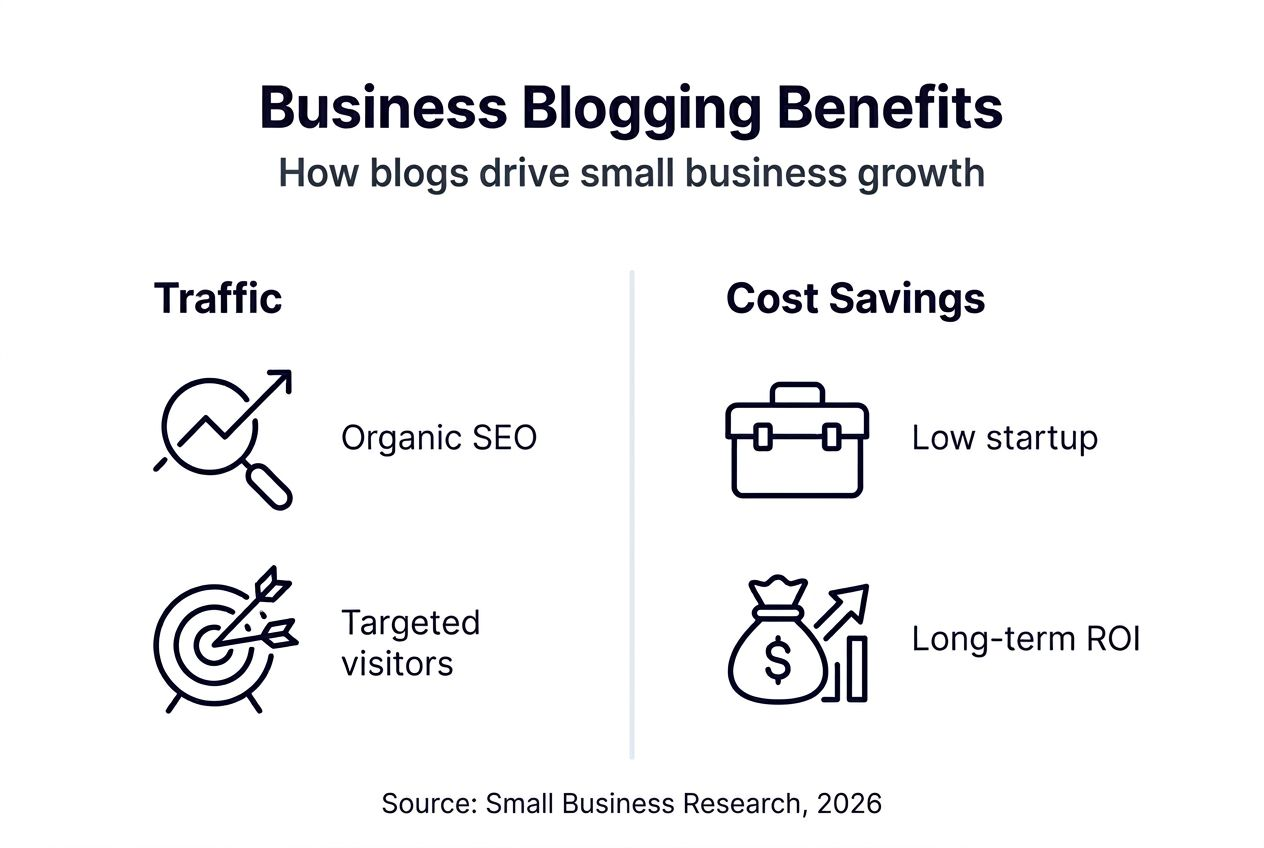
A single well-optimised article can drive hundreds of visitors monthly without additional spending. Multiply this across dozens of posts and you build a traffic engine that scales efficiently. Despite assumptions blogging is obsolete, blogs with clear purpose and genuine usefulness outperform competitors.
Financial advantages of business blogging:
Lower barrier to entry compared to paid advertising campaigns
Content can be repurposed for email newsletters and social posts
Cumulative traffic growth as your archive expands
Owned asset that builds equity rather than rented ad space
Supports multiple marketing channels simultaneously
Your blog feeds other marketing efforts naturally. A comprehensive guide becomes a lead magnet for email collection. Key points from articles supply social media content for weeks. Customer service teams reference blog posts when answering common questions, saving time while maintaining consistency.
Compare this versatility to a single ad campaign with fixed messaging and limited lifespan. The social media advertising guide shows how paid and organic strategies work together, but blogging provides the foundation that makes all tactics more effective.
Startup costs involve primarily time and potentially a content management system. Many small businesses handle writing internally or outsource affordably. Either approach costs substantially less than sustained advertising budgets while building lasting value.
Common misconceptions and challenges in business blogging
Many entrepreneurs hesitate to start blogs based on outdated assumptions or incomplete information. Addressing these misconceptions helps you approach blogging with realistic expectations and effective strategies.
Myth versus reality:
Misconception | Reality |
Blogging is dead due to social media | Companies maintaining blogs outperform those abandoning them |
More posts equal better results | Quality and depth now outweigh quantity for rankings and engagement |
Blogging takes too much time | Strategic posting yields long-term returns exceeding time investment |
AI makes human blogs unnecessary | Authenticity and expertise remain irreplaceable for trust building |
The content landscape has evolved, not disappeared. Video and social platforms complement blogs rather than replace them. Each format serves different purposes in your overall marketing mix. Blogs provide depth and discoverability that short-form content cannot match.
Quality standards have risen significantly. Search engines and readers both demand substantial value, not keyword-stuffed fluff. This shift favours thoughtful small businesses willing to share genuine expertise over content farms publishing volume without insight.
Time management challenges are real but surmountable. Batch writing sessions, editorial calendars, and content repurposing strategies help maintain consistency without overwhelming schedules. Start with one quality post monthly rather than attempting unsustainable frequency.
Pro Tip: Document your answers to frequent customer questions as blog drafts. You’re already explaining these concepts regularly, so capturing and polishing them creates content efficiently while ensuring relevance.
Practical steps and framework for successful business blogging
Starting a blog without strategy leads to frustration and abandonment. Follow this framework to build momentum and achieve measurable results systematically.
1. Define your blog’s purpose and audience
Align content with business goals like lead generation, customer education, or establishing thought leadership. Identify your ideal reader’s challenges, questions, and information needs. Clear purpose guides every content decision forward.
2. Conduct keyword research
Discover what your customers actually search for using tools like Google Keyword Planner or Ubersuggest. Prioritise long-tail keywords with moderate search volume and manageable competition. These terms reveal specific problems you can address comprehensively.
3. Create high-quality, helpful content
Focus each post on solving one problem thoroughly rather than skimming multiple topics superficially. Use clear structure with headings, short paragraphs, and formatting that aids scanning. Include examples, data, and actionable takeaways that readers can implement immediately.
4. Promote strategically
Share new posts via email newsletters to existing contacts. Adapt key points for social media updates linking back to full articles. Guest posting on relevant industry sites builds backlinks and expands reach. Understanding content marketing drives 20% more leads demonstrates promotion’s importance.
5. Analyse and optimise
Track metrics like organic traffic, time on page, and conversion rates. Identify top-performing posts and create similar content. Update older articles with fresh information to maintain rankings. Regular analysis reveals what resonates with your audience.
Common pitfalls to avoid:
Inconsistent publishing schedule that loses reader trust
Ignoring SEO basics like meta descriptions and internal linking
Writing for yourself rather than addressing customer needs
Abandoning blogs after a few months before seeing results
An editorial calendar maintains consistency and reduces decision fatigue. Plan topics quarterly, accounting for seasonal trends and business priorities. This structure lets you batch research and writing efficiently. Explore the digital marketing plan guide for broader strategic context.
Review effective marketing strategies to ensure blogging integrates with other tactics. Visit business blog examples for inspiration on topics, formats, and voice that engage small business audiences.
Grow your small business with expert digital coaching
Building an effective blog requires strategy, consistency, and adaptation to changing best practises. Professional guidance accelerates your progress while avoiding costly mistakes.

Our digital coaching services help you implement and optimise blogging strategies tailored to your business goals. Whether you’re launching your first blog or revitalising an existing one, personalised coaching addresses your specific challenges and opportunities.
Schedule a free marketing SOS call to discuss your blogging questions and receive actionable advice. These consultations identify quick wins and long-term strategies suited to your resources and market position.
Explore additional business coaching and blog resources covering content creation, SEO optimisation, and digital marketing integration. Small businesses succeed when equipped with knowledge and support for consistent execution.
Frequently asked questions
How long does it take to see results from a business blog?
Most businesses notice initial traffic increases within 3 to 6 months of consistent publishing. Rankings improve gradually as search engines index your content and recognise your site’s growing authority. Significant lead generation typically emerges between 6 to 12 months as your article library expands and older posts gain momentum.
What are the biggest mistakes to avoid when starting a business blog?
Skipping planning and posting sporadically are the most common failures. Without clear strategy, content drifts off-target and fails to serve business goals. Prioritising quantity over quality creates shallow posts that neither rank well nor engage readers. Start with realistic publishing frequency you can maintain long-term.
How can blogs generate leads for small businesses?
By addressing customer questions and pain points, blogs attract targeted visitors actively seeking solutions. Strategic calls to action within posts encourage visitors to subscribe, download resources, or request consultations. Content marketing drives 20% more leads when aligned with customer journey stages and supported by conversion-optimised design.
Is blogging still relevant with the rise of social media and video content?
Absolutely. Companies maintaining blogs outperform those abandoning them because blogs provide lasting, searchable content. Social media and video complement blogs by expanding reach and engagement formats. Thoughtful blogs remain essential for SEO, detailed education, and building customer trust through depth impossible in short-form content.
Recommended
Comments