Boost engagement and sales: storytelling's power in marketing

Everyone loves a good story. But here’s the thing: just because you’re telling one doesn’t mean it’s working. Not all storytelling works in marketing, and plenty of small business owners have learned that the hard way. You can craft the most beautifully written brand origin story, post it everywhere, and still hear crickets. So what separates the stories that actually drive sales and engagement from the ones that just… exist? Spoiler: it’s not about how dramatic your journey was. It’s about whether your story means something to your customer.
Table of Contents
Key Takeaways
Point | Details |
Customer relevance is key | Focus your stories on what matters most to your audience for better results. |
Authenticity drives trust | Ensure your brand stories align with your true values and mission. |
Structure stories for impact | Use clear, relatable narratives with a beginning, conflict, and resolution. |
Small steps deliver big gains | Start integrating storytelling into social posts, emails, and your website now. |
Measure and improve | Track engagement and tweak your stories based on real audience reaction. |
What is storytelling in marketing?
Let’s clear something up right away. Storytelling in marketing is not the same as storytelling around a campfire (though both can involve s’mores, theoretically). Classic storytelling is about entertainment. Marketing storytelling is about connection, and more specifically, about making your customer the hero.
In marketing, storytelling must centre on customer meaning, not just entertainment. That’s a big distinction. Your brand’s story only matters if it reflects something your audience genuinely cares about.
So what does an effective marketing story actually look like? It has three core components:
Purpose: Why does this story exist? What problem does it solve for your customer?
Structure: A clear beginning, middle, and end. Setup, conflict, resolution. Think less novel, more Netflix episode.
Authenticity: It has to be real. Customers can smell a fabricated story faster than burnt toast.
“The best brand stories don’t start with ‘let me tell you about us.’ They start with ‘here’s what we understand about you.’”
When you nail these elements, storytelling becomes a form of benefit-driven marketing that builds genuine emotional connection. And emotional connection? That’s what turns browsers into buyers. Pair that with smart content marketing strategies and you’ve got a real engine for growth.
Why storytelling matters: Benefits for engagement and sales
Okay, so storytelling sounds great in theory. But does it actually move the needle? Yes. Measurably. Significantly. Stories make information up to 22 times more memorable than plain facts alone. That’s not a small edge, that’s a cheat code.

But here’s the catch: misapplied storytelling risks hollow results if it’s not rooted in internal brand coherence. In other words, if your story doesn’t match your actual values and customer experience, it backfires. Hard.
When done right, storytelling delivers some seriously good outcomes:
Deeper engagement across social, email, and video
Stronger emotional resonance that keeps customers coming back
Higher conversion rates because people buy from brands they trust
Increased word-of-mouth because great stories get shared
Better brand recall, which matters when your customer is finally ready to buy
Look at high-ROI social campaigns that have crushed it in recent years. The common thread? They told stories their audience already wanted to believe. And video marketing impact is especially powerful here, since video lets you layer emotion, visuals, and narrative all at once.
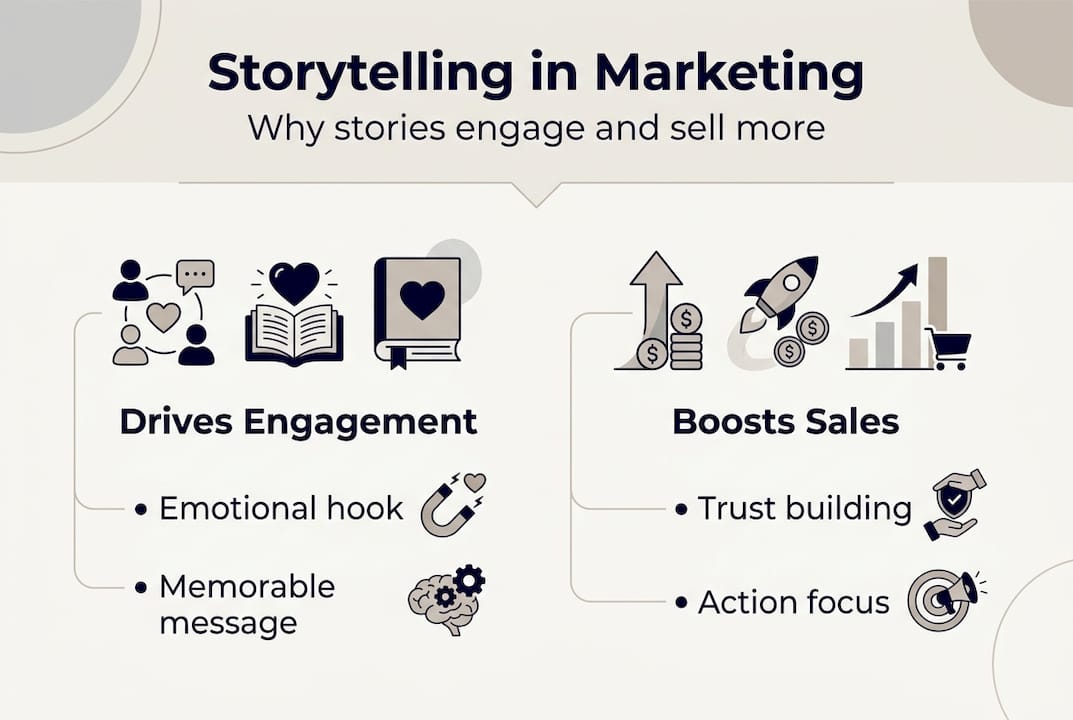
Pro Tip: Don’t tell the story of your brand. Tell the story of your customer’s transformation. Your product or service is the guide, not the main character.
How to build a compelling marketing story
Ready to actually build one? Good. Here’s a framework that works even if you’re a one-person operation running on coffee and determination.
Know your audience first. Before you write a single word, get clear on who you’re talking to. What do they struggle with? What do they want? What keeps them up at night?
Clarify your core message. What is the one thing you want your audience to feel or understand after hearing your story? One thing. Not five.
Build your structure. Use the classic setup, conflict, resolution arc. Setup: here’s the world before. Conflict: here’s the problem. Resolution: here’s how things changed.
Add an emotional hook. Facts inform, but emotions motivate. Find the moment in your story that makes someone feel something, relief, hope, excitement, recognition.
Align with your brand values. Stories must align with organisational values and not diverge from core purpose. If your story contradicts how you actually operate, trust evaporates instantly.
Pro Tip: Before you publish, test your story with a real customer or two. Ask them what they felt, not what they thought. Feelings are the data point that matters most here.
Once you’ve got your story, think about where it lives. Advertising with narrative can amplify your reach significantly, and video storytelling tips can help you translate your story into formats that perform.
Common pitfalls: When storytelling fails in marketing
Not every brand story lands. Some crash and burn spectacularly (and not in the fun, viral way). Here’s a quick comparison of what works versus what doesn’t:
Effective storytelling | Ineffective storytelling |
Customer is the hero | Brand is the hero |
Rooted in real values | Feels performative or forced |
Consistent across channels | Changes tone and message constantly |
Solves a real customer problem | Focuses on brand achievements |
Emotionally resonant | Emotionally flat or generic |
Storytelling for the sake of storytelling, without customer meaning, leads to hollow results. It’s the marketing equivalent of a speech that sounds great but says absolutely nothing.
Here are the most common pitfalls to watch out for:
Lack of authenticity: If it feels scripted or exaggerated, your audience will tune out faster than a bad reality TV episode.
Excessive brand focus: Nobody woke up this morning wanting to hear about your company’s founding year. They want to know what you can do for them.
Inconsistency: Telling one story on Instagram and a completely different one in your emails is confusing and erodes trust.
Copying other brands: What works for a global sneaker company probably won’t work for your local bakery. Stay in your lane.
Performative values: Claiming values your business doesn’t actually live by is a fast track to a PR nightmare.
The fix? Always focus on benefits and keep your customer’s reality at the centre of every story you tell.
Real-world success: Case studies of storytelling done right
Let’s look at some examples that show what customer-centric storytelling actually produces in the real world.
Company | Campaign approach | Result |
Local fitness studio | Shared member transformation stories on social media | 40% increase in new memberships over 3 months |
Boutique skincare brand | Email series featuring real customer skin journeys | 3x higher click-through rate vs. product-only emails |
Independent coffee roaster | Behind-the-scenes farmer partnership story on video | 60% boost in online sales and strong community loyalty |
What do these have in common? Companies prioritising customer meaning over narrative tactics see greater success. Every single one of these campaigns put the customer’s experience, values, or transformation front and centre.
Best practices pulled from these examples:
Use real voices (testimonials, interviews, user-generated content)
Show the before and after, not just the after
Connect your product to a larger value your audience already holds
Keep the story specific, not vague and generic
For more inspiration, check out ROI-boosting campaigns and content marketing wins that small businesses have pulled off brilliantly. You can also explore brand localisation success stories for a global perspective on what resonates.
How to start: Simple steps for integrating storytelling today
Inspired? Great. Overwhelmed? Also valid. Here’s the good news: you don’t need a massive budget or a film crew to start using storytelling in your marketing. You just need to start small and stay focused.
Start small, focus on meaning, and align stories with your customers’ needs. That’s the whole game, honestly.
Here’s your five-step action plan:
Rewrite your About page. Make it about the problem you solve for customers, not a timeline of your business history.
Share one customer success story on social media this week. Keep it real, keep it specific, keep it short.
Add a before-and-after narrative to your next email campaign. Show the transformation your product or service creates.
Record a short video (even on your phone) telling the story of why you started your business and who you started it for.
Measure the response. Track comments, shares, replies, and clicks. Let your audience tell you what resonates.
Pro Tip: Customer testimonials are storytelling gold. Ask your happiest clients to describe their experience in their own words, then share those stories with minimal editing. Authenticity beats polish every time.
Once you’ve got some momentum, lean into benefit-first messaging across all your channels to keep the story consistent and compelling.
Take your storytelling further with expert marketing support
You’ve got the framework, the examples, and the action plan. But sometimes knowing what to do and actually doing it well are two very different things (we’ve all been there). If you’re ready to go beyond the basics and build a storytelling strategy that genuinely drives results, expert guidance can make all the difference.
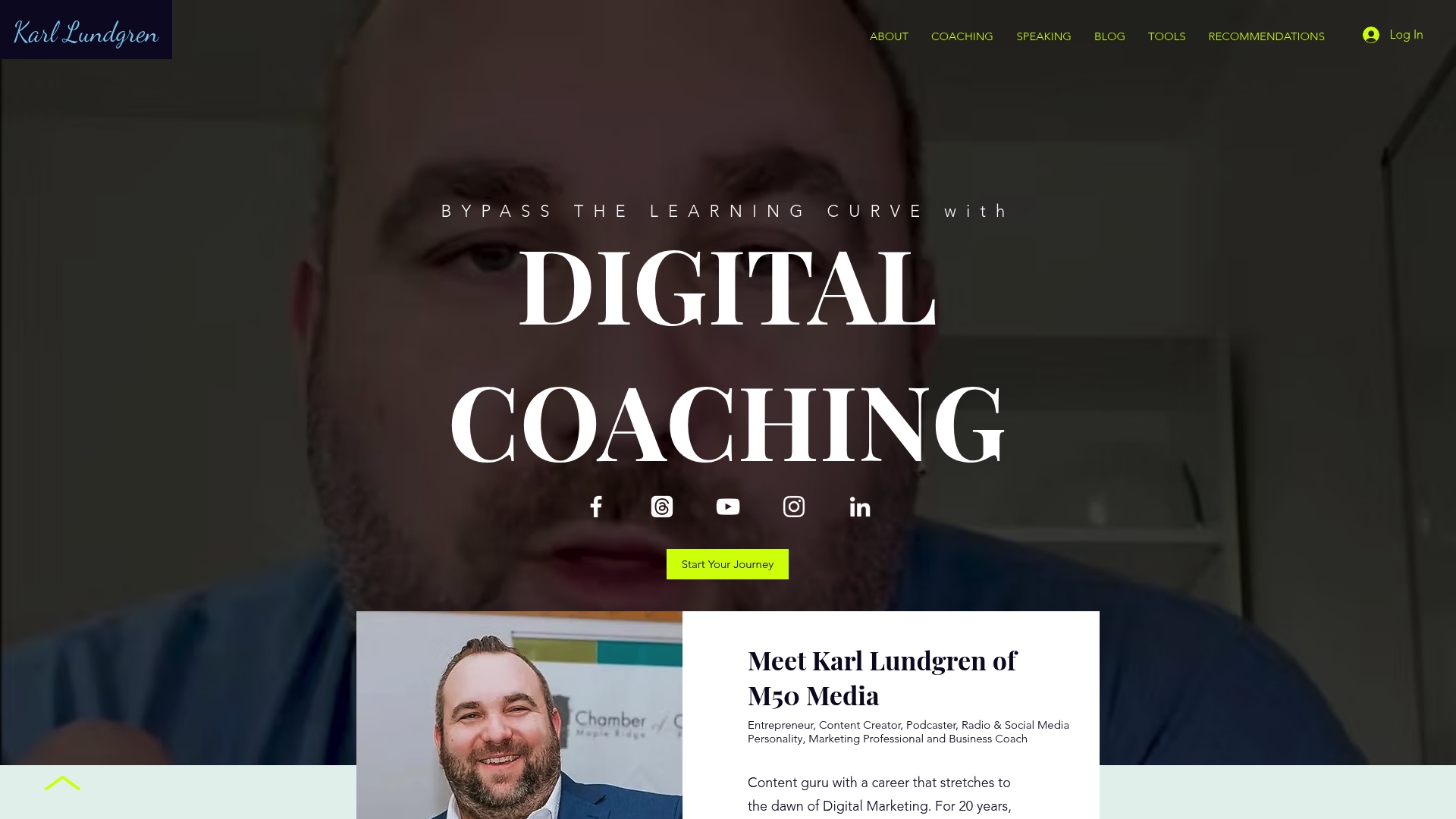
At M50 Media, Karl Lundgren works directly with small business owners to develop marketing strategies that connect, convert, and actually feel like you. Whether you want ongoing support through personalised business coaching or just need a quick gut-check on your current approach, a free marketing SOS call is the perfect place to start. No pressure, no jargon, just real talk about what’s working and what isn’t. Your story deserves to be heard by the right people.
Frequently asked questions
What is the most important element of storytelling in marketing?
Customer relevance is the most crucial element. Customer meaning should drive storytelling tactics, meaning your story only works if it connects to what your audience genuinely cares about.
How do I know if my brand story is effective?
Track engagement metrics like comments, shares, and click-throughs after sharing your story. Meaningful, customer-centric storytelling delivers measurable growth, so positive audience actions are your clearest signal.
Can storytelling be used in digital marketing channels?
Absolutely. Storytelling works across social media, email campaigns, your website, and video content when you adapt the format and length to suit each platform.
What should I avoid in marketing storytelling?
Avoid vague, inauthentic stories or ones that don’t reflect your actual values and customer realities. Performative stories not rooted in real brand values tend to backfire and erode the trust you’ve worked hard to build.
Recommended
Comments