Marketing automation examples for small businesses

TL;DR:
Marketing automation uses software-driven workflows to deliver personalized messages, saving small businesses time and boosting conversions.
Starting with core automations like welcome emails, abandoned cart recovery, and win-back campaigns provides immediate high ROI and valuable behavioral data.
Effective automation integrates multi-channel triggers, AI signals, and customer journey mapping to enhance relationships and revenue.
Marketing automation is defined as software-driven workflows that trigger personalised messages and tasks based on customer behaviour, saving small businesses hours of manual work while improving conversion rates. If you’ve ever wished you had a clone to follow up on every lead, send every welcome email, and nudge every abandoned cart shopper, well, marketing automation is basically that clone (minus the existential crisis). Platforms like ActiveCampaign, Dotdigital, and Customer.io have made these automated marketing strategies accessible to businesses of every size. The marketing automation examples in this article are real, proven workflows you can steal, adapt, and launch without a developer or a six-figure budget.
1. Welcome email series

The welcome email series is the single most important automation you can set up, full stop. Triggered welcome emails personalised by subscriber data consistently outperform batch-and-blast campaigns on every engagement metric. Think of it as your digital handshake. A new subscriber joins your list, and within minutes they receive a warm, on-brand email that sets expectations, delivers a promised lead magnet, and introduces your best content. A three-part welcome series over seven days typically outperforms a single welcome email by a significant margin, because it gives new contacts multiple touchpoints to build trust before you ask for anything.
2. Abandoned cart recovery
Abandoned cart automation is the closest thing to free money in ecommerce. A shopper adds items to their cart, gets distracted by a cat video, and leaves. Your automation fires a reminder email within one hour, followed by a second email 24 hours later with social proof, and a third at 72 hours with a small incentive. High-leverage workflows like abandoned cart recovery are among the top revenue-generating automations for online retailers. For small businesses, even recovering a handful of carts per week compounds into meaningful annual revenue.
Pro Tip: Add a “still thinking about it?” subject line to your second abandoned cart email. It reads like a human sent it, and that casual tone tends to lift open rates noticeably.
3. Lead scoring and routing
Lead scoring is the practice of assigning points to contacts based on their behaviour, such as opening emails, visiting pricing pages, or downloading a guide, and then routing high-scoring leads to your sales team automatically. Lead scoring pipelines automate form submissions through to sales follow-up within 24 hours, which dramatically improves speed-to-lead and conversion rates. Without scoring, your sales rep is calling everyone equally, which is like a doctor treating every patient the same regardless of symptoms. With scoring, they focus only on contacts who have already shown buying intent.
4. Win-back campaigns
Every business has a graveyard of lapsed customers who simply drifted away. A win-back automation targets contacts who haven’t engaged in 60, 90, or 180 days with a sequence designed to rekindle the relationship. Lifecycle automations like win-back campaigns are among the highest-impact workflows for small businesses because re-engaging an existing customer costs far less than acquiring a new one. A good win-back sequence might include a “we miss you” email, a personalised offer based on past purchases, and a final “should we part ways?” message that creates urgency. That last one sounds dramatic, but it works.
5. Cross-sell and upsell automations
Once a customer buys, the conversation shouldn’t end. Cross-sell and upsell automations trigger post-purchase emails that recommend complementary products or upgrades based on what the customer just bought. If someone purchases a camera, an automation can suggest a memory card, a carrying case, or a photography course within days of their order. Workflow triggers and channel strategies for post-purchase sequences are well-documented, and the data consistently shows that customers who receive relevant follow-up offers spend more over their lifetime. This is one of the simplest examples of automation in marketing that directly lifts average order value.
6. AI-driven autonomous email engine
This is where things get genuinely exciting. An autonomous email engine uses real-time data signals, like contract end dates, engagement history, and potential savings, to determine the exact right moment to send a personalised message. ElectricityRates.com built a workflow around a Switch Readiness Score that analysed multiple data points to auto-personalise rate-change emails at optimal times, resulting in a 200% increase in conversions with only a 0.2% unsubscribe rate. That is not a typo. Two hundred percent. For small businesses, the lesson is that AI-powered context signals can replace generic broadcast emails with messages that feel like they were written specifically for each recipient.
“The autonomous email engine treats every contact as an audience of one, firing messages only when the data says the customer is ready to act.” — ActiveCampaign AI Lab
7. Behavioural trigger automations
Behavioural triggers fire automations based on specific customer actions, like clicking a particular link, visiting a product page three times, or watching a video to completion. Real-time cross-channel orchestration across email, SMS, push notifications, and in-app messaging means you can reach customers on their preferred channel the moment they signal intent. This is not about being creepy. It’s about being relevant. A contact who visits your pricing page twice in one week is telling you something. An automated follow-up email with a case study or a limited-time offer at that moment converts far better than a generic newsletter sent on Tuesday morning.
8. Lifecycle stage automations
Lifecycle automation maps your customer journey into stages, such as new subscriber, active buyer, loyal customer, and at-risk contact, and assigns different automated workflows to each stage. Onboarding sequences educate new customers. Retention sequences reward loyal ones. Re-engagement sequences target at-risk contacts before they churn. Marketing automation works best when lifecycle-triggered workflows are applied at every stage, because each stage has different customer needs and different messages that resonate. Think of it like a choose-your-own-adventure book, except the automation does the choosing based on real behaviour.
9. Journey-based multi-channel sequencing
Journey-based sequencing combines geo-targeting, behavioural data, and sequential messaging across multiple touchpoints to create a cohesive customer experience. The Erceflora campaign is a standout case study here. Their journey-based media system used travel data and sequenced messaging across touchpoints to achieve a 265% increase in ecommerce growth during the campaign period. That kind of result comes from treating automation as a connected system rather than a series of isolated emails. For small businesses, even a simplified version of this approach, such as combining email with SMS reminders, can produce outsized results.
10. Lead-to-revenue pipeline automation
A lead-to-revenue pipeline automation connects your inbound marketing to your sales process without any manual handoffs. Here’s how a well-built pipeline works:
A contact submits a form on your website.
The automation creates a CRM contact record instantly.
A personalised welcome email fires within minutes.
Lead scoring begins based on subsequent behaviour.
When the contact crosses a scoring threshold, the automation assigns them to a sales rep and sends an internal notification.
The sales rep receives a 24-hour SLA alert to follow up.
If no action is taken, an escalation notification fires automatically.
Lead-to-revenue automation reduces manual errors, accelerates sales velocity, and creates accountability at every handoff point. For small businesses with lean sales teams, this kind of structure means no lead ever falls through the cracks again.
Pro Tip: Set your lead scoring threshold conservatively at first. It’s better to send your sales team ten highly qualified leads than fifty lukewarm ones. Adjust the threshold upward as you gather data on which scores actually convert.
11. Event-triggered campaigns
Event-triggered automations fire based on specific dates or milestones, like a customer’s birthday, the anniversary of their first purchase, a product price drop, or a back-in-stock notification. These are among the most personal-feeling automations you can run, because they acknowledge the individual rather than the segment. A birthday email with a small discount feels like a gift. A back-in-stock alert for a product someone viewed three times feels like a favour. The table below shows how different event triggers map to customer intent and the right automated response.
Event trigger | Customer intent | Recommended automation |
Birthday or anniversary | Relationship milestone | Personalised discount or gift email |
Back-in-stock alert | High purchase intent | Immediate single-email notification |
Price drop on viewed item | Price-sensitive shopper | Urgency-driven email with clear CTA |
Contract or subscription renewal | Retention opportunity | Multi-step renewal reminder sequence |
Post-purchase follow-up | Satisfaction and upsell | Review request plus complementary offer |
Key takeaways
The most effective marketing automation examples for small businesses are lifecycle-triggered workflows that engage customers at every stage, because timely and relevant automated messages consistently outperform generic broadcasts on both engagement and revenue.
Point | Details |
Start with lifecycle workflows | Welcome, abandoned cart, and win-back automations generate the fastest ROI for small businesses. |
Use AI signals for personalisation | Readiness scores and behavioural data unlock context-aware campaigns that convert at higher rates. |
Automate your lead pipeline | Form-to-CRM automation with scoring and SLA alerts eliminates manual errors and speeds up sales. |
Layer in event triggers | Birthday, price drop, and back-in-stock automations feel personal and drive strong conversion rates. |
Connect channels intentionally | Combining email, SMS, and push notifications in a single workflow increases reach and relevance. |
Karl’s honest take on starting with automation
Here’s what I’ve learned after years of helping small businesses set up their first automations: most people overcomplicate it. They want to build a 47-step funnel before they’ve even sent a welcome email. Start with the three highest-leverage workflows, which are the welcome series, the abandoned cart recovery, and the win-back campaign, and get those running well before you add anything else. Those three alone will generate enough behavioural data to inform every automation you build afterward.
The AI-driven stuff is genuinely exciting, and the Switch Readiness Score case study from ActiveCampaign is one of the most compelling examples of what’s possible. But AI personalization only works when you have clean data and a clear understanding of what signals matter for your specific business. Don’t skip the fundamentals to chase the shiny object.
One thing I push back on constantly is the idea that automation replaces human connection. It doesn’t. The best automated marketing strategies I’ve seen are the ones that use automation to create space for better human conversations, not to eliminate them entirely. Automate the repetitive stuff. Keep the relationship human. That balance is where the real magic happens.
For a deeper look at how automation fits into your broader digital marketing plan, it’s worth mapping your customer journey before you build a single workflow.
— Karl
Ready to build your automation workflows?
If reading this made you realise your current marketing setup is basically a group chat with no one responding, you’re not alone. Most small business owners are sitting on untapped automation potential and just need a clear starting point.
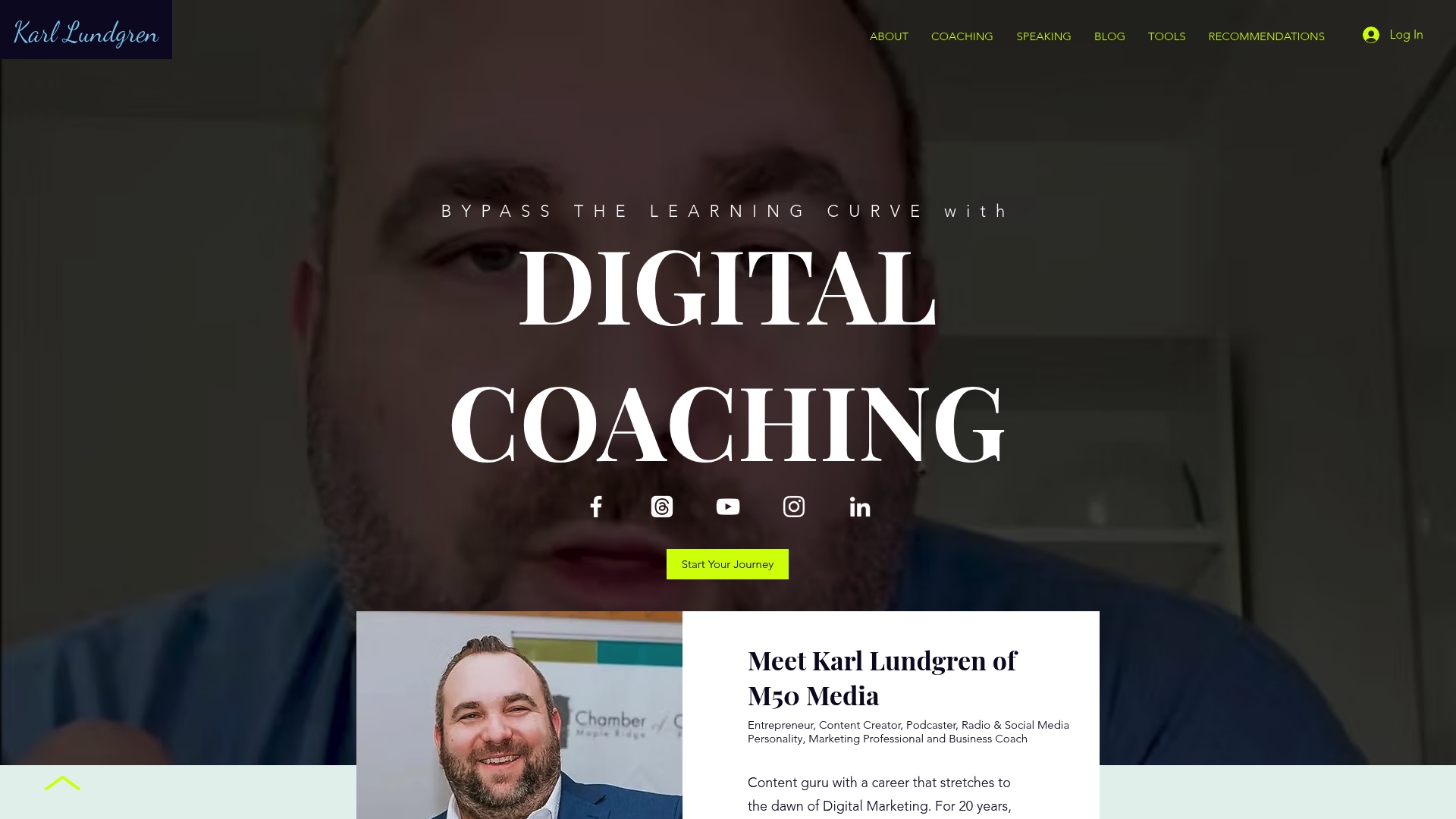
At M50media, Karl works directly with small business owners to identify the highest-impact automation opportunities and build workflows that actually get used. No cookie-cutter templates. No overwhelming tech stack. Just practical guidance tailored to your business. Book a free Marketing SOS call to talk through your current setup, or explore the full coaching programme to get hands-on support building your lead-to-revenue pipeline from scratch.
FAQ
What are the best marketing automation examples for beginners?
The best starting points are the welcome email series, abandoned cart recovery, and win-back campaigns. These three lifecycle automations generate strong ROI and produce the behavioural data you need to build more advanced workflows later.
Which tools are best for small business marketing automation?
ActiveCampaign, Dotdigital, and Customer.io are among the most widely used platforms for small business automation, each offering workflow builders, segmentation, and multi-channel capabilities at accessible price points.
How does lead scoring work in marketing automation?
Lead scoring assigns points to contacts based on actions like email opens, page visits, and form submissions. When a contact reaches a set threshold, the automation routes them to a sales rep automatically, as outlined in lead-to-revenue pipeline frameworks.
Can marketing automation work across multiple channels?
Yes. Platforms like Customer.io function as an orchestration layer that updates segments and triggers messages across email, SMS, push notifications, and in-app messaging in real time based on customer behaviour.
How much can automation improve conversion rates?
Results vary by workflow and industry, but the ElectricityRates.com case study using an AI-driven readiness score achieved a 200% conversion increase with a 0.2% unsubscribe rate, demonstrating what context-aware automation can achieve when built on strong data signals.
Recommended
Comments