Effective advertising tips for small businesses in 2026

TL;DR:
Effective advertising strategies in 2026 focus on clear goals, audience-specific messaging, and comprehensive measurement that includes AI visibility. Small businesses should prioritize 3-4 platforms, create authentic visuals, and test one variable at a time to optimize results. Success relies on clarity, honesty, and consistency instead of complexity or over-automation.
Effective advertising tips are the actionable strategies that turn a modest budget into real customer engagement and measurable growth. Think of them as the cheat codes for your marketing game (minus the ban risk). The best advertising strategies in 2026 combine goal clarity, targeted messaging, and data-driven optimisation. They also account for a rapidly shifting environment where AI-driven search now shapes how customers discover brands before they ever click a link. Tools like Meta Advantage+, frameworks like AIDA, and goal-setting methods like SMART goals are no longer optional extras. They are the foundation of every successful ad campaign.
1. start with effective advertising tips: set SMART goals first
The most common reason small business ad campaigns fail is not a bad creative. It is a missing goal. SMART goals aligned with revenue growth give your campaigns a clear direction and make it far easier to decide where to spend your budget.
Here is how to build goals that actually work:
Specific: Name the exact outcome. “Increase online sales of Product X” beats “grow the business.”
Measurable: Attach a number. Target a specific cost per lead, return on ad spend (ROAS), or click-through rate (CTR).
Achievable: Match your goal to your budget. A $500 monthly ad spend will not out-muscle a national brand.
Relevant: Tie the goal to a real business outcome, like revenue or customer retention.
Time-bound: Set a 6–12 month timeline so you know when to evaluate results.
Pick one primary goal per campaign. You can track secondary metrics like impressions or brand awareness, but chasing six goals at once is like trying to watch six Netflix shows simultaneously. You will finish none of them.
Pro Tip: Write your campaign goal on a sticky note and put it on your monitor. Every creative decision, budget call, and channel choice should pass the “does this serve the goal?” test.
2. know your audience beyond just demographics
Demographics tell you someone is a 35-year-old woman in Toronto. Buyer personas tell you she values sustainability, shops on her phone at 10 p.m., and trusts peer reviews over brand claims. That second picture is what drives ad copy that actually converts.

Build personas that include values, aspirations, and daily frustrations. Ask yourself what problem your product solves and what language your customer uses to describe that problem. Then use their words in your ads, not yours.
Platform data is your friend here. Meta’s Audience Insights, Google Analytics, and even your own email list can reveal patterns you would never guess. The more specific your persona, the less you waste on people who will never buy.
3. write ad copy that follows the AIDA framework
AIDA stands for Attention, Interest, Desire, and Action. Effective ad copy in 2026 follows this structure because it mirrors how human decision-making actually works. You grab attention first, build interest with relevant details, create desire with benefits, and close with a clear call to action (CTA).
A few rules that separate good copy from forgettable copy:
Lead with benefits, not features. “Save 3 hours a week” beats “includes automated scheduling.”
Write a CTA that tells people exactly what to do. “Book your free call” is stronger than “learn more.”
Keep sentences short. Mobile users skim, they do not read essays.
Use social proof. A quick stat or customer quote builds trust fast.
One thing most guides skip: Meta Advantage+ reorders your ad copy automatically across placements. That means your carefully crafted narrative might get scrambled. Write modular sentences where each line stands alone as a strong hook. Think of it like building with LEGO bricks instead of writing a novel.
Pro Tip: Write three versions of your headline before choosing one. The first idea is rarely the best one. The third usually is.
4. choose the right channels (and commit to fewer of them)
More channels do not mean more results. Focusing on 3–4 channels improves execution quality and gives your team room to actually get good at each platform. Spreading thin across eight channels is a recipe for mediocre performance everywhere.
Here is a quick comparison to help you choose:
Channel | Best For | Budget Level | Key Strength |
Google Search Ads | High-intent buyers | Medium to high | Captures demand at decision point |
Meta (Facebook/Instagram) | Awareness and retargeting | Low to medium | Detailed audience targeting |
YouTube | Brand storytelling | Medium | High engagement with video content |
Email Marketing | Retention and upsell | Low | Highest ROI of digital channels |
Podcast Advertising | Niche audience reach | Low to medium | Trusted, personal listener relationship |
Integrate your channels rather than running them in silos. Brands that build integrated discovery-to-decision journeys across Search and YouTube see stronger results than those treating each platform as a standalone experiment. A customer might discover you on Instagram, research you on Google, and convert via email. Plan for that journey.
Check out the M50media guide to top advertising platforms for a deeper breakdown of which platforms suit different business types.
5. use visuals that feel real, not polished
Authenticity is the new production value. Scroll through any social feed and you will notice the ads that stop thumbs are often the ones that look least like ads. Vertical video shot on a phone, real customers talking, behind-the-scenes clips. These formats outperform glossy studio shots in engagement because they blend into organic content.
For mobile-first formats, always add captions. Most people watch video with the sound off (yes, even your brilliant voiceover). Captions keep your message intact regardless of volume settings.
Short-form video is not a trend anymore. It is the default. Platforms like TikTok, Instagram Reels, and YouTube Shorts reward native-feeling content with organic reach that paid-only formats cannot buy.
6. measure what actually matters in 2026
Clicks are not the whole story anymore. Zero-click searches now account for 68.01% of all searches. That means most people get their answer directly on the search results page without visiting your site. Measuring only sessions and clicks will make your advertising look less effective than it actually is.
Track these metrics alongside traditional click data:
ROAS (Return on Ad Spend): The clearest signal of campaign profitability.
Branded search volume lift: Are more people searching your brand name after seeing your ads?
AI citation frequency: Is your brand appearing inside AI-generated answers on Google or Perplexity?
Share of voice: How often does your brand appear versus competitors in your category?
Advertising success now requires tracking AI visibility signals like brand citation frequency and branded demand. This is not optional if you want an accurate picture of your marketing’s real impact.
You can also explore how to measure ad effectiveness with a practical framework that goes beyond surface-level metrics.
7. run a/b tests the right way
A/B testing is how you stop guessing and start knowing. The rule is simple: change one variable at a time. Test your headline, then your image, then your CTA. Testing three things at once means you will never know which change caused the result.
Run tests during the platform’s learning window, typically the first 7–14 days of a campaign. Pull the plug too early and the algorithm has not had enough data to optimise. Wait too long and you are burning budget on a loser.
Keep a simple log of every test: what you changed, what the result was, and what you learned. Over time, this becomes a playbook specific to your audience that no competitor can copy.
8. tap into short-form video and podcast advertising
Short-form video and audio content deliver some of the strongest returns in digital marketing right now. 46% of weekly podcast listeners have purchased a product or service after hearing about it in a podcast. That is not a passive audience. That is a buying audience.
For small businesses, podcast advertising does not require a massive budget. Many independent podcasts in niche industries offer host-read ad spots at accessible rates. A host-read ad from someone their audience trusts is worth more than a polished 30-second pre-roll from a brand nobody knows.
Short-form video works because it forces you to get to the point. You have 3 seconds to earn the next 27. That constraint is actually a gift. It makes your messaging sharper.
9. adapt your ads for zero-click and AI search visibility
Your ad strategy needs to account for how people find information now, not just how they used to. Visibility metrics like brand citations inside AI answers are the new proxies for influence in a zero-click world. If your brand is not showing up in AI-generated summaries, you are invisible to a growing segment of searchers.
Practically, this means creating content and ads that answer specific questions clearly and directly. Structured content, clear brand messaging, and consistent presence across platforms all contribute to how often AI tools reference your brand.
For paid ads, native-style formats that match the look and feel of organic content perform better in AI-influenced feeds. Problem-solution framing and emotional appeals also tend to earn more engagement than feature-heavy product descriptions.
10. lock your core messaging before platforms change it
This one surprises a lot of small business owners. Platforms like Meta Advantage+ can automatically rewrite your offer language if certain settings are enabled. Your carefully written headline might get replaced by an AI-generated version that misses the point entirely.
Review your platform settings before launching any campaign. Lock stable offer language, pricing details, and brand-specific claims so the platform cannot alter them. This is especially important for promotions with specific terms or limited-time offers.
Building a multi-channel marketing strategy also helps here. When your messaging is consistent across channels, a single platform’s auto-edits have less impact on your overall brand voice.
Key takeaways
The most effective advertising strategies combine clear SMART goals, audience-specific messaging, and measurement that goes beyond clicks to include AI visibility and branded demand.
Point | Details |
Set one primary goal | Focus on a single measurable outcome per campaign to guide every decision. |
Write modular ad copy | Use standalone sentences so Meta Advantage+ reordering does not break your message. |
Limit your channels | Commit to 3–4 platforms and execute well rather than spreading thin across many. |
Measure beyond clicks | Track branded search lift, ROAS, and AI citation frequency for a full picture. |
Test one variable at a time | Clean A/B tests produce clear insights; testing multiples creates confusion. |
What i have actually learned about advertising in 2026
Here is my honest take after years of working with small businesses on their marketing: most owners do not have a creativity problem. They have a clarity problem.
The businesses I see struggling with advertising are almost always trying to say too many things to too many people at once. Their ads are busy, their goals are vague, and they are measuring the wrong things. Then they blame the platform.
The AI shift has made this worse in one specific way. There is now a temptation to automate everything and let the algorithm figure it out. And yes, tools like Meta Advantage+ are genuinely useful. But if you hand a vague brief to a smart system, you get a vague result at scale. Garbage in, garbage out, just faster.
What actually works is boring in the best way. Clear goal. Specific audience. Honest message. Consistent testing. The businesses I coach that follow this approach see results that feel almost unfair compared to what they were doing before.
One more thing: do not sleep on brand visibility in AI answers. This is the new SEO, and the window to get ahead of competitors is still open. Not for long, though.
— Karl
Ready to put these tips to work?
If reading this felt like drinking from a fire hose (in the best way), you are not alone. Knowing the tips and actually applying them to your specific business are two very different things.
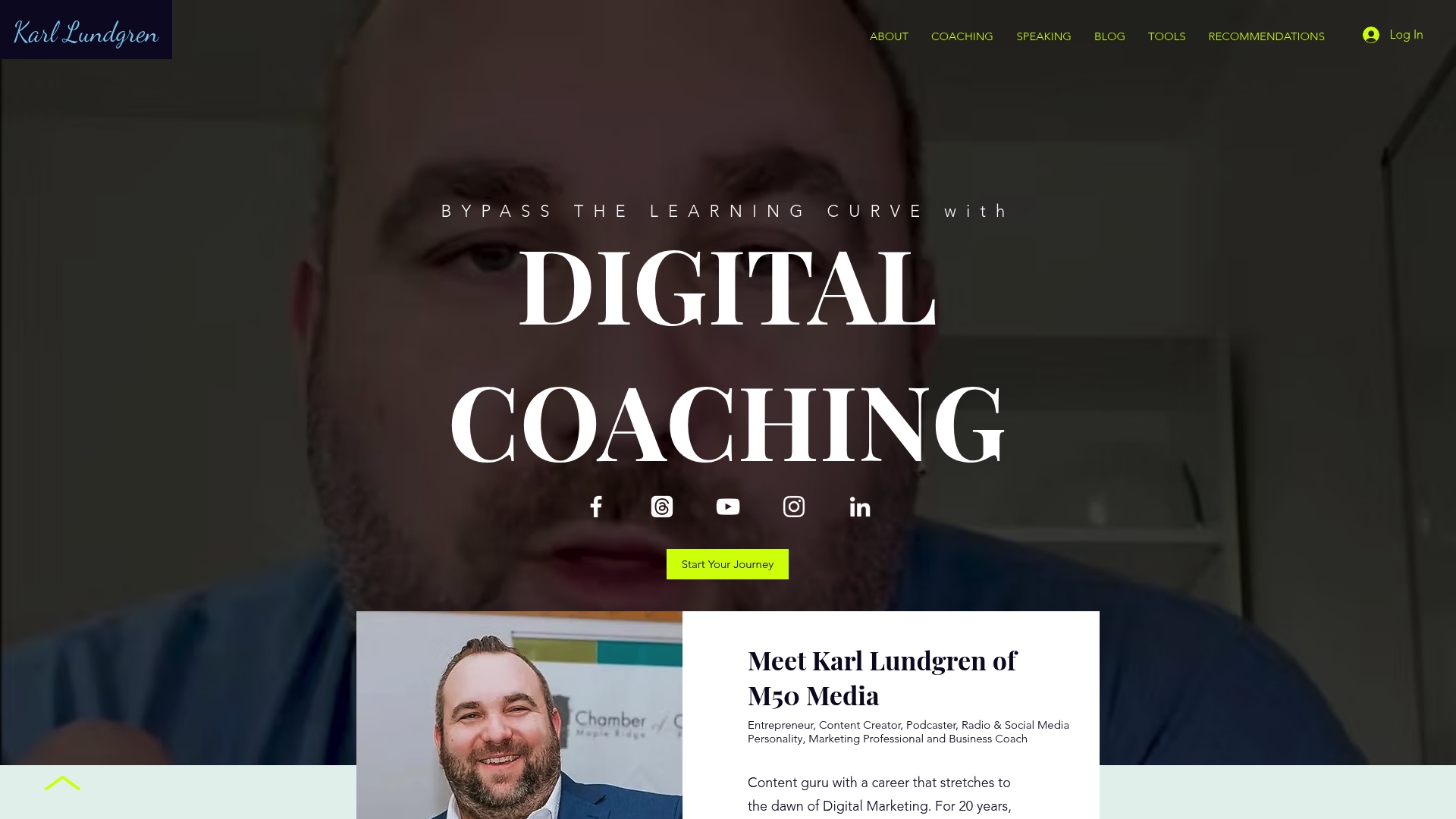
At M50media, Karl works directly with small business owners to turn advertising confusion into a clear, focused plan that gets results. Whether you want to sharpen your ad copy, pick the right channels, or finally understand what your metrics are telling you, the M50media blog and coaching programmes have you covered. Book a free Marketing SOS call and get a second set of expert eyes on your advertising strategy. No fluff, no generic advice. Just practical help built for your business.
FAQ
What are the most effective advertising tips for small businesses?
The most effective tips are setting a single SMART goal per campaign, writing benefit-focused copy using the AIDA framework, and measuring results beyond clicks to include ROAS and branded search lift.
How do i advertise effectively on a small budget?
Focus on 3–4 channels where your audience is most active, use short-form video and email marketing for high ROI, and run small A/B tests before scaling spend on winning creatives.
What is the AIDA framework in advertising?
AIDA stands for Attention, Interest, Desire, and Action. It is a copywriting structure that guides a reader from first noticing your ad to taking a specific action like clicking or purchasing.
Why are zero-click searches important for advertisers?
Zero-click searches represent 68.01% of all searches in 2026, meaning most users never visit a website. Advertisers must track brand visibility and AI citation frequency, not just site traffic.
How many advertising channels should a small business use?
Limiting to 3–4 channels improves execution quality and allows your team to develop real expertise on each platform rather than spreading effort too thin.
Recommended
Comments