Essential social media tips for small businesses in 2026

Social media advice changes fast, and for small business owners, keeping up can feel like chasing a moving target. Platforms shift their algorithms, new tools appear every quarter, and the pressure to show real return on investment has never been higher. The good news is that success in 2026 does not require doing everything. It requires doing the right things, consistently, on the right channels. This guide breaks down the strategies that actually move the needle, so you can stop guessing and start growing.
Table of Contents
Key Takeaways
Point | Details |
Pick focused platforms | Choose 1-2 platforms where your audience is most active for better results. |
Show your human side | Authentic, people-focused content builds stronger engagement than polished, generic posts. |
Balance quality and consistency | Post valuable content 2-3 times a week rather than aiming for daily volume. |
Use AI wisely | Leverage AI for efficiency but always ensure a final human edit to maintain brand authenticity. |
Maximise ROI with small budgets | Even modest ad spends can boost results—target platforms that align with your goals. |
Choose the right platforms for your audience
Platform selection is the single most important decision you will make in your social media strategy. Get it wrong and you will spend hours creating content that reaches the wrong people or no one at all. Get it right and every post works harder for your business.
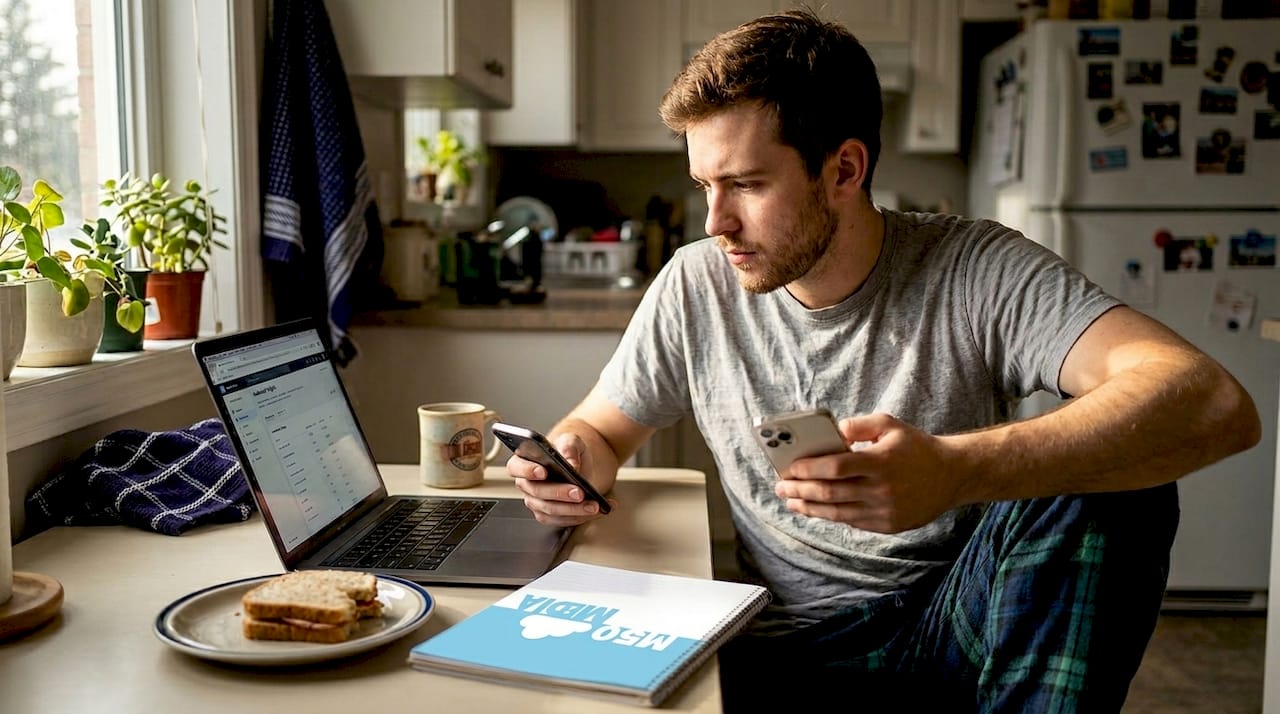
The most common mistake small businesses make is trying to maintain a presence on every platform. Spreading your effort across Facebook, Instagram, TikTok, LinkedIn, Pinterest, and X simultaneously leads to mediocre results everywhere. Instead, focus on 1-2 platforms where your target customers are actually active, whether that is Instagram and TikTok for visual or consumer products, Facebook for local services, or LinkedIn for B2B.
Here is a quick checklist to evaluate which platforms deserve your attention:
Where does your audience spend time? Survey existing customers or check your website analytics for social referral traffic.
What type of content suits your business? Visual products thrive on Instagram. Professional services belong on LinkedIn.
What are your competitors doing? If a competitor is growing fast on a specific platform, that is a strong signal.
Do you have the capacity to post consistently? One well-managed platform beats three neglected ones every time.
Once you have narrowed it down, learn how to choose effective social platforms based on your specific customer profile. You can also review the basics of setting up business social media to make sure your profiles are fully optimised before you invest time in content.
Pro Tip: Spend 20 minutes looking at your top three competitors’ social profiles. Note which platforms show the most engagement (comments, shares, reactions), not just followers. High follower counts with low engagement often signal a platform that is not worth your effort.
Emphasise authenticity and human connection
Once you have chosen your platforms, the next challenge is standing out. In 2026, audiences are more sceptical than ever of polished, corporate-feeling content. They can spot AI-generated captions and stock photo posts from a mile away.
Small businesses actually have a structural advantage here. You have a face, a story, a local community, and real customers. Big brands spend millions trying to appear relatable. You can simply be relatable. Real faces, voices, and stories outperform automated content, and that is a gap small businesses can exploit every single day.
“Authenticity is not a trend. It is the baseline expectation your audience brings to every post they see from you.”
Here are four practical ways to build genuine connection through your content:
Staff spotlights: Introduce the people behind your business. A 30-second video of a team member explaining why they love their job builds more trust than any promotional graphic.
Founder updates: Share what is happening in your business, challenges included. Transparency builds loyalty.
Customer success stories: Ask happy customers for a quick quote or photo. User-generated content is free social proof.
Behind-the-scenes moments: Show your process, your workspace, or your product being made. People are genuinely curious about how things work.
The pitfall to avoid is chasing every trending audio or meme format just because it is popular. If it does not fit your brand, it will feel forced and your audience will notice. Learn how to prioritise authenticity on social in a way that feels natural for your specific business.
Optimise posting frequency, timing, and content mix
Knowing what to post is only half the equation. Knowing when and how often to post is what separates businesses that grow steadily from those that plateau.
The data is clear: post 2-3 high-quality times per week, targeting midweek afternoons between Tuesday and Thursday from 2 to 5 PM. This is when engagement rates are consistently highest across most platforms. Posting every day with average content will not outperform three excellent posts per week.
The content mix matters just as much as the schedule. Use the 80/20 rule as your guide:
80% value content: Educational tips, entertaining posts, behind-the-scenes, community stories, and industry insights.
20% promotional content: Product announcements, sales, service highlights, and direct calls to action.
Here are the content formats worth prioritising right now:
Images and carousels: From an analysis of 9.3 million posts, images and carousels consistently top engagement metrics across Facebook and Instagram.
Short-form video: Reels and TikToks still drive reach, especially for new audience discovery.
Text-based posts on LinkedIn: For B2B businesses, thoughtful written posts often outperform visual content.
Statistic to know: Facebook delivers the highest ROI among social platforms for small businesses, making it a strong anchor for your paid and organic strategy. Explore the full picture of social media marketing benefits to understand how each platform contributes differently to your goals.
Leverage AI tools without losing your voice
AI is everywhere in 2026, and ignoring it entirely means leaving efficiency on the table. But using it without a filter is just as risky. The goal is to use AI as a starting point, not a finishing line.
54% of small businesses now use AI tools for content ideas and optimisation, but the ones seeing the best results are those who apply a human layer before anything goes live. AI can draft a caption in seconds. It cannot replicate your local knowledge, your customer relationships, or your brand’s specific personality.
Here is a practical breakdown of where AI helps and where humans must lead:
AI task | Human oversight needed |
Generating caption drafts | Edit for tone, local references, and brand voice |
Suggesting post topics | Filter for relevance to your specific audience |
Scheduling and timing recommendations | Confirm against your own audience data |
Image editing and background removal | Review for quality and brand consistency |
Hashtag research | Curate for relevance, remove generic or oversaturated tags |
For more on balancing AI and human content mix, check out the M50 guide on setting up your social media presence for 2026.
Pro Tip: Before publishing any AI-assisted post, read it out loud. If it sounds like something a robot wrote or could apply to any business in any city, rewrite it. Add one specific detail: a customer name, a local landmark, a real situation. That one detail is what makes it yours.
Boost ROI with paid campaigns on a budget
Strong organic content builds trust. Paid campaigns build reach. In 2026, even a modest ad budget can produce measurable results if you know where to put it.
The numbers tell a compelling story. 91% of small businesses use social media for marketing, and 68% plan to increase their ad budgets this year. The average conversion rate across social platforms sits at around 3%, which is competitive with most digital channels. And here is the part that surprises most people: 47% of small businesses spend less than $500 per month on ads and still see solid returns, particularly on Facebook.
Here is a comparison of organic versus paid results to help you decide where to invest:
Factor | Organic social | Paid social |
Reach | Limited to followers and shares | Targeted to specific audiences |
Speed | Slow build over time | Immediate visibility |
Cost | Time investment | Budget required |
Best for | Trust building, community | Promotions, lead generation |
Top platform | Instagram, LinkedIn | Facebook, Instagram |
If you are just starting with paid ads, here are quick wins to focus on first:
Boost your best organic posts: Start with content that already performs well. Paid promotion amplifies what is already working.
Use retargeting: Show ads to people who have already visited your website. These audiences convert at a much higher rate.
Set a daily budget cap: Even $5 to $10 per day on a well-targeted Facebook ad can generate leads for local businesses.
Test one variable at a time: Change only the image or only the headline between ad versions. This tells you exactly what is driving results.
For real-world ROI-driven campaign examples and a deeper look at digital advertising strategies built for small business budgets, the M50 Blog has you covered.
Ready to put your social media strategy into action?
You now have a clear framework: choose the right platforms, lead with authenticity, post strategically, use AI wisely, and back it all up with smart paid campaigns. The challenge for most small business owners is not knowing what to do. It is finding the time and support to do it consistently.
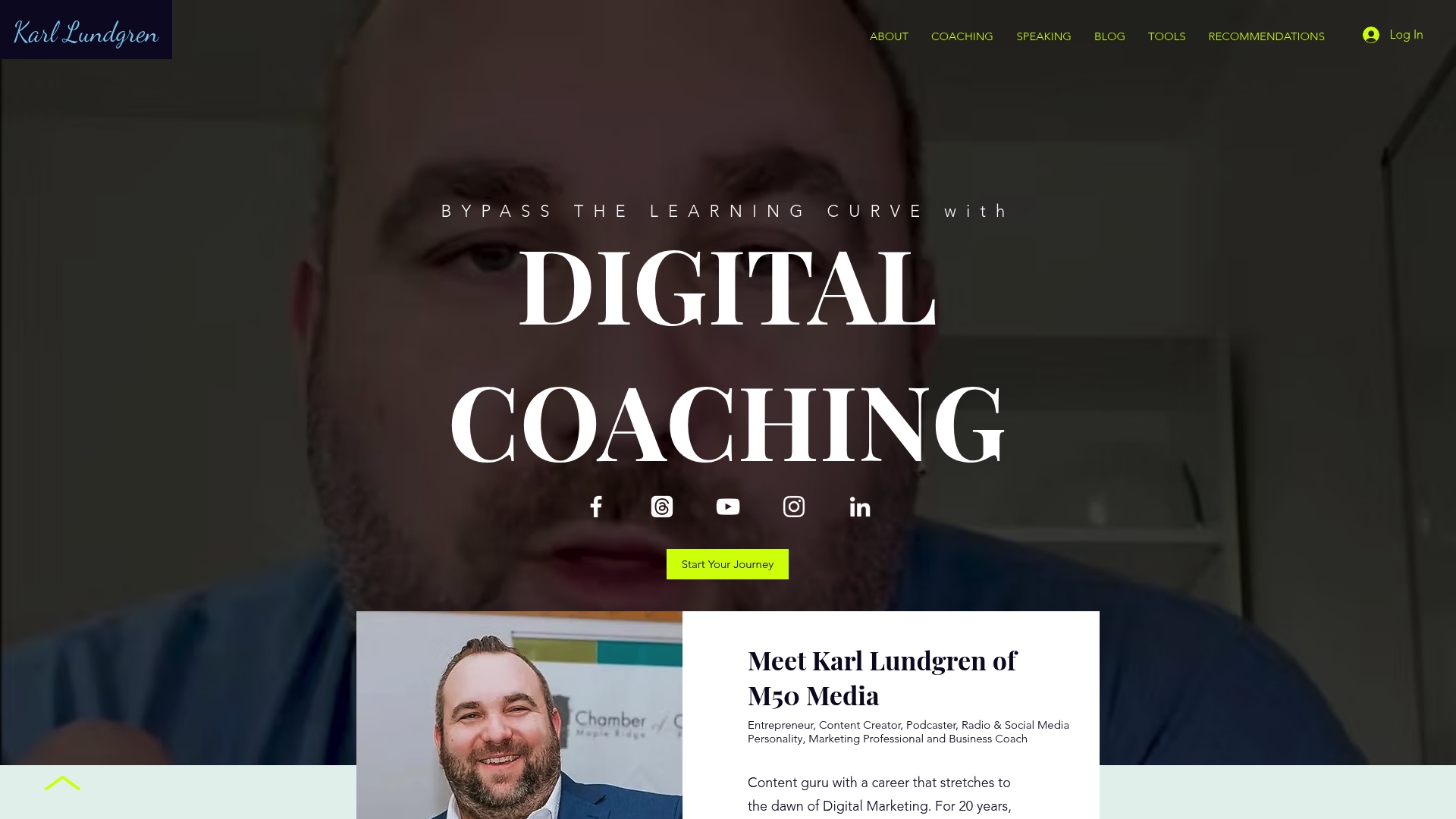
At M50 Media, Karl Lundgren works directly with small business owners to build social media strategies that are realistic, measurable, and tailored to your specific goals. Whether you need a full digital marketing plan or just a clear starting point, the M50 coaching and consulting services are designed to help you move forward without the guesswork. Explore the M50 Blog for more guides, or reach out to start a conversation about what your business needs most in 2026.
Frequently asked questions
What is the best social media platform for Canadian small businesses in 2026?
The best platform depends on your audience. Focus on 1-2 platforms where your customers are active: Facebook for local outreach, Instagram or TikTok for visual products and younger buyers, and LinkedIn for B2B services.
How often should I post on social media in 2026?
Posting 2-3 times per week during midweek afternoons consistently outperforms daily posting with lower-quality content. Quality and timing matter more than volume.
Is using AI for social media content a good idea in 2026?
Yes, AI is a useful tool for drafts and scheduling, but 54% of SMBs using AI tools still need human oversight to keep content authentic and on-brand. Always add your own voice before publishing.
What is a reasonable ad budget for small businesses on social media?
47% of small businesses spend less than $500 per month on social ads and see meaningful results, especially on Facebook, which consistently delivers the highest ROI for small business advertisers.
Recommended
Comments