Growth strategies for entrepreneurs: 10 proven tactics

TL;DR:
Growth strategies for entrepreneurs revolve around deliberate plans that focus on customer retention, data-driven experimentation, and operational discipline.
Focusing on market penetration, product development, and testing multiple avenues early on helps businesses scale sustainably and efficiently.
Growth strategies for entrepreneurs are deliberate, systematic approaches that drive sustainable scaling by combining customer-centric innovation, data-driven marketing, and operational discipline. If you’ve been winging it and hoping for the best (no judgement, we’ve all been there), this article is your sign to get intentional. Whether you’re just getting traction or ready to go full throttle, these tactics will help you grow smarter, not just faster.
1. What are the most impactful growth strategies for entrepreneurs?
Growth strategy, in the formal sense, is the structured plan a business uses to increase revenue, market share, or customer base over time. Harvard Business School frames it around the “value stick” framework, which asks how your business creates value for customers, employees, and suppliers simultaneously. That framing matters because growth without value creation is just noise.

The four classic pillars are market penetration, market development, product development, and diversification. Each one serves a different stage of business maturity. Knowing which one fits your current situation is half the battle.
Pro Tip: If you are unsure which pillar fits your business right now, ask yourself: “Am I selling more of the same to the same people, or am I doing something genuinely new?” Your honest answer points to the right strategy.
2. Market penetration: sell more to who already loves you
Market penetration is the fastest path to revenue growth for most early-stage entrepreneurs. You are selling an existing product to an existing market, which means lower risk and faster feedback loops. Think loyalty programmes, upsells, and referral incentives.
The goal is to increase your share of wallet with current customers before chasing new ones. A customer who already trusts you costs far less to convert than a cold lead. John Paul DeJoria built Paul Mitchell and Patrón on this exact principle: repeat orders over new sales are the real engine of sustainable growth.
3. Product development: meet your customers where they are going
Product development means creating new offerings for your existing customer base. It is one of the most reliable entrepreneur success strategies because you already understand the audience. You are not guessing at their needs; you are building on a relationship.
The key is tight integration between product and marketing. Rapid testing and adoption in target markets accelerates this loop considerably. Build a minimum viable version, get it in front of real users, and iterate based on what they actually do, not what they say they will do.
4. Growth hacking: disciplined experimentation, not viral tricks
Growth hacking for startups gets a bad reputation because people confuse it with stunts. Sean Ellis’s book Hacking Growth has reached over 750,000 readers and its core message is the opposite of gimmicks. It is about systematic, interdisciplinary experimentation across every stage of the customer journey.
The AARRR funnel (Acquisition, Activation, Retention, Revenue, Referral) gives you a map. The ICE framework (Impact, Confidence, Ease) helps you prioritise which experiments to run first. Together, they turn guesswork into a repeatable process.
Pro Tip: GitHub grew by targeting developers directly through open-source communities. Match your growth channel to where your specific audience already hangs out, not where you wish they were.
Want a deeper breakdown of this approach? The M50media small business growth hacking guide is a solid starting point.
5. Data-driven marketing: stop flying blind
Fast-growing companies combine analytics, search demand, and Generative Engine Optimization (GEO) to spot market gaps before competitors do. GEO is the practice of structuring your content so AI-powered search engines like Perplexity and ChatGPT surface your brand in generated answers. It is quickly becoming a non-negotiable layer of digital visibility.
Analytics tells you what is already working. GEO tells you where demand is forming before it peaks. Used together, they give you a real edge in identifying market opportunities ahead of the curve. If you want to understand how analytics fits into this picture, the M50media guide on marketing analytics for small businesses breaks it down clearly.
Pro Tip: Build SEO and community-led marketing as long-term assets from day one. Paid ads stop the moment you stop paying. Organic authority compounds over time like a very patient investment.
6. Market expansion: find new homes for proven products
Market expansion means taking a product that already works and introducing it to a new audience or geography. The metakaolin industry is a useful illustration: the global market is projected to grow from US$473 million in 2025 to US$698 million by 2032. That kind of trajectory exists in dozens of sectors. The entrepreneurs who win are the ones who spot the opening early.
Before you expand, confirm that your core product has genuine product-market fit. Repeat usage is the clearest signal. If customers are not coming back on their own, expansion just spreads a problem wider.
7. Diversification: the high-risk, high-reward play
Diversification means new products for new markets. It carries the most risk of any growth technique because you are operating without the safety net of existing customer relationships or proven product demand. That said, it is the right move when your current market is saturated or declining.
The discipline here is testing before committing. MIT Sloan’s Entrepreneurial Strategy Compass recommends testing multiple commercialization routes simultaneously before locking in capital. This approach reduces financial exposure and surfaces the best path faster.
8. Classic vs. modern growth techniques: which one fits you?
Choosing between traditional and modern approaches is not an either/or decision. Most successful entrepreneurs run both in parallel. Here is a practical comparison:
Approach | Core method | Best for | Key risk |
Market penetration | Upsells, loyalty, referrals | Early-stage, proven product | Ceiling effect in small markets |
Market development | New geographies or segments | Validated product, limited local growth | Higher acquisition costs |
Diversification | New product, new market | Mature businesses with capital | High execution complexity |
Growth hacking | AARRR funnel, ICE experiments | Startups with limited budget | Requires analytical discipline |
Digital and GEO marketing | SEO, AI search, content | Any stage with online audience | Slower to show results |
Influencer and community | Partnerships, brand advocates | Consumer products, B2C | Hard to measure directly |
Traditional strategies give you a proven playbook. Modern tactics give you speed and data. The best practice for business growth is to anchor your foundation in the classics and use modern tools to accelerate.
Pro Tip: Do not chase every new marketing channel at once. Pick one modern tactic, run it for 90 days with clear metrics, and then decide whether to scale or swap it out.
9. Operational best practices for scaling a startup
Scaling a startup is not just a marketing problem. Operations either support your growth or quietly strangle it. Here are the practices that separate businesses that scale from ones that plateau:
Avoid destiny bias. Do not assume your first go-to-market path is the right one. Testing two or more routes simultaneously early on reduces financial risk and identifies your best channel faster.
Build repeatable systems. Document every process that runs more than once a week. If it lives only in your head, it cannot scale.
Invest in your team. The value stick framework includes employee value for a reason. Engaged employees deliver better customer experiences, full stop.
Adopt a reorder mentality. Sustainable growth comes from repeat orders, not just first-time sales. Build your product and service quality around making customers want to come back.
Treat setbacks as data. John Paul DeJoria was homeless twice before building a billion-dollar empire. Resilience in the face of rejection is not a soft skill. It is a competitive advantage.
10. Build your brand as a growth asset
Branding is not just a logo and a colour palette (though those matter too). A strong brand reduces customer acquisition costs over time because people seek you out rather than stumbling across you. It is one of the most underused business growth techniques in the entrepreneur toolkit.
Consistent brand positioning also makes every other strategy work harder. Your growth hacking experiments convert better. Your content ranks faster. Your referrals close easier. Think of your brand as the compound interest on every other tactic you run.
Key takeaways
The most effective growth strategies for entrepreneurs combine customer retention, data-driven experimentation, and repeatable operational systems to build sustainable, scalable businesses.
Point | Details |
Start with value creation | Use the value stick framework to balance customer, employee, and supplier value before scaling. |
Prioritise retention over acquisition | Repeat orders drive sustainable revenue; focus on product quality that earns reorders. |
Use AARRR and ICE together | Map your funnel with AARRR and prioritise experiments with ICE to grow systematically. |
Test before committing capital | Run multiple go-to-market routes simultaneously to find your best channel early. |
Combine classic and modern tactics | Anchor strategy in proven pillars and use GEO, analytics, and community marketing to accelerate. |
What I have learned after years of watching entrepreneurs grow (and stall)
Here is the uncomfortable truth I keep coming back to: most entrepreneurs do not fail because they lack ideas. They fail because they fall in love with one idea and stop testing. I call it the “chosen path” trap. You pick a strategy, it feels right, and you pour everything into it before the data tells you whether it actually works.
The MIT Sloan Entrepreneurial Strategy Compass exists precisely to break that habit. Testing two commercialisation paths simultaneously feels inefficient. It is actually the most capital-efficient thing you can do early on. You are buying information, and information is cheap compared to a failed pivot six months later.
The other thing I see constantly is entrepreneurs treating growth hacking like a bag of tricks. Run a viral contest, get a press mention, hope for the best. That is not growth hacking. That is wishful thinking with a fancier name. Real growth hacking is boring in the best possible way. It is spreadsheets, hypotheses, and weekly experiment reviews. Sean Ellis built that methodology for a reason, and the disciplined experimentation approach it promotes is what separates companies that grow from ones that spike and crash.
My honest advice? Pick one strategy from this list that fits your current stage. Run it hard for 90 days. Measure everything. Then decide. Growth is not a sprint or a marathon. It is more like a series of very intentional sprints, each one informed by the last.
— Karl
Ready to grow? Let’s build your plan together
You have got the strategies. Now you need a plan that fits your specific business, not a generic template you found on the internet at 11pm. M50media’s business coaching services are built specifically for entrepreneurs who want to move from “I know what to do” to “I am actually doing it.”
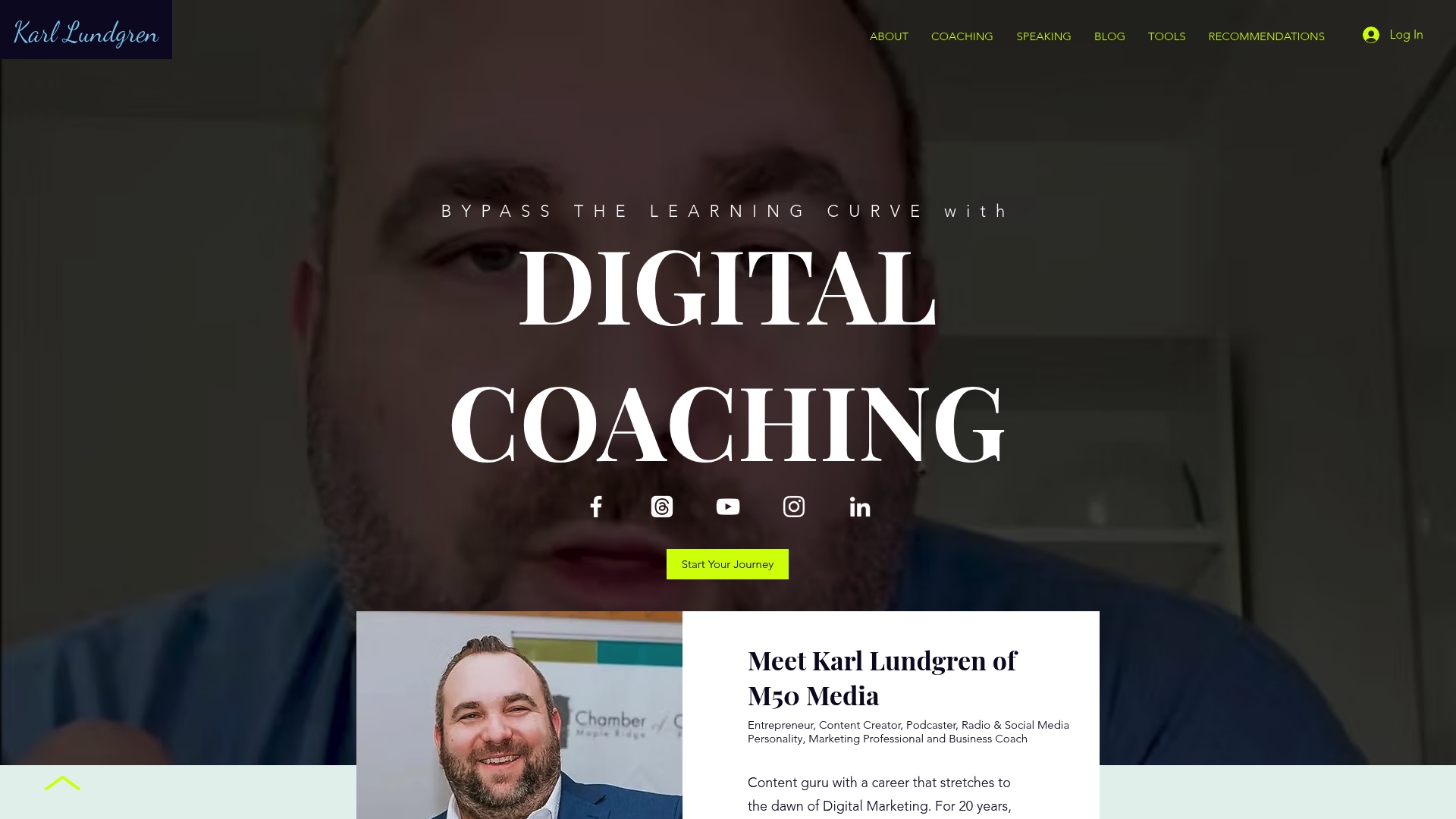
Karl works directly with entrepreneurs to identify the right growth levers, build a marketing plan that converts, and cut through the noise of a hundred competing tactics. If you are not sure where to start, book a free Marketing SOS call and let’s figure it out together. No pressure, no pitch deck, just a real conversation about your business.
FAQ
What are growth strategies for entrepreneurs?
Growth strategies for entrepreneurs are structured plans to increase revenue, market share, or customer base through methods like market penetration, product development, and growth hacking. Harvard Business School defines them around creating measurable value for customers, employees, and suppliers simultaneously.
What is growth hacking and does it work for small businesses?
Growth hacking is a disciplined, data-driven process of running rapid experiments across the customer journey using frameworks like the AARRR funnel and ICE scoring. It works for small businesses because it prioritises low-cost, high-impact experiments over large advertising budgets.
How do I choose the right growth strategy for my startup?
Match your strategy to your current stage: use market penetration if you have an existing customer base, product development if you have strong relationships but limited offerings, and diversification only when your core market is saturated. Testing multiple routes before committing capital reduces risk significantly.
What is Generative Engine Optimization (GEO) and why does it matter?
GEO is the practice of structuring content so AI-powered search tools like ChatGPT and Perplexity surface your brand in generated answers. Fast-growing companies combine GEO with traditional analytics to spot market gaps before competitors do.
How important is customer retention compared to acquisition?
Customer retention is the foundation of sustainable growth. John Paul DeJoria’s core principle is that repeat orders, driven by genuine product quality, outperform first-time sales as a long-term revenue driver. Acquiring a new customer costs significantly more than retaining an existing one.
Recommended
great post, really enjoyed reading this. i often use instagram video download tools to save creative references and watch them later offline.