How to build your brand online: grow your small business

Building a recognisable brand online can feel overwhelming when you’re juggling daily operations and trying to stand out in crowded digital spaces. Many small business owners struggle with unclear messaging, limited budgets, and confusion about which marketing tactics actually work. This guide walks you through a proven, step-by-step approach to establish your brand identity, create an optimised website hub, execute integrated marketing tactics, and track your results so you can attract customers and grow sustainably in the digital landscape.
Table of Contents
Key Takeaways
Point | Details |
Clear brand identity | Define your UVP, know your audience and establish a consistent voice and visuals before building your online presence. |
Website as brand hub | Create a well optimised website that acts as your brand hub, delivering strong user experience, search visibility and conversion focused design. |
Email marketing ROI | Email marketing delivers high return on investment and supports customer retention. |
Integrated marketing mix | Coordinate SEO, content marketing and paid advertising for a cohesive and effective strategy. |
Key metrics tracking | Regularly monitor ROAS and CAC to gauge effectiveness and guide optimisation decisions. |
Defining your brand identity before building online presence
Your brand identity is the personality, promise, and perception that sets you apart from competitors. Before investing in websites or advertising, you need clarity on what you offer, who you serve, and why customers should choose you. 81% of people research online before buying, making a clear brand identity essential to capture attention during those critical research moments.
Start by defining your unique value proposition. Ask yourself what specific problem you solve better than anyone else. Your UVP should be a single, memorable sentence that communicates your benefit clearly. Next, identify your target audience with precision. Go beyond demographics to understand their pain points, buying behaviours, and preferred communication channels. The more specific you are about who you serve, the more effectively you can tailor your messaging and marketing efforts.
Consistency builds recognition. Develop a brand voice that reflects your business personality, whether that’s professional and authoritative, friendly and approachable, or innovative and bold. Apply this voice across all communications. Your visual identity should be equally consistent, from logo and colour palette to typography and imagery style. This cohesive approach helps customers recognise your brand instantly across different platforms and touchpoints.
Research is your competitive advantage. Study your competitors to identify gaps in the market and opportunities to differentiate. Analyse customer reviews and feedback to understand what your audience truly values. Monitor industry trends and evolving customer expectations so your brand remains relevant. A digital branding guide can provide deeper insights into building a cohesive identity that resonates with modern consumers.
Key brand identity elements:
Unique value proposition that clearly states your competitive advantage
Target audience profile with specific demographics and psychographics
Brand voice guidelines for consistent communication tone
Visual identity system including logo, colours, and typography
Core brand values that guide business decisions and messaging
Pro Tip: Create a simple one-page brand guide documenting your UVP, target audience, voice, and visual standards. Share it with anyone who creates content or communicates on behalf of your business to maintain consistency across all channels.
With your brand identity clearly defined, you’re prepared to build the digital foundation that will serve as your online home.
Building an optimised website as your brand hub
Your website is the central hub where all your marketing efforts converge. It’s where prospects learn about your offerings, evaluate your credibility, and decide whether to become customers. A well-optimised site combines user experience, search engine visibility, and conversion-focused design to turn visitors into loyal customers.

Choosing the right platform depends on your business model and technical comfort level. Platforms like Wix and Shopify offer user-friendly interfaces for building professional sites without coding knowledge. Shopify excels for e-commerce businesses with built-in payment processing and inventory management. Wix provides flexibility for service-based businesses needing portfolios and booking systems. WordPress offers maximum customisation but requires more technical expertise or developer support.
SEO fundamentals include clear navigation and targeted landing pages that help search engines understand your content and rank you for relevant queries. Structure your site with a logical hierarchy where main services or product categories are easily accessible from the homepage. Create dedicated landing pages optimised for specific keywords your target audience searches. Include descriptive page titles, meta descriptions, and header tags that incorporate your target keywords naturally.
Mobile optimisation is non-negotiable. More than half of web traffic comes from mobile devices, and search engines prioritise mobile-friendly sites in rankings. Ensure your site uses responsive design that adapts seamlessly to different screen sizes. Test loading speed on mobile networks, as slow sites lose visitors and rank lower. Compress images, minimise code, and use reliable hosting to achieve fast load times across devices.
User experience directly impacts conversion rates. Confusing website navigation loses 80% of visitors, highlighting the importance of intuitive design. Place clear calls to action on every page, whether that’s booking a consultation, requesting a quote, or making a purchase. Display contact information prominently in your header or footer. Include trust signals like customer testimonials, security badges, and professional certifications to build credibility.
Essential website elements:
Clear navigation menu with logical category structure
Mobile-responsive design that works on all devices
Fast loading speed under three seconds
Prominent calls to action on every page
Contact information easily accessible
Security certificates and trust signals
Website feature | Impact on performance | Priority level |
Mobile responsiveness | Affects 50%+ of traffic | Critical |
Page load speed | Influences bounce rate and SEO | Critical |
Clear navigation | Reduces 80% visitor loss | High |
SEO optimisation | Drives organic discovery | High |
Trust signals | Increases conversion rates | Medium |
Pro Tip: Use heat mapping tools like Hotjar or Microsoft Clarity to see exactly where visitors click, scroll, and abandon your site. This data reveals friction points you can optimise to improve user experience and conversion rates without guessing.
Exploring online marketing advantages and top marketing platforms for small business can help you select the right tools to support your website and broader digital strategy.
With your website established as a solid foundation, you’re ready to drive traffic and build awareness through integrated marketing tactics.
Integrating digital marketing tactics to grow your brand online
Effective brand growth requires a multi-channel approach where different marketing tactics work together synergistically. Relying on a single channel creates vulnerability and limits your reach, whilst an integrated strategy amplifies your message and provides multiple touchpoints for customer engagement.
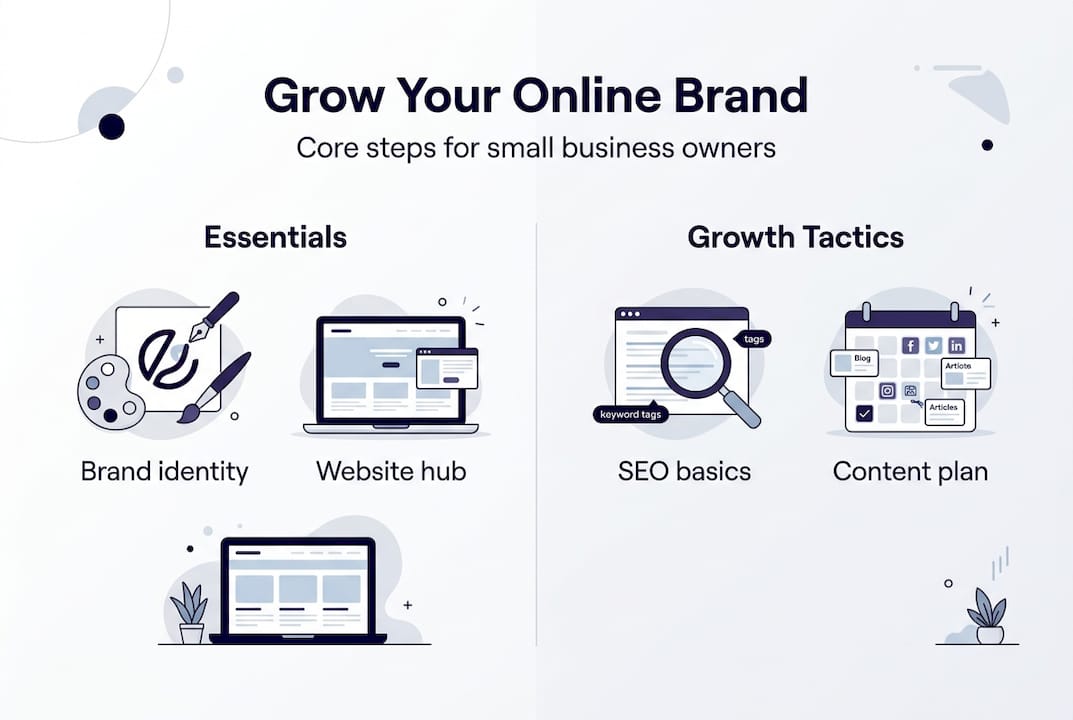
Organic search engine optimisation builds long-term visibility without ongoing ad costs. Focus on creating valuable content that answers your target audience’s questions and solves their problems. Invest in SEO by researching keywords your prospects use, optimising existing pages, and publishing fresh content regularly. SEO takes time to show results but compounds over months and years, eventually becoming your most cost-effective traffic source.
Content marketing establishes your expertise and builds trust before prospects are ready to buy. Publish blog posts, guides, and resources that demonstrate your knowledge and provide genuine value. Share this content across social media channels where your audience spends time. Video content, infographics, and case studies diversify your content mix and appeal to different learning preferences. Quality content also generates backlinks from other websites, boosting your SEO authority.
Paid advertising accelerates visibility whilst you build organic momentum. Start with small budgets on platforms where your audience is active, whether that’s Google Ads, Facebook, Instagram, or LinkedIn. Integrate SEO, content, and paid ads to track ROAS and CAC for comprehensive performance measurement. Test different ad formats, targeting parameters, and messaging to identify what resonates. Scale spending on campaigns that deliver positive return on ad spend whilst pausing or optimising underperformers.
Email marketing provides the highest return on investment of any digital channel. Email marketing provides the highest ROI with $36 return per $1 spent and open rates between 34-40%. Build your email list by offering valuable lead magnets like guides, checklists, or exclusive discounts. Segment your list based on customer behaviour and interests to send targeted messages. Automate welcome sequences, abandoned cart reminders, and re-engagement campaigns to nurture leads efficiently. Learn more about email marketing benefits to maximise this powerful channel.
“The most successful small businesses don’t choose between SEO, content, email, and paid ads. They integrate all four, measuring performance rigorously and allocating budget to the channels delivering the best results for their specific business model and audience.”
Integrated marketing execution steps:
Establish SEO foundation with keyword research and on-page optimisation
Create content calendar publishing valuable resources consistently
Build email list with lead magnets and automated nurture sequences
Launch small paid campaigns to test messaging and targeting
Measure performance across all channels weekly
Reallocate budget toward highest-performing tactics monthly
Essential marketing channels:
Organic SEO for sustainable long-term traffic
Content marketing to demonstrate expertise and build trust
Email marketing for highest ROI and customer retention
Paid advertising to accelerate visibility and test messaging
Social media to engage audience and amplify content reach
Explore comprehensive marketing strategies for small businesses to deepen your understanding of how these tactics work together effectively.
Executing these tactics is only half the equation. Measuring results and optimising based on data ensures your efforts translate into business growth.
Monitoring performance and optimising your online brand strategy
Data transforms marketing from guesswork into a systematic process of continuous improvement. By tracking the right metrics and analysing performance regularly, you identify what’s working, what needs adjustment, and where to invest more resources for maximum impact.
Key performance indicators vary by channel but should always connect to business outcomes. Track return on ad spend to measure paid campaign efficiency. Monitor customer acquisition cost across all channels to understand the true cost of gaining new customers. Measure website traffic, bounce rate, and time on site to gauge content relevance and user experience. Email open rates, click-through rates, and conversion rates reveal how well your messaging resonates with subscribers.
Compare organic versus paid channel performance to optimise budget allocation. Organic channels like SEO and content marketing require upfront investment but deliver compounding returns over time with minimal ongoing costs. Paid channels provide immediate visibility and precise targeting but require continuous spending. Most successful small businesses maintain a balanced mix, using paid ads for quick wins and testing whilst building organic assets for long-term sustainability.
Small business marketing budgets should average 7-8% of revenue, with allocation prioritising high-ROI channels like email marketing and SEO. Start conservatively if you’re new to digital marketing, testing small budgets across different channels before scaling what works. As you gather performance data, shift budget toward channels delivering the lowest customer acquisition cost and highest lifetime value.
Analytics tools provide insights that guide optimisation decisions. Google Analytics tracks website behaviour, showing which pages attract visitors, where they drop off, and which sources drive conversions. Email marketing platforms report open rates, click patterns, and revenue attribution. Social media analytics reveal which content types generate engagement and referral traffic. Digital tools significantly boost SME brand equity and engagement when used strategically to inform decisions.
Continuous optimisation compounds small improvements into significant results. Test different headlines, calls to action, and page layouts to improve conversion rates. Refine email subject lines and send times based on open rate data. Adjust ad targeting and creative based on cost per acquisition trends. Review your digital marketing plan guide quarterly to ensure your strategy aligns with business goals and market conditions.
Critical metrics to monitor:
Return on ad spend for paid campaign efficiency
Customer acquisition cost across all channels
Website traffic and conversion rate trends
Email open rates and click-through performance
Organic search rankings for target keywords
Metric | Healthy benchmark | Action if below |
ROAS | 3:1 or higher | Refine targeting and creative |
Email open rate | 34-40% | Test subject lines and send times |
Website conversion | 2-5% | Optimise UX and calls to action |
Organic traffic growth | 10-20% quarterly | Increase content publishing |
CAC vs LTV ratio | 1:3 or better | Improve retention or reduce costs |
Pro Tip: Schedule a monthly marketing review where you analyse performance data, identify trends, and decide on three specific optimisations to test in the coming month. This disciplined approach prevents reactive decision-making and builds a culture of continuous improvement.
With systematic measurement and optimisation in place, you have a sustainable system for growing your brand online. But you don’t have to navigate this journey alone.
Discover expert coaching to boost your online brand
Building a brand online requires strategic thinking, technical execution, and ongoing optimisation. Whilst this guide provides the framework, personalised guidance can accelerate your progress and help you avoid costly mistakes. M50 Media’s business coaching services provide tailored support for small business owners navigating digital brand building.
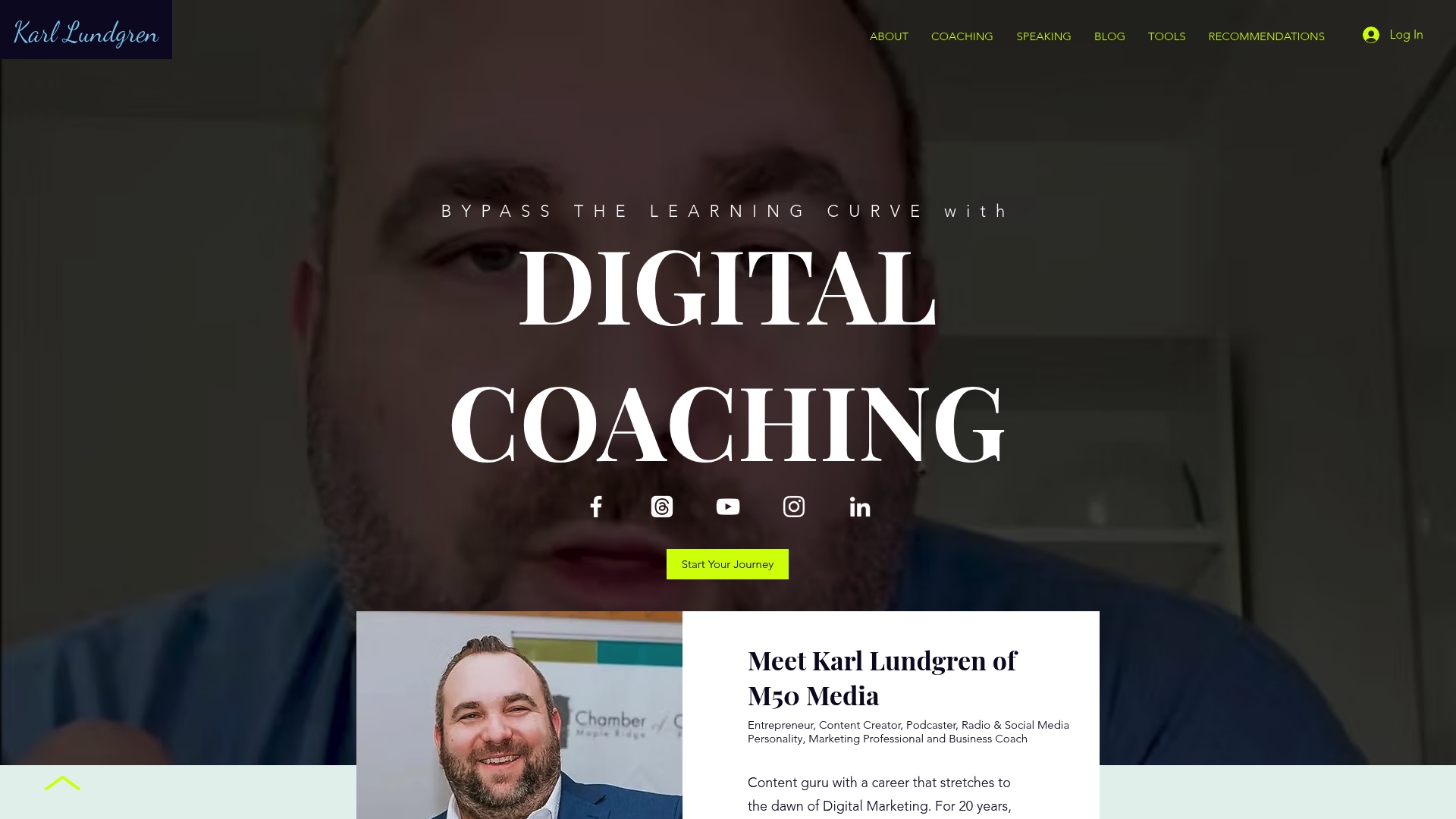
Whether you’re just starting or looking to scale existing efforts, expert coaching helps you implement best practices specific to your industry and business model. Take advantage of a free marketing SOS call to address your most pressing challenges and get actionable recommendations. For ongoing support, digital coaching solutions provide accountability and expertise to keep your brand-building efforts on track and delivering results.
How to build brand online: frequently asked questions
What is the first step to building a brand online?
Define your unique value proposition and target audience before creating any digital assets. Clear brand identity ensures all subsequent marketing efforts communicate consistently and resonate with the right people.
How important is website SEO for brand building?
SEO is critical because 81% of people research online before buying. Without search visibility, potential customers won’t discover your brand when they need your products or services.
Which digital marketing tactic provides the best ROI?
Email marketing delivers the highest return with $36 per $1 spent. However, the best approach integrates email with SEO, content marketing, and paid ads for comprehensive reach and multiple customer touchpoints.
How often should I review my online brand strategy?
Review performance metrics weekly and conduct comprehensive strategy assessments monthly. Quarterly reviews should evaluate whether your overall approach aligns with business goals and market changes.
Can I build a strong brand on a limited budget?
Yes, by prioritising high-ROI tactics like email marketing and SEO whilst starting with small paid advertising tests. Allocate 7-8% of revenue to marketing, focusing budget on channels that deliver measurable results for your specific business.
Recommended
Comments