Multichannel marketing strategies for small business growth

Picking just one marketing channel feels safe, like ordering the same thing at your favourite restaurant every single time. Comfortable, sure. But you’re probably leaving a lot on the table. Multichannel campaigns yield 287% higher purchase rates compared to single-channel efforts, and 86% of marketers say they see better results when they diversify. That’s not a small-brand stat either. That’s your business, your neighbourhood bakery, your freelance studio, your e-commerce hustle. This article breaks down exactly what multichannel strategy means, why it works especially well for Canadian small businesses, and how you can launch one without losing your mind (or your budget).
Table of Contents
Key Takeaways
Point | Details |
Multichannel boosts sales | Using three or more channels can drive up to 287% higher purchase rates versus single-channel marketing. |
Start simple, scale smart | Begin with email, social media, and direct mail, then expand as customer data and confidence grow. |
Track results for ROI | Measure incrementality to ensure each channel is contributing and avoid wasted spend. |
Omnichannel enhances loyalty | While multichannel drives quick wins, omnichannel offers superior retention and customer loyalty. |
What is a multichannel strategy?
Okay, let’s get clear on what we’re actually talking about. A multichannel strategy means reaching your customers across more than one platform or touchpoint. Think email, Instagram, Google search, a local flyer, maybe even a podcast mention. The idea is simple: your customers don’t live in one place, so your marketing shouldn’t either.
Now, you might be wondering how this is different from omnichannel. Great question! Here’s a quick breakdown:
Approach | What it means | Best for |
Single-channel | One platform only (e.g., just Instagram) | Tiny budgets, early testing |
Multichannel | Multiple platforms, each managed separately | Growing SMBs ready to expand reach |
Omnichannel | All channels connected, sharing data seamlessly | Established businesses with CRM tools |
Multichannel is the sweet spot for most small businesses right now. You’re not trying to build a NASA control room. You’re just showing up in a few more places where your customers already hang out.
The channels you can mix and match include:
Email marketing
Social media (Instagram, Facebook, LinkedIn, TikTok)
Paid search (Google Ads)
Direct mail (yes, physical flyers still work!)
SMS marketing
Content marketing and blogging
Reaching customers across multiple channels increases both purchase rates and retention in a meaningful way. That’s not fluff. That’s repeat customers and bigger carts.
One thing that trips people up is thinking multichannel means doing everything at once. Nope! It means being intentional about which channels you layer in, and when. You can read more about online marketing advantages to see how each platform brings something unique to the table.
“The goal of multichannel marketing isn’t to be everywhere. It’s to be everywhere your customer actually is.”
For practical tips on connecting your channels effectively, cross-channel marketing tips from Entrepreneur are worth a read. The short version? Start with two or three channels, get comfortable, then grow from there.
Why multichannel strategy works for small businesses
Here’s where it gets exciting. Multichannel marketing isn’t just a nice-to-have. It’s genuinely one of the highest-ROI moves a small business can make, and the numbers back that up.

287% higher purchase rates from multichannel campaigns versus single-channel. Let that sink in for a second. That’s not a rounding error. That’s almost tripling your chances of a sale just by showing up in more than one place.
Here’s a quick look at what the data says:
Metric | Single-channel | Multichannel |
Purchase rate lift | Baseline | Up to 287% higher |
Customer retention | Lower | Significantly improved |
Brand recall | Limited | Much stronger |
Recommended marketing spend | 5-7% of revenue | 7-12% of revenue for SMBs |
SMBs typically invest 7 to 12% of revenue on marketing. If you’re going to spend that money anyway, doesn’t it make sense to spread it across channels that actually compound each other’s impact?
Here’s why multichannel specifically works so well for smaller businesses:
You can reach customers at different stages of the buying journey
Different channels attract different demographics (hello, TikTok vs. LinkedIn)
You reduce your risk if one platform changes its algorithm (looking at you, Instagram)
Consistent messaging across channels builds trust faster
The social media marketing benefits alone are worth exploring, but the real magic happens when social works alongside email, search, and other channels together. It’s like a band. Each instrument sounds fine on its own. Together? That’s a concert.
Need a broader framework for your marketing mix? Check out these effective marketing strategies for small businesses to see how multichannel fits into the bigger picture.
For more inspiration on how cross-channel marketing can transform your small business, Entrepreneur has some solid real-world examples.
Pro Tip: Don’t try to launch five channels at once. Pick two, run them for 60 days, and measure what’s actually working before you add more. Incremental growth beats chaotic expansion every time.
Choosing the right channels for your business
Not every channel is right for every business. A local plumber doesn’t need a TikTok dance. A Gen Z fashion brand probably doesn’t need a direct mail catalogue. Choosing wisely is the whole game.
Here’s a simple framework to help you decide:
Know your audience. Where do your best customers actually spend their time online? Ask them directly if you have to. A quick survey or even a casual Instagram poll works wonders.
Match channels to your goals. Want brand awareness? Social media and content marketing shine here. Want conversions? Email and paid search are your best friends.
Assess your capacity. Be honest about what you can maintain consistently. A neglected channel is worse than no channel at all.
Start with what you know. If you’re already decent at email, that’s your anchor. Build from there.
Scale as your data grows. Once you see which channel drives the most leads or sales, double down on it before adding new ones.
Start with email, social, and direct mail for quick wins, then scale as your data and confidence grow. This approach keeps things manageable and measurable right from the start.
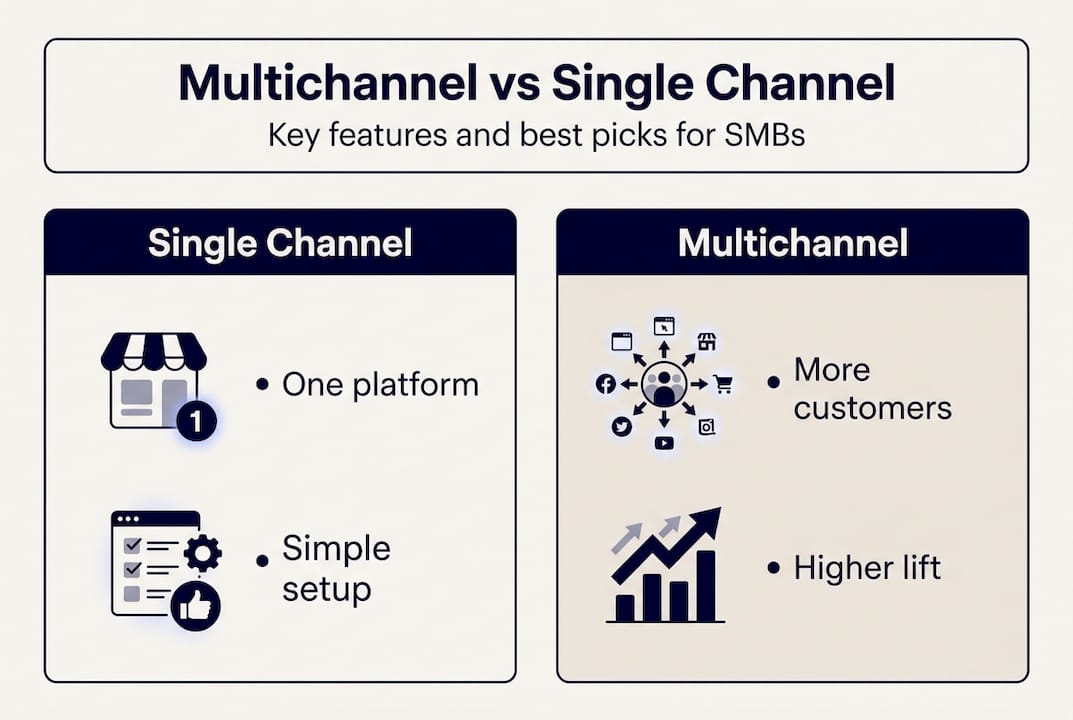
For a deeper look at how to pick your platforms wisely, these social media tips are a great starting point. And if you want to map out the whole picture, a solid digital marketing plan guide will help you see where each channel fits.
Here are some channels worth considering, and what they’re best at:
Email: High ROI, great for nurturing and retention
Instagram and Facebook: Visual storytelling, community building
Google Search (SEO and Ads): Capturing demand when people are actively searching
Direct mail: Surprisingly effective for local businesses and older demographics
Content marketing: Long-term traffic and authority building (see our content marketing strategy guide)
Not sure whether to go multichannel or full omnichannel? The omnichannel vs multichannel breakdown from Progress is a helpful read for understanding the difference in practice.
Pro Tip: Pull your existing customer data (even just purchase history or email open rates) to spot patterns. Where are people engaging most? That’s where you start investing first.
How to launch and measure your multichannel campaign
Alright, you’ve picked your channels. Now what? Time to actually launch the thing. Here’s a step-by-step approach that keeps it simple and measurable.
Set one clear goal. More website traffic? More email sign-ups? More in-store visits? One goal per campaign keeps you focused.
Create consistent messaging. Your tone, visuals, and offer should feel like the same brand across every channel. Not identical, but recognisably you.
Build your content calendar. Plan what goes out, on which channel, and when. Even a basic spreadsheet works fine.
Launch in phases. Start with your strongest channel, then roll out the others over the following weeks. This lets you troubleshoot without everything going sideways at once.
Track from day one. Set up UTM parameters (trackable links) for every digital channel so you know exactly where your traffic and conversions are coming from.
When it comes to measurement, the biggest mistake most small businesses make is tracking channels in isolation. Measure incrementality and avoid silos so you can see how channels work together, not just independently.
Here’s what to track:
Conversion rate per channel
Cost per acquisition by channel
Customer lifetime value for multichannel vs. single-channel customers
Email open and click-through rates
Social engagement and reach
For real-world inspiration on campaigns that actually moved the needle, check out these ROI-boosting social campaign examples. And if you’re adding video to your mix (you should be), the case for video marketing ROI is pretty compelling.
Pro Tip: Tools like Google Analytics 4, Mailchimp, and even Meta’s Ads Manager have built-in cross-channel reporting. You don’t need enterprise software to get useful data. Start simple, stay consistent.
What most guides miss about multichannel strategy for Canadian SMBs
Here’s the honest truth that most marketing guides skip over: multichannel strategy sounds more complicated than it actually is. A lot of Canadian small business owners read about it and immediately picture a team of 12 people and a six-figure ad budget. That’s not the reality.
You can start a legitimate multichannel strategy with email, one social platform, and a basic content plan. That’s it. The complexity comes later, if you want it to.
What most Canadian SMBs actually miss isn’t the tech or the budget. It’s the coordination. They post on Instagram, send an email, and run a Google ad, but each one says something slightly different. That’s not multichannel. That’s just noise on multiple platforms.
The other thing guides rarely mention? The long game. Omnichannel holds the key to long-term loyalty and retention, and multichannel is the natural stepping stone to get there. Think of multichannel as your training wheels. Solid, effective training wheels that deliver real results, but still a step toward something even better.
Incremental testing is your best friend here. Try one new channel at a time, measure its impact, and only keep it if it earns its place. A well-structured digital marketing plan helps you stay coordinated as you grow, so nothing falls through the cracks.
Next steps: Get expert help to grow your business
Ready to stop guessing and start growing? Building a multichannel strategy is genuinely exciting once you have a clear plan and the right support behind you.

At M50 Media, Karl Lundgren works directly with small business owners to build marketing strategies that actually fit their goals, budget, and bandwidth. Whether you need a full strategy session through business coaching or just want to talk through your options on a free marketing SOS call, there’s a starting point for every stage. And if you’re ready to kick off your email channel, Mailerlite email tools are a fantastic, budget-friendly way to get going fast. You’ve got this. Let’s build something great together.
Frequently asked questions
How does multichannel marketing increase sales for small businesses?
Multichannel campaigns connect with customers across several platforms, resulting in purchase rates 287% higher compared to single-channel efforts. More touchpoints mean more opportunities to convert.
What are the most effective channels for starting with multichannel marketing?
For SMBs, email, social, and direct mail deliver quick wins and are easier to manage before expanding to additional platforms. Start there and build confidence before layering in more.
How can I track the ROI of my multichannel campaigns?
Track each channel separately using UTM links and analytics tools, and measure incrementality to avoid silos. Unified dashboards in tools like Google Analytics 4 make this much easier than it sounds.
Is multichannel or omnichannel better for building customer loyalty?
Multichannel delivers strong ROI and expanded reach, but omnichannel is superior for long-term loyalty and retention. Multichannel is the smart, practical first step toward getting there.
Recommended
Comments