Set up social media for business success in 2026

Starting social media for your business feels overwhelming when you face endless platform choices, confusing profile settings, and pressure to post constantly. Many small business owners waste months experimenting without clear direction, leading to frustration and abandoned accounts. This guide walks you through choosing the right platforms, optimising your profiles, planning sustainable content, and measuring what truly matters. Following these proven steps saves time and builds a foundation for genuine marketing results that drive leads and sales.
Table of Contents
Key Takeaways
Point | Details |
Focused platform selection | Identify 1 to 2 platforms where your audience is most active and tailor content to that environment. |
Profile branding consistency | Complete every profile field with a matching logo and bio to build credibility and recognisable branding. |
Master one platform | Start with a single platform, establish a consistent posting rhythm for three months, then expand only after measurable results. |
Value driven content mix | Apply an eighty twenty content rule that prioritises value and education over promotional posts to grow engagement and trust. |
Free tools and ROI tracking | Use free scheduling tools and track metrics focused on return on investment rather than vanity follower counts. |
Choose the right social media platforms for your business
Selecting platforms strategically prevents wasted effort and builds focused engagement. Small businesses should focus on 1-2 platforms where their audience is active, such as Instagram for visual products, Facebook for local services, LinkedIn for B2B. Your target customer’s behaviour determines platform choice more than platform popularity.
Start by identifying where your ideal customers spend their online time. Visual businesses like bakeries, boutiques, or designers thrive on Instagram and Pinterest where imagery drives purchasing decisions. Local service providers including plumbers, restaurants, or fitness studios benefit from Facebook’s community features and local search integration. B2B companies selling professional services find decision-makers actively networking on LinkedIn.
Spreading across too many platforms dilutes your message and exhausts resources. A bakery posting daily on Instagram builds stronger community than posting sporadically across Instagram, Facebook, Twitter, TikTok, and LinkedIn combined. Concentrated effort allows you to understand platform nuances, engage meaningfully with followers, and refine content based on audience response.
Conduct simple audience research before committing to platforms. Survey existing customers about their preferred social channels. Search competitors in your industry and note where they maintain active, engaged communities. Check platform demographics to ensure alignment with your customer profile.
Consider your content creation strengths relative to platform requirements. Video-focused TikTok demands different skills than text-heavy LinkedIn articles or image-centric Instagram posts. Choose platforms matching your team’s capabilities and content production capacity. Implementing marketing strategies for small businesses requires honest assessment of your resources and realistic commitments.
Pro Tip: Start with one platform, master it over three months, then expand to a second platform only after establishing consistent posting rhythm and measurable results.
Set up and optimise your business profiles
Proper technical setup establishes credibility and unlocks platform features unavailable to personal accounts. Core setup steps include claiming business listings, using business accounts, optimising profiles with logo, bio, website, and contact information, plus enabling analytics and verification where possible.
Claim your business listing on each chosen platform before someone else does. Search your business name to check if listings already exist, then follow platform procedures to claim ownership. Switch from personal to business account types to access analytics dashboards, advertising tools, and contact buttons that personal profiles lack.
Complete every profile field without exception. Upload high-resolution logos matching your website and other marketing materials for brand consistency. Write compelling bios that clearly state what you do, who you serve, and what value you provide. Include your website URL and local address if you serve customers in person. Add contact methods like phone numbers and email addresses to make reaching you effortless.

Verification badges signal legitimacy to potential customers researching your business. Apply for verification on platforms offering this feature. Requirements vary, but typically involve confirming your business identity through official documents or website ownership.
Enable built-in analytics tools immediately, even before posting content. Baseline data helps you measure growth accurately. Most platforms offer free analytics showing post performance, audience demographics, and engagement patterns. Understanding effective marketing strategies requires tracking these metrics from day one.
Pro Tip: Create a profile optimisation checklist covering logo upload, bio completion, contact info, website link, business hours, and analytics activation. Review quarterly to ensure information stays current.
Profile Element | Purpose | Priority |
Business account type | Unlocks analytics and advertising features | Critical |
High-quality logo | Brand recognition and professionalism | Critical |
Complete bio | Communicates value proposition clearly | Critical |
Website link | Drives traffic to conversion points | High |
Contact information | Enables customer inquiries | High |
Verification badge | Builds trust and credibility | Medium |
Business hours | Sets customer expectations | Medium |
Develop a content strategy and schedule for engagement
Sustainable content planning prevents burnout while maintaining the consistency that algorithms reward. Follow the 80/20 rule: 80% value content providing education or entertainment, 20% promotional posts about your products or services. This balance builds trust before asking for sales.
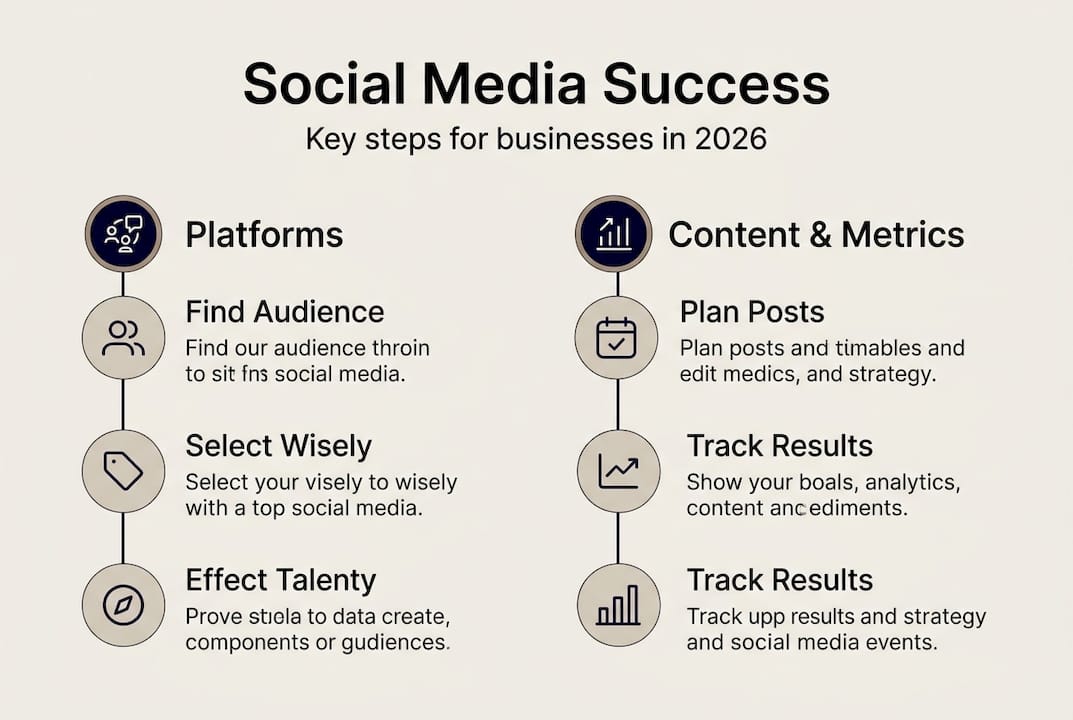
Value content educates your audience about topics related to your industry without directly selling. A plumber might share seasonal maintenance tips, a bakery could post baking techniques, a consultant might explain industry trends. This content positions you as a helpful expert rather than a pushy salesperson.
Batching content creation multiplies efficiency dramatically. Dedicate one afternoon monthly to creating 12-20 posts rather than scrambling daily for content ideas. Photograph multiple products in one session, write several captions at once, or record multiple videos back-to-back. This approach leverages creative momentum and reduces the mental load of constant content production.
Content calendars transform random posting into strategic communication. Simple spreadsheets work perfectly for planning posts two to four weeks ahead. Note dates, post topics, content types, and any relevant hashtags or links. This forward planning ensures you never miss important dates like holidays or industry events.
Posting frequency targets vary by platform and audience expectations. Instagram and TikTok benefit from 3-5 posts weekly, while LinkedIn performs well with 2-3 posts weekly. Facebook falls somewhere between at 3-4 weekly posts. Consistency matters more than frequency, so choose a sustainable schedule you can maintain long-term.
Free scheduling tools eliminate the need for manual posting. Buffer, Hootsuite’s free tier, and platform-native scheduling features let you load content in advance and publish automatically at optimal times. This automation maintains presence even during busy periods or vacations. Developing a content marketing strategy guide helps structure these efforts systematically.
Pro Tip: Repurpose one piece of core content across multiple formats and platforms. Turn a blog post into an infographic for Instagram, a discussion post for LinkedIn, and a tip series for Twitter.
Measure success and refine your social media efforts
Tracking meaningful metrics reveals what drives business results rather than vanity metrics that feel good but generate no revenue. Focus on conversions, leads, and sales rather than likes or follower counts. A thousand followers mean nothing if none become paying customers.
Key performance indicators vary by business goal. E-commerce businesses track product clicks and purchases. Service providers monitor inquiry form submissions and booking requests. B2B companies measure content downloads and demo requests. Define your primary conversion action, then track how social media contributes to that outcome.
Benchmarks vary by industry and business size, so customize expectations rather than chasing generic standards. A local restaurant’s engagement rates differ vastly from a software company’s metrics. Compare your performance against your own baseline, aiming for month-over-month improvement rather than industry averages that may not reflect your reality.
Platform | Average Engagement Rate | Optimal Posting Frequency | Best Posting Times |
1.2-3.5% | 3-5 times per week | Weekdays 11am-1pm | |
0.5-1.5% | 3-4 times per week | Weekdays 1pm-3pm | |
2.0-5.0% | 2-3 times per week | Weekdays 8am-10am | |
TikTok | 5.0-8.0% | 3-7 times per week | Evenings 7pm-9pm |
Analytics insights guide content optimisation and scheduling refinements. Notice which post types generate most engagement, then create more of that content. Identify when your audience is most active online, then schedule posts for those windows. Test different content formats, captions lengths, and calls to action, measuring results to inform future decisions.
Adjust goals quarterly using the SMART framework: Specific, Measurable, Achievable, Relevant, Time-bound. If you aimed for 50 leads monthly but generated only 20, analyse why. Perhaps you need better calls to action, more frequent posting, or different content types. Set a revised goal of 25 leads next month with specific tactical changes.
Handle negative feedback transparently to build trust. Respond promptly to complaints, take conversations private when appropriate, and demonstrate genuine care for customer concerns. Public responses to criticism show potential customers how you treat people when things go wrong. Following a comprehensive social media marketing guide helps navigate these challenges strategically.
Pro Tip: Create a simple monthly report tracking three metrics: total conversions from social media, cost per conversion including time investment, and top-performing content type. This focused tracking prevents data overwhelm while maintaining accountability.
Discover expert coaching to boost your social media success
Navigating social media setup alone creates unnecessary frustration and costly mistakes. Professional coaching accelerates your progress by providing personalised strategy, accountability, and expert feedback tailored to your specific business situation. M50 Media offers business coaching services designed specifically for small business owners building their digital marketing presence.
Struggling with an urgent marketing challenge? Book a free marketing SOS call to get immediate guidance on your most pressing social media questions. Whether you need help choosing platforms, creating content that converts, or measuring ROI effectively, expert support transforms confusion into clarity. Visit M50 Media to explore coaching options and access additional resources through the blog’s extensive library of practical marketing guides.
Frequently asked questions
What social media platforms should small businesses focus on?
Focus on one or two platforms where your target audience actively engages rather than spreading efforts across every available channel. Instagram works well for visual businesses like boutiques and bakeries, Facebook serves local service providers effectively, and LinkedIn connects B2B companies with decision-makers. Research where your ideal customers spend time online and match platform strengths to your content creation capabilities.
How often should I post on social media for best engagement?
Aim for three to five posts weekly on visual platforms like Instagram and TikTok, while LinkedIn performs well with two to three weekly posts. Consistency matters more than frequency, so choose a sustainable schedule you can maintain long-term without burning out. Use batching and scheduling tools to maintain regular presence even during busy periods.
What metrics matter most for measuring social media success?
Track business outcomes like leads generated, sales completed, and conversion rates rather than vanity metrics like follower counts or post likes. Monitor how many people click through to your website, submit inquiry forms, or make purchases attributed to social media. These conversion-focused metrics reveal actual ROI and guide strategic improvements better than engagement numbers alone.
Can I manage multiple platforms without burning out?
Yes, by focusing on just one or two platforms and using scheduling tools plus content batching techniques. Create multiple posts in single dedicated sessions rather than scrambling daily for content ideas. Free scheduling tools like Buffer or platform-native schedulers automate posting, maintaining presence without constant manual effort. Start with one platform, master it, then expand only after establishing sustainable routines.
Recommended
Comments