Step by step SEO for small businesses in 2026

TL;DR:
Step-by-step SEO focuses on fixing technical issues and optimizing existing core pages before creating new content. It emphasizes foundation-building, such as verifying your site, submitting sitemaps, and enhancing on-page elements to improve search visibility and local traffic. Consistent measurement and iteration ensure long-term growth and better results for small businesses.
SEO can feel like trying to assemble IKEA furniture with no instructions and half the parts missing. You know it matters. Everyone keeps telling you it matters. But the advice online is either way too vague (“just create good content!”) or way too technical (robots.txt what now?). Here at M50media, we believe step by step SEO is the only sane way for a small business owner to actually get traction without losing their mind. This guide walks you through exactly what to do, in what order, so you can stop spinning your wheels and start showing up where it counts.
Table of Contents
Key takeaways
Point | Details |
Fix technical issues first | Crawl problems and indexability gaps waste all your other SEO efforts if left unchecked. |
Prioritise existing core pages | Optimise your current key pages before creating anything new to build traction faster. |
On-page basics deliver outsized results | Polished title tags, meta descriptions, and headers move the needle more than most people expect. |
Local SEO is low-hanging fruit | A properly set-up Google Business Profile can drive real customers before your rankings even budge. |
Track the metrics that matter | Organic traffic, leads, and revenue tell you if SEO is actually working for your business. |
Step by step SEO: getting prepared
Before you touch a single title tag, you need a solid foundation. Think of it like baking (bear with us). You wouldn’t throw random ingredients into a bowl and hope for a cake. You’d read the recipe, gather your tools, and preheat the oven. SEO works the same way.
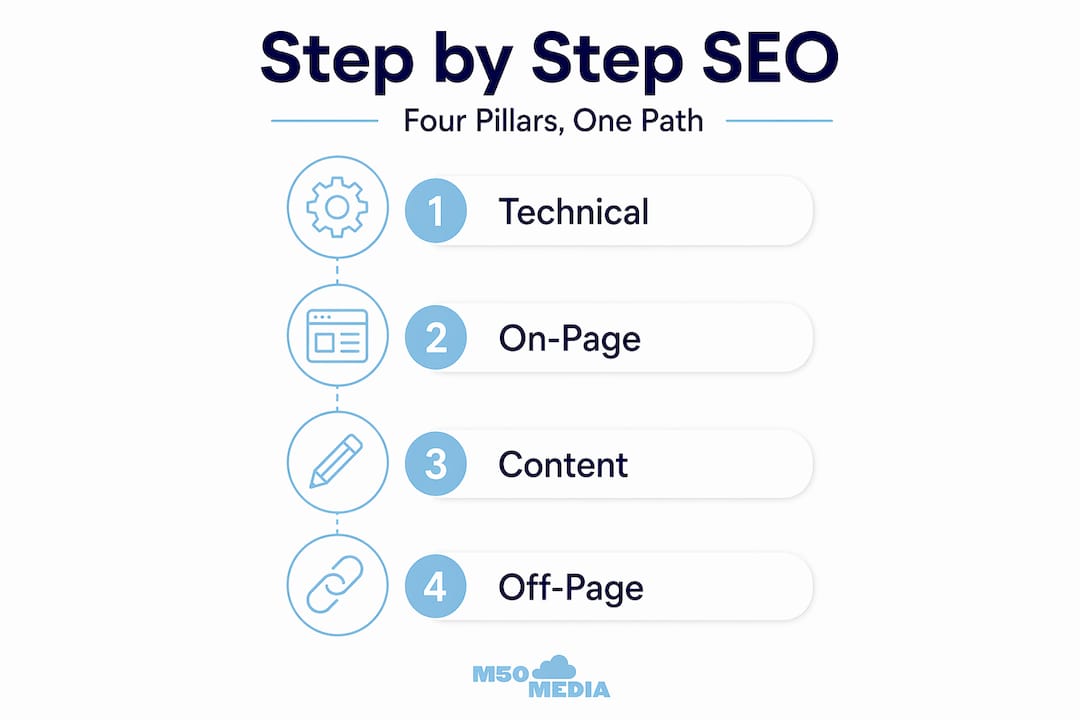
Start by understanding the four pillars of SEO: technical, on-page, content, and off-page. A structured learning path that covers all four before jumping into tactics is what separates businesses that see results from those that waste months on random efforts. Each pillar plays a different role, and skipping one is like baking that cake without turning the oven on.
Next, get clear on your business goals and who your customers are. Who are you trying to reach? What are they searching for? What problems do they need solving? Your keyword research flows directly from those answers.
Here are the must-have tools to have ready before you start:
Google Search Console: Free, official, and non-negotiable. It shows you how Google sees your site.
Google Analytics: Tracks where your visitors come from and what they do on your site.
A keyword research tool: Options range from free (Google Keyword Planner) to paid (Ahrefs, Semrush). Pick one and learn it.
An XML sitemap: Most platforms generate one automatically. Find yours now.
A site audit tool: Even a free crawl from Screaming Frog (up to 500 URLs) is a great start.
Once you have those sorted, verify your website in Google Search Console and submit your sitemap. That one action alone tells Google your site exists and what pages to look at. Then run a basic technical and content audit to see exactly where you stand before wasting effort on the wrong things.
Pro Tip: Don’t skip the audit. It is the GPS that tells you where you actually are before you start driving.
Technical SEO: crawlability and site health
Technical SEO sounds scary. It isn’t. At its core, it just means making sure Google can find, read, and understand your website. That’s it.
There is an important distinction to know here: crawlability and indexability are not the same thing. Crawlability and indexability are distinct. Google crawling your page means it visited it. Indexing means it decided to include it in search results. A page can be crawled and still not indexed. That gap is where a lot of small business SEO quietly dies.
Here is a numbered checklist to work through for technical SEO:
Check your robots.txt file. Make sure you haven’t accidentally blocked Google from crawling important pages. You can view it at yourdomain.com/robots.txt.
Look for accidental noindex tags. These tell Google not to index a page. Sometimes they are added during development and never removed.
Fix canonical tag issues. Canonical tags tell Google which version of a page is the “real” one. Conflicts here cause duplicate content problems.
Submit and monitor your sitemap. Submitting your sitemap is your primary discovery tool, but it does not guarantee indexing. Check the Coverage report in Search Console regularly.
Improve site speed. Slow sites frustrate users and get penalised. Use Google PageSpeed Insights for free recommendations.
Confirm mobile-friendliness. Google indexes the mobile version of your site first. Non-mobile-friendly pages are at a serious disadvantage.
Check for SSL (HTTPS). If your site still shows HTTP, fix that today. It’s a trust signal for both users and Google.
Fix broken links. Internal broken links confuse crawlers and disappoint users. A free tool like Broken Link Checker finds them fast.
Here is a quick look at the most common technical issues and their priority levels:
Issue | Impact on SEO | Priority |
Pages blocked by robots.txt | Very high | Fix immediately |
Missing or broken sitemap | High | Fix this week |
No SSL certificate | High | Fix immediately |
Slow page load speed | Medium-high | Fix within a month |
Broken internal links | Medium | Fix within a month |
Non-mobile-friendly pages | High | Fix immediately |
Pro Tip: Use the URL Inspection Tool inside Google Search Console to check the index status of any individual page. It tells you exactly why a page might be excluded.
On-page SEO: optimising your content and meta elements
This is where most beginners want to start. And honestly? It’s the fun part. But technical SEO has to come first, otherwise you’re polishing a car with a busted engine.
On-page SEO is everything you control directly on the page. Here’s the bit most guides gloss over: every page should target one primary keyword that matches what a real person is actually searching for. Not what you think sounds good. What they type into Google.
Once you know your keyword, here’s what to optimise on every important page:
Title tag: Keep it under 60 characters and include your keyword naturally near the front. Title tags under 60 characters perform significantly better in search results.
Meta description: Aim for 50 to 300 characters. Write it like an ad. This is your pitch to someone scrolling through results.
H1 heading: One per page. Should include your primary keyword and clearly state what the page is about.
Subheadings (H2, H3): Break up your content and include related keywords naturally. Think of them as a table of contents for skimmers.
Body content: Write for humans first. Answer the question your keyword is asking. Be specific, be useful, and be clear.
Image alt text: Every image needs a short, descriptive alt text. It helps accessibility and gives Google context about your visuals.
Internal links: Link to other relevant pages on your site. It helps Google understand your site structure and keeps visitors exploring.
One thing worth knowing: optimising existing core pages before creating new content is one of the most efficient moves a small business can make. Your homepage, service pages, and top blog posts should be in great shape before you even think about adding more.
Pro Tip: Improving your meta descriptions is one of the fastest wins available. A more compelling description can lift your click-through rate from existing rankings almost immediately. Check out these blog writing steps to write content that actually converts.
Off-page SEO and local SEO: building trust and nearby visibility
Here’s where your reputation starts working for you. Off-page SEO is essentially what the rest of the internet says about you. And for a small business, local SEO is often the fastest path to real revenue.
Backlinks are still one of the strongest ranking signals Google uses. A backlink is simply another website linking to yours. Not all links are equal, though. A link from a well-respected local news site beats ten links from random directories. Focus on earning links that make sense contextually, such as being featured in a local guide, collaborating with complementary businesses, or getting mentioned in industry publications. You can find more practical tactics on how to build backlinks that actually move the needle.
For local SEO, here’s your four-step starting point:
Claim your Google Business Profile. If you haven’t done this yet, stop reading and do it right now. Seriously. It’s free and it directly affects whether you show up in local map results. Google Business Profile optimisation is one of the most impactful steps for local businesses.
Keep your NAP consistent. NAP stands for Name, Address, Phone number. It needs to be identical everywhere: your website, your Google profile, Yelp, directories, social media. Even a slight variation can confuse Google.
Build local citations. Get listed on reputable local and industry directories. Think Yelp, Yellow Pages Canada, and any niche directories relevant to your business.
Collect and respond to reviews. Ask happy customers to leave a Google review. Then respond to every review, positive or negative. It signals engagement and builds credibility.
Here’s a quick comparison of local SEO versus general off-page SEO to help you see where to focus:
Strategy | Best for | Timeline to results |
Google Business Profile setup | Local foot traffic and map rankings | Weeks |
Building local citations | Local authority and NAP consistency | Weeks to months |
Earning backlinks from industry sites | General domain authority | Months |
Content marketing for link earning | Long-term organic growth | Months to a year |
For a deeper look at local strategies, the M50media local SEO guide is a great next read.
Measuring and iterating: tracking what’s actually working
You have done the work. Now comes the part most people skip: checking whether it’s actually doing anything.
Key metrics to watch consistently:
Organic traffic: Found in Google Analytics. Is the number growing over time?
Keyword rankings: Are your target keywords moving up? Use Search Console’s Performance report.
Click-through rate (CTR): If your page ranks but nobody clicks, your title or description needs work.
Leads and revenue: Tracking organic traffic, leads, and revenue as a minimum framework tells you whether SEO is actually converting, not just generating traffic.
When rankings stall or traffic drops, Google Search Console is your diagnostic centre. The Coverage report shows pages with indexing problems. The URL Inspection Tool reveals crawl issues. Monitoring SEO performance regularly helps you catch drops before they become crises.
Set a monthly review ritual. Pull your key numbers, note any changes, and identify one or two things to adjust. SEO rewards consistency far more than bursts of frantic activity.
Pro Tip: Set up a simple monthly tracking spreadsheet with five columns: keyword, ranking, organic traffic, leads, and revenue. Fifteen minutes a month with that sheet is worth more than hours of guessing.
My honest take on step by step SEO
I’ve worked with a lot of small business owners on their SEO, and I keep seeing the same pattern. They start with content or backlinks, then get frustrated when nothing ranks. When I dig in, the problem is almost always technical. Pages blocked from indexing, slow load times, broken internal links. All that beautiful content they created? Google couldn’t even access it.
My take is this: the sequence matters more than most people realise. Fix your technical foundation first. Then optimise your core pages. Then and only then should you think about new content or link building. Skipping ahead feels faster, but it usually costs you months.
The other thing I’ve seen? Small businesses that obsess over discipline in the basics consistently outperform those chasing the latest tactics. Writing a proper title tag and a genuinely useful meta description is not glamorous work. But doing it correctly across every key page compounds over time in a way that’s frankly exciting to watch.
The long-term benefits of SEO investment are real, but only for those who build methodically. Take it step by step. And when you get stuck, ask for help instead of guessing.
— Karl
Ready to get some SEO support?
Knowing the steps is one thing. Actually doing them alongside your regular business responsibilities? That’s where things get real.
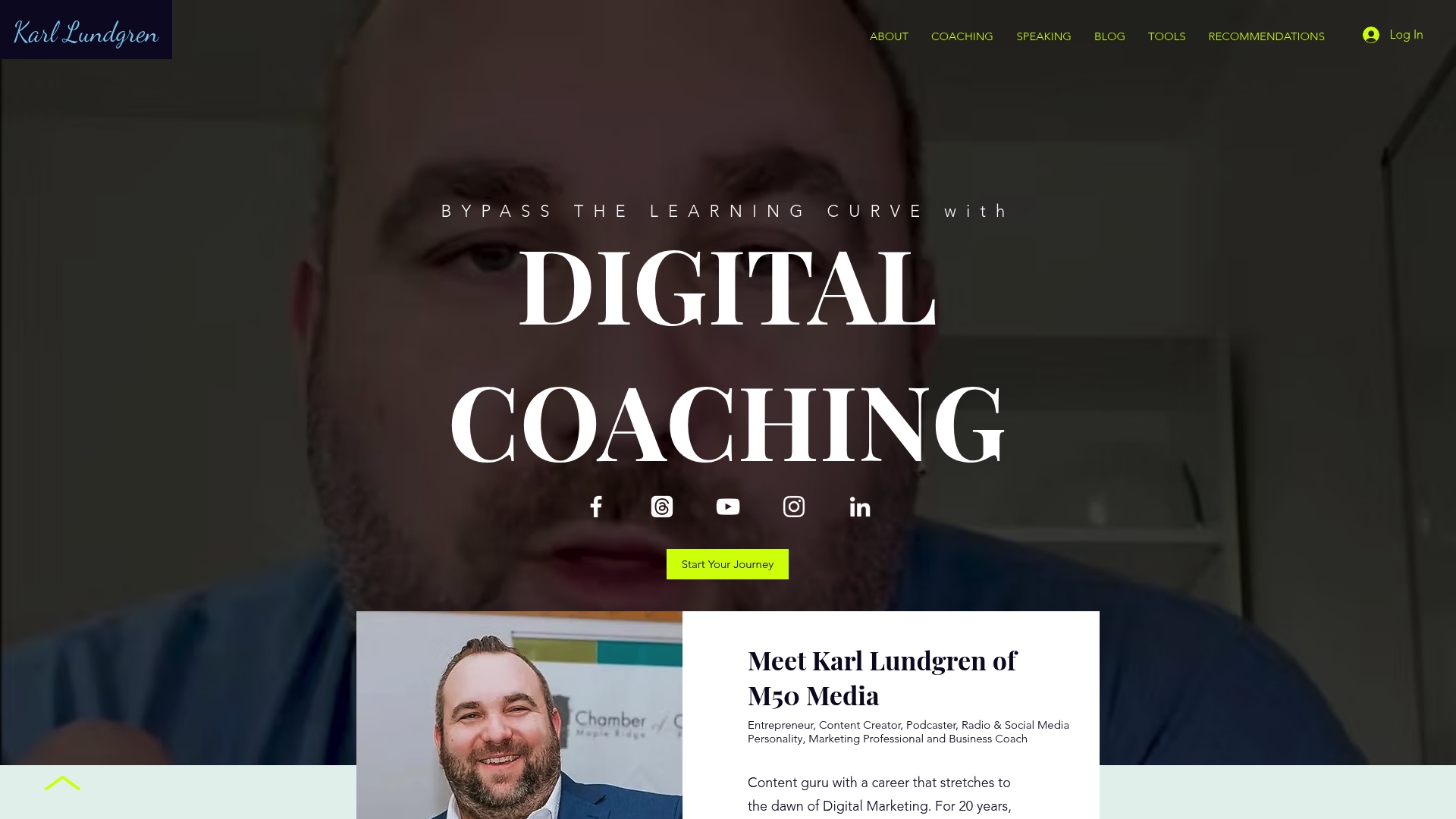
At M50media, Karl offers personalised SEO coaching designed specifically for small business owners who want to implement smart strategies without the overwhelm. Whether you want someone to hold you accountable or you just need your questions answered by an actual human, coaching is the fastest way to skip the trial and error. Not sure if it’s right for you? Book a free Marketing SOS call and let’s figure it out together. No fluff, no pitch. Just clarity.
FAQ
What is step by step SEO for small businesses?
Step by step SEO is a sequenced approach that guides you through technical fixes, on-page optimisation, content improvements, and off-page strategies in a logical order. It helps small businesses avoid wasted effort by tackling the right things at the right time.
How long does it take to see SEO results?
Most small businesses start seeing measurable movement in organic traffic and rankings within three to six months of consistent effort. Local SEO, particularly through a Google Business Profile, can show results within a few weeks.
What are the most basic SEO techniques to start with?
The most effective starting points are verifying your site in Google Search Console, submitting your sitemap, writing proper title tags under 60 characters, and fixing any pages blocked from indexing. These basic SEO techniques create the foundation everything else builds on.
Do I need to pay for SEO tools to get started?
No. Google Search Console and Google Analytics are free and cover most of what a beginner needs. Paid tools like Ahrefs or Semrush add depth, but they’re not required to get started with a solid SEO checklist.
What is the difference between on-page and off-page SEO?
On-page SEO covers everything you control directly on your website, like content, title tags, and internal links. Off-page SEO refers to external signals like backlinks and Google Business Profile listings that build your site’s authority and local visibility.
Recommended
Comments