Streamline your content workflow: 73% see 5x output boost

Small business owners know the frustration: you need consistent content to attract customers, but creating it feels overwhelming. Between running operations and serving clients, marketing gets pushed aside. The result? Sporadic posts, inconsistent messaging, and missed opportunities to connect with your audience. An efficient content creation workflow solves this by turning chaos into a repeatable system that delivers results without consuming your entire week. This guide shows you exactly how to build one.
Table of Contents
Key takeaways
Point | Details |
Workflow discipline beats volume | Consistent execution with quality controls outperforms random publishing for small teams |
AI multiplies output capacity | Businesses using AI tools see up to 5x increases in content production |
Repurposing maximises resources | Transform one pillar piece into multiple weekly assets to stretch limited budgets |
Business metrics matter most | Track leads and revenue impact instead of vanity metrics like page views |
What you need to prepare before building your workflow
Before diving into content creation, you need a solid foundation. Without proper preparation, even the best workflow falls apart under real world pressure.
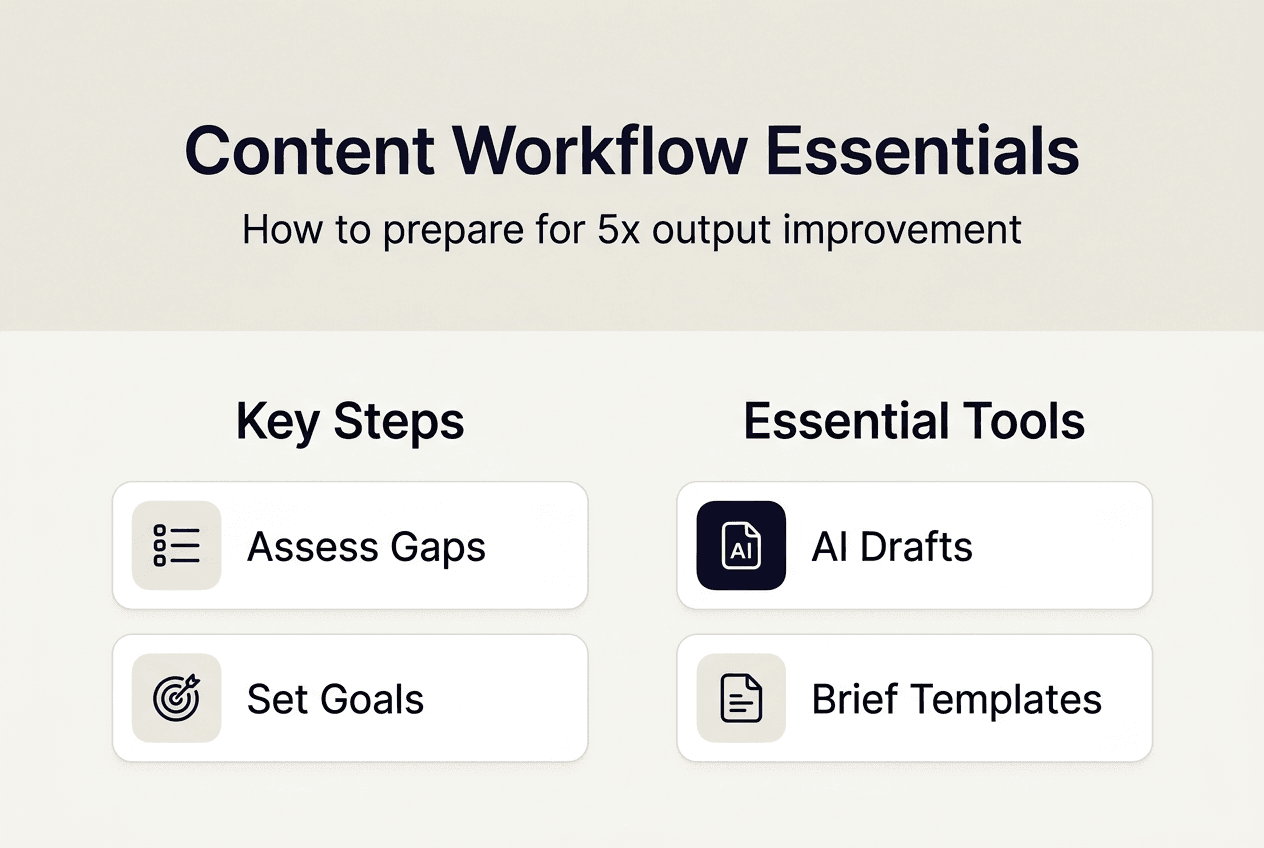
Start by honestly assessing your current situation. What content challenges drain your time? Where do bottlenecks occur? Most small businesses face similar obstacles: limited staff, tight budgets, and competing priorities. Understanding these constraints helps you design a workflow that actually fits your reality rather than an idealised version that looks good on paper but never gets executed.
Next, define clear content goals tied to business outcomes. Forget vague objectives like “increase brand awareness.” Instead, focus on measurable targets: generate 20 qualified leads monthly, reduce customer acquisition cost by 15%, or increase email subscribers by 30%. These concrete goals guide every content decision and make it easy to evaluate what’s working.
Gathering the right tools transforms workflow efficiency. In 2026, AI-powered content aids have become essential for small businesses. Research shows 73% of small businesses struggle with consistency; AI integration increases output 5x in documented case studies. These tools handle research, generate draft outlines, and suggest topic angles, freeing you to focus on strategy and refinement.
Establish clear roles from the start. AI excels at generating drafts, conducting research, and identifying trending topics. Humans excel at strategic thinking, brand voice refinement, and quality control. This division of labour prevents the common mistake of either avoiding AI entirely or trusting it blindly. You want AI doing the heavy lifting while you provide the creative direction and final polish.
Brand voice consistency separates professional content from amateur efforts. Document your tone, key phrases, and style preferences in a simple guide. Include examples of what sounds like your brand and what doesn’t. This reference keeps content cohesive whether you’re writing it yourself, working with a team member, or using AI assistance.
Pro Tip: Create a content brief template that captures your brand voice guidelines, target audience details, and key messaging points. Use this template for every piece to maintain consistency without reinventing the wheel each time.
Quality control checkpoints prevent subpar content from reaching your audience. Define minimum standards: fact checking requirements, readability scores, SEO basics, and brand alignment criteria. These guardrails ensure everything published meets your standards regardless of who creates it or which small business marketing tools you use.
Step-by-step guide to building and executing your content creation workflow
With preparation complete, you’re ready to build a workflow that produces consistent, high quality content without overwhelming your schedule.
Define your content pillars first. These are three to five core themes that align with your business expertise and customer needs. A marketing consultant might focus on digital strategy, content creation, and analytics. A local bakery might cover baking tips, ingredient sourcing, and community events. Pillars provide focus, preventing the scattered approach that dilutes your message and confuses your audience.

Use AI tools strategically for ideation and research. Feed your content pillars into AI platforms and ask for topic suggestions, trending angles, and audience questions. The technology excels at identifying gaps in existing content and surfacing data you might miss manually. This research phase typically takes 30 minutes instead of several hours when done traditionally.
Create detailed content briefs before writing begins. Each brief should specify the target audience, primary keyword, key points to cover, desired word count, and internal links to include. This upfront investment saves enormous time during creation because you’re never staring at a blank page wondering what to write. The brief becomes your roadmap.
Generate first drafts using AI assistance, then refine extensively. Let the technology handle structure, initial research integration, and basic content flow. Your job is transforming that draft into something genuinely valuable. Add personal insights, real examples from your business, and the nuanced understanding that only human experience provides. This hybrid approach delivers the consistent execution with briefs and quality assurance that beats publishing noise for small teams.
Implement a standard review process with specific checkpoints. First pass: verify factual accuracy and source credibility. Second pass: refine for brand voice and readability. Third pass: optimise for SEO without sacrificing natural flow. This systematic approach catches issues before publication and gradually improves your content quality as you internalise these standards.
Schedule publishing consistently to build audience trust. Whether you commit to weekly blog posts, bi-weekly videos, or daily social updates, consistency matters more than frequency. Your audience learns when to expect new content and returns regularly. Sporadic publishing, even if higher quality, trains people to forget about you.
Pro Tip: Batch create content during dedicated sessions rather than switching contexts daily. Spend one afternoon monthly generating five blog briefs, another afternoon drafting them all, and a third afternoon editing and scheduling. This focused approach is far more efficient than trying to create content in scattered 30-minute blocks.
Integrate your workflow with a content marketing strategy that connects each piece to broader business goals. Every blog post, video, or social update should serve a purpose: educating prospects, nurturing leads, supporting sales conversations, or retaining customers. Random content might attract visitors, but strategic content converts them.
Maximising efficiency and impact with content repurposing and measurement
Creating content is only half the battle. Smart businesses multiply their investment through repurposing and measure what actually drives results.
Content repurposing transforms one substantial piece into multiple assets throughout the week. Write a comprehensive blog post on Monday, then extract key points for three social media posts, create a short video explaining the main concept, design an infographic highlighting statistics, and draft an email newsletter featuring the best insights. This approach lets you repurpose one pillar into multi-assets weekly to maximise efficiency even with minimal budget.
The repurposing process follows a simple pattern. Start with long form content like blog posts or videos that explore topics thoroughly. These pillar pieces require more effort but provide rich material for extraction. Break them into smaller chunks optimised for different platforms: pull quotes for social media, key statistics for infographics, actionable tips for email sequences, and discussion questions for community engagement.
Different formats reach different audience segments. Some people prefer reading detailed articles, others want quick video explanations, and many engage primarily through social media snippets. By presenting the same core information across multiple formats, you increase the chances of connecting with your entire target audience rather than just the segment that prefers your default format.
Measurement separates successful content strategies from busy work. Track metrics that indicate genuine business impact rather than vanity numbers that look impressive but don’t pay bills. Focus on leads, customer acquisition cost, and revenue generated directly from content efforts. These indicators tell you whether your workflow produces actual returns or just consumes resources.
Use first-party data for accurate attribution. Install proper tracking on your website to see which content pieces drive email signups, consultation bookings, or product purchases. Connect your content management system with your customer relationship management platform so you can trace the journey from first blog visit to closed sale. This visibility reveals which topics and formats deserve more investment.
Avoid common measurement mistakes that distort your understanding. Page views and social media likes feel good but rarely correlate with business growth. A blog post with 10,000 views that generates zero leads is less valuable than one with 500 views that converts 10 qualified prospects. Similarly, social posts with high engagement but no click throughs to your website or offers provide entertainment value, not business value.
Pro Tip: Create a simple monthly dashboard tracking three metrics: content pieces published, leads generated from content, and cost per lead from content efforts. Review these numbers monthly to identify trends and adjust your workflow accordingly.
Regularly review performance data to refine your strategy. Which content pillars resonate most with your audience? What formats drive the highest conversion rates? Which distribution channels deliver the best return on effort? Use these insights to double down on what works and eliminate what doesn’t. Your workflow should evolve based on real results, not assumptions or industry trends that may not apply to your specific situation.
The content marketing approach that drives leads combines consistent execution with continuous optimisation. You maintain the discipline of regular publishing while constantly improving based on performance feedback. This balance prevents both the chaos of no system and the rigidity of never adapting to what your audience actually wants.
Study successful content marketing examples from businesses similar to yours. What patterns emerge? How do they structure their content? What topics do they prioritise? While you shouldn’t copy competitors directly, understanding what works in your industry provides valuable direction for your own efforts.
Boost your marketing with expert coaching and tools
Building an efficient content workflow takes time and expertise. You don’t have to figure it out alone.
M50 Media offers personalised coaching that helps small business owners develop marketing strategies tailored to their specific situations. Work one on one with digital marketing expert Karl Lundgren to refine your content approach, overcome bottlenecks, and accelerate results. Whether you’re starting from scratch or optimising an existing workflow, expert guidance shortens your learning curve dramatically.

Need quick answers to pressing marketing challenges? Schedule a free Marketing SOS call for focused guidance on your most urgent questions. These sessions provide actionable solutions you can implement immediately rather than generic advice that doesn’t fit your reality.
Explore the full range of resources available through M50 Media, including tool recommendations, detailed guides, and proven frameworks for small business marketing success. The right support system transforms content creation from an overwhelming burden into a manageable, results driven process.
FAQ
How long does it take to see results from improving my content creation workflow?
Most small businesses notice improvements within three months of adopting a structured workflow. Initial changes include reduced stress, more consistent publishing, and better content quality. Business impact metrics like lead generation and conversion rates typically improve in months four through six as your content library grows and search engines index your material. Consistent execution accelerates these timelines significantly.
What are the best AI tools to use for content creation in 2026?
Popular AI tools in 2026 include platforms for research, draft generation, and content optimisation. The specific tools matter less than how you use them. Successful businesses combine AI capabilities with human refinement to maintain quality and brand authenticity. Explore different options to find what fits your workflow, budget, and technical comfort level. Learn more about AI’s role in modern marketing to make informed choices.
How can I measure if my content marketing is generating business value?
Focus on leads generated, customer acquisition cost, and revenue directly attributed to content efforts. Install tracking to connect content consumption with business actions like email signups, consultation bookings, or purchases. Use first-party data from your website and customer relationship management system for accurate attribution. Avoid vanity metrics like page views or social likes that don’t indicate genuine business return. Discover how content marketing drives measurable leads when properly tracked.
Should I outsource content creation or keep it in house?
The answer depends on your resources, expertise, and business priorities. In house creation offers better brand control and deep product knowledge but requires significant time investment. Outsourcing provides professional quality and frees your schedule but costs more and requires clear communication. Many small businesses find a hybrid approach works best: handle strategy and final editing internally while outsourcing research and draft creation. Evaluate your specific situation honestly before deciding.
How many content pieces should I publish weekly as a small business?
Quality and consistency matter more than quantity. Start with one substantial piece weekly, such as a detailed blog post, then repurpose it into multiple formats for different channels. This approach is more sustainable and effective than trying to create five mediocre pieces that drain your resources without delivering results. As your workflow matures and you build efficiency, gradually increase output while maintaining quality standards.
Recommended
Comments