Unlock the benefits of email marketing for small businesses

TL;DR:
Email marketing offers small businesses a controllable, measurable channel with higher conversion rates than social media or paid ads. Building an engaged, opt-in email list and utilizing segmentation and automation can significantly improve results and ROI. Proper list hygiene, compliance, and ongoing strategy maintenance are essential for sustained success in 2026 and beyond.
You’ve got a great product, a solid service, and the drive to make your business thrive. But between juggling social media algorithms, paid ads, and everything else on your plate, you’re probably wondering which marketing channel actually delivers real, measurable results without draining your budget. Here’s the thing: email marketing efficiency is built on a foundation of high-intent subscribers who chose to hear from you, making it one of the most powerful tools in your small business arsenal.
Table of Contents
Key Takeaways
Point | Details |
High ROI potential | Email marketing offers industry-leading ROI, especially for direct conversions and repeat customer relationships. |
Automation & segmentation | Automated and segmented campaigns save time and ensure the right people get the right message. |
Metrics that matter | Focus on actionable metrics like clicks and conversions, not just open rates, to measure and optimise success. |
List health and compliance | Regularly clean your list and follow rules to maintain deliverability and protect your brand’s reputation. |
Continuous improvement | Learn from metrics and benchmarks to test, refine, and grow the impact of your email strategy. |
Why email marketing stands out for small businesses
Let’s be real for a second. Social media can feel like renting a billboard in someone else’s city. One algorithm change and your reach drops faster than your motivation on a Monday morning. Email is different. When someone subscribes to your list, you own that relationship. No middleman. No auction for attention. No surprise platform policy changes that tank your visibility overnight.
“Email lets you combine owned audience control with systematized customer journeys via automation and segmentation, then measure results directly.” This is the practical benefit of email marketing that sets it apart from every rented channel out there.
That “owned audience” concept is genuinely a game changer. Think of it like the difference between renting a venue and owning your storefront. On social media, you’re renting. With email, you’ve got the keys. You decide when to open, what to display, and who gets the VIP treatment.
Here’s what makes email uniquely powerful for small businesses like yours:
You control the timing, the message, and the segmentation
Subscribers have explicitly opted in, so they actually want to hear from you
No algorithm decides whether your message gets seen
Every campaign is measurable from open to conversion
You can test, tweak, and improve with real data
If you’re still on the fence about why use email marketing, consider this: social media posts have an organic reach of roughly 2 to 5 percent for most business pages. Email, on the other hand, lands directly in the inbox of people who raised their hand and said “yes, I want this.” That’s a completely different conversation.
And if you’re just getting started, building an email list is the single most important step you can take right now. Every subscriber is a potential loyal customer waiting to hear your story.
Now that you’ve seen why email deserves a place in your marketing toolbox, let’s explore each major benefit and how it can drive results for your business.
Top measurable benefits of email marketing
With this foundation, let’s break down the specific, measurable gains email marketing offers your business.
Email consistently tops the charts when it comes to return on investment. HubSpot’s marketing statistics position email as a high-ROI channel for driving conversions in both B2C and B2B environments. And that’s not just hype. It’s backed by consistent data across industries and business sizes.
Here are the top measurable benefits you can expect when you do email marketing right:
High conversion rates: Email subscribers convert at significantly higher rates than cold social media audiences because they already know and trust your brand.
Scalable reach without increasing ad spend: Once your list grows, sending to 500 people costs the same as sending to 5,000.
Automation saves serious time: Set up welcome sequences, cart abandonment flows, and re-engagement campaigns once, then let them run on autopilot.
Personalisation lifts engagement: Segmented campaigns consistently outperform generic blasts in both click rates and revenue.
Full campaign tracking: You can see exactly who opened, clicked, and converted, giving you a clear picture of what’s working.
Want to see what strong performance looks like in practice? Industry benchmarks show that monitoring your delivery rate, open rate, and click rate gives you powerful diagnostic data to improve every campaign you send.
Let’s put some of these benefits side by side so you can see how email stacks up:
Metric | Email marketing | Social media organic | Paid ads |
Audience intent | High (opted in) | Low to medium | Medium |
Cost per send | Very low | Free but limited reach | Moderate to high |
Measurability | Excellent | Limited | Good |
Audience ownership | Full | None | None |
Automation potential | High | Low | Medium |
Pretty compelling table, right? 😄
Pro Tip: Don’t just look at the raw numbers in your email reports. Dig into which subject lines drove the most clicks and which content led to actual purchases. Check out some email campaign examples to see what this looks like for real small businesses.
And when you’re ready to sharpen your approach, these email marketing tips will help you level up fast. You can also use tools like campaign ROI tracking to connect your email efforts directly to business outcomes.
Segmentation and automation: Personalising the customer journey
Segmentation and automation are at the core of taking your email strategy to the next level. Here’s how they work in practice.
Imagine you run a boutique fitness studio. You’ve got gym newbies, seasoned spin class regulars, and people who signed up for yoga three months ago and haven’t been back since. Sending all three groups the exact same email is like handing everyone the same workout plan regardless of fitness level. It’s not going to land.

Segmentation fixes that. It uses data like purchase history, location, engagement behaviour, and signup source to split your audience into meaningful groups. Then you send content that actually speaks to each group’s needs and interests. The result? Higher engagement, lower unsubscribes, and more sales.
Automation and segmentation together turn your email list into a scalable system, not just a newsletter you remember to send when things slow down. They enable timely, personalised journeys that feel human even when they’re running on autopilot.
Here’s a breakdown of the most effective automated email flows for small businesses:
Automated flow | Trigger | Primary goal |
Welcome series | New subscriber | Build trust and introduce your brand |
Abandoned cart | Cart left unpurchased | Recover lost revenue |
Post-purchase follow-up | Completed order | Encourage review and repeat purchase |
Re-engagement campaign | Inactive for 60 to 90 days | Win back lapsed subscribers |
Birthday or anniversary | Date-based trigger | Strengthen loyalty with a personal touch |
Setting up even two or three of these flows can dramatically change your results without adding more hours to your week. That’s the beauty of it.
Some key practices to get your segmentation working properly:
Collect relevant data at signup (interests, location, preferences)
Tag subscribers based on their behaviour (clicked a link, visited a page, made a purchase)
Review your segments quarterly so they stay accurate and relevant
Use A/B testing within each segment to find what resonates
Pro Tip: Curious how AI fits into all of this? The role of AI in email marketing is growing fast, especially for personalisation at scale. It’s worth exploring if you want to get ahead of the curve.
For a complete strategy walkthrough, the email marketing guide for small business growth is a great next read.
Of course, to maintain these benefits, it’s crucial to avoid the most common email marketing pitfalls. Here’s what to watch out for.
Managing deliverability and compliance: Risks and best practices
Email marketing is not entirely set it and forget it. (We wish!) There are real risks that can tank your results if you’re not paying attention. Chief among them? Deliverability, compliance, and list hygiene.
Deliverability and spam risks are real concerns that can harm your reputation and reduce results if you’re not managing your list with care. Translation: if you’re blasting emails to people who haven’t opted in, or letting your list go stale, you’re asking for trouble.
“Low list hygiene or over-messaging can reduce results and harm your sender reputation.” Managing your email programme proactively is not optional. It’s a core part of the strategy.
Here’s your checklist for staying on the right side of deliverability and compliance:
Use double opt-in to confirm subscribers genuinely want to hear from you
Remove inactive subscribers after 90 to 180 days of zero engagement
Follow Canadian anti-spam legislation (CASL), CAN-SPAM, and GDPR requirements based on your audience’s location
Never purchase email lists. Ever. (Just don’t do it.)
Monitor your bounce rates and remove hard bounces immediately
Avoid spammy subject lines with excessive caps, exclamation points, and misleading previews
Send consistently but not obsessively. Finding your frequency sweet spot matters.
Pro Tip: Check out the M50 blog for email deliverability advice and pair it with the right tools. MailerLite’s deliverability tools make it much easier to stay compliant and maintain a healthy sender reputation.
Compliance is not just a legal checkbox. It’s also a signal to your subscribers that you respect their inbox. And respected subscribers are loyal customers.
Finally, to make your campaigns truly pay off, you need to know which numbers actually tell the real story.
Metrics to focus on: Beyond open rates
Open rates used to be the gold standard for measuring email performance. Then Apple dropped Mail Privacy Protection (MPP) and changed everything. MPP pre-loads email content in the background, which inflates open rates regardless of whether anyone actually read your email. So your shiny 45% open rate might be more fiction than fact.
Post-MPP email metrics mean teams should now emphasise action metrics and list health rather than relying on open rates alone. This is a genuinely important shift that a lot of small business owners haven’t made yet.
So what should you actually be tracking? Here’s the shortlist:
Click-through rate: Are people clicking on your links? This is a true engagement signal.
Conversion rate: Are subscribers taking the action you want (buying, booking, signing up)?
Delivery rate: Is your email actually reaching inboxes, or disappearing into the void?
Unsubscribe rate: A spike here is a red flag worth investigating immediately.
Revenue per email: The ultimate metric if sales is your goal.
List growth rate: Are you gaining more subscribers than you’re losing?
Benchmarks are useful as diagnostic tools, not finish lines. If your click rate is below industry average, that’s a signal to test new subject lines, improve your call to action, or revisit your segmentation. It’s not a grade.
Want to see how email fits into a broader picture of what’s working online? Exploring the advantages of online marketing for small businesses can help you put these metrics in context.
The bottom line: measure what moves the needle for your business, not just what looks impressive in a report.
What most experts miss about email marketing in 2026
With these core metrics and strategies in mind, here’s a more nuanced perspective most guides skip.
Everyone loves to talk about email marketing like it’s a magic machine. Set up your automation, watch the conversions roll in, sip your coffee. Simple, right? Not quite.
Here’s what we’ve seen time and again: small business owners set up their automations, pat themselves on the back, and then walk away. Six months later, their welcome sequence is referencing a promotion that ended in March, their segments haven’t been updated since a product line changed, and their sender reputation has quietly started to slide.
In 2026, AI personalisation and sophisticated segmentation are genuinely helpful tools, but you still need to manage the failure modes: stale segments, over-frequency, deliverability degradation, and misleading open-rate measurement. The tech assists. It doesn’t replace the thinking.
The businesses that win at email marketing are not the ones with the fanciest automation flows. They’re the ones doing the unglamorous work: regularly auditing their list, reviewing engagement patterns, updating sequences when offers change, and actually reading their own emails before they go out.
Think of email marketing less like a vending machine and more like a garden. You can set up a great irrigation system, but if you never check on the plants or pull the weeds, don’t be surprised when things go sideways.
The other thing most guides gloss over? The relationship between email strategy and your broader digital marketing trends for 2026. Email doesn’t exist in a silo. It works best when it’s connected to your content, your social strategy, and your offers. When those pieces are aligned, the results compound. When they’re not, even the best automation in the world can’t save you.
Discipline, consistency, and genuine care for your subscribers. That’s the real secret.
Take your next step with expert email marketing support
Ready to unlock the benefits of email marketing for your small business? Here’s how you can take action or get further support.
You’ve got the knowledge now. The next step is putting it into practice with the right tools and support behind you.
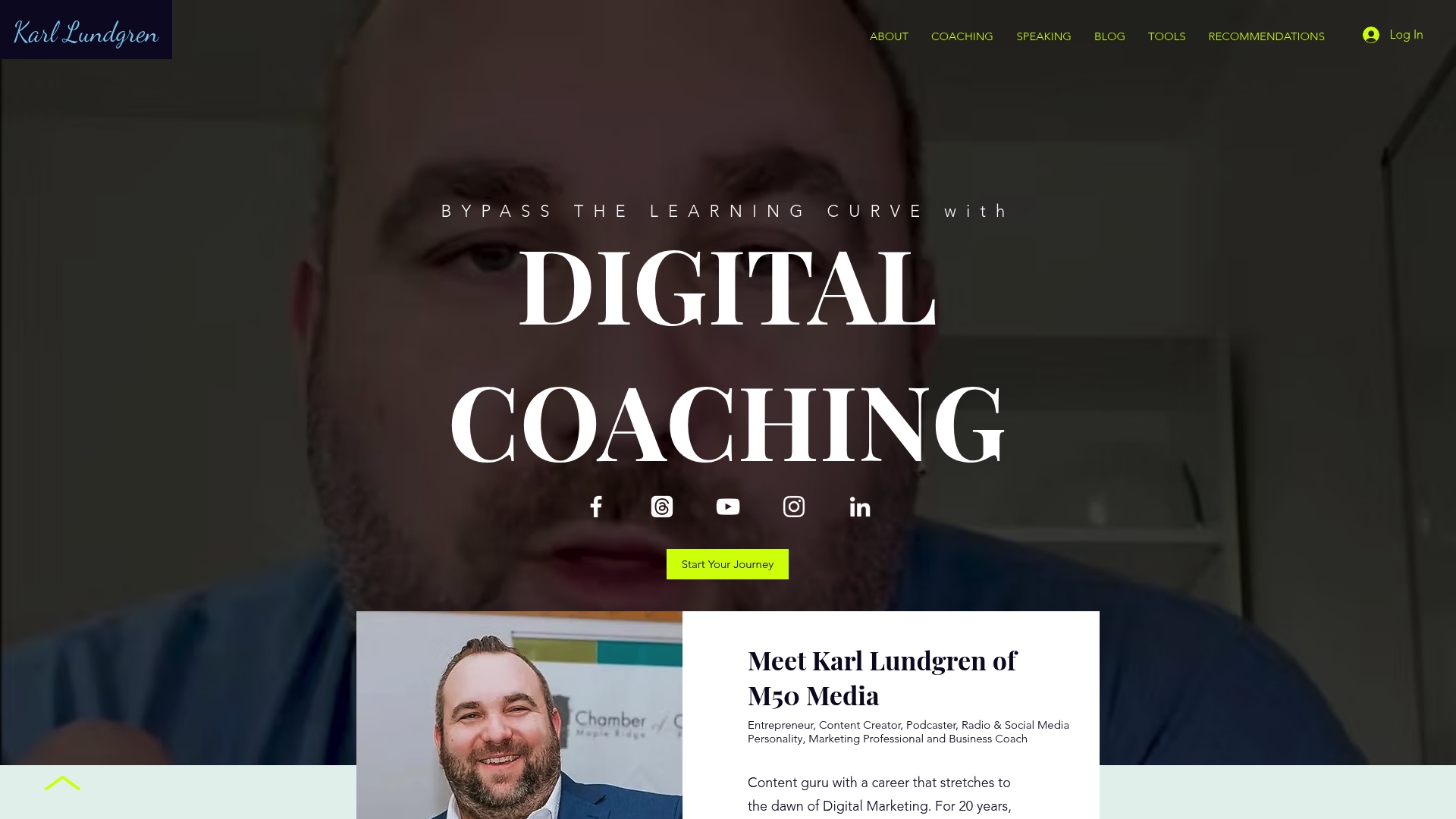
Karl Lundgren and the M50 Media team offer marketing coaching tailored specifically to small business owners who want real results without the overwhelm. Whether you need help setting up your first automation, fixing a deliverability issue, or building a segmentation strategy that actually works, the support is there. You can also explore MailerLite email tools for a beginner-friendly platform that grows with your business. And if you’re ready to go deeper, digital marketing coaching gives you a personalised roadmap to get there faster. Your inbox strategy should be working as hard as you are. 💪
Frequently asked questions
How can small businesses get started with email marketing?
Begin by building a permission-based email list, choosing a reliable email service provider, and sending targeted, value-driven campaigns. Automation and segmentation are core for making your efforts scalable right from the start.
What’s the typical ROI for email marketing compared to other channels?
Industry data consistently show email delivers the highest ROI among digital channels for both B2C and B2B brands. Email tops the ROI charts because subscribers are high-intent and campaigns are fully measurable.
How do I avoid my emails being marked as spam?
Use permission-based opt-ins, maintain list hygiene by removing inactive subscribers, and always comply with anti-spam laws. Poor list management is the fastest route to deliverability problems and a damaged sender reputation.
Are open rates still a good metric for success in 2026?
Open rates are less trustworthy due to privacy changes like Apple Mail Privacy Protection, so shift your focus to clicks, conversions, and overall engagement. Post-MPP email tracking means action metrics now tell the more accurate story.
What types of emails should I automate for maximum impact?
Start with welcome, abandoned cart, post-purchase, and re-engagement sequences for the highest engagement and efficiency gains. These automated flows save time while delivering timely, personalised experiences that subscribers actually appreciate.
Recommended
Comments