Video content's role in small business growth 2026
Small business owners often underestimate video’s power, yet 93% of businesses rely on video marketing as essential to their growth strategy. Video content doesn’t just complement your marketing efforts, it transforms how customers discover, trust, and buy from your brand. In 2026, understanding video’s strategic role separates thriving businesses from those struggling to connect with audiences. This guide reveals why video matters more than ever, which formats drive results on specific platforms, and how to leverage user-generated and explainer videos to accelerate sales. You’ll discover practical strategies tailored for small business budgets and resources, backed by current data showing video’s measurable impact on engagement, conversion, and organic reach.
Table of Contents
Key takeaways
Point | Details |
Video drives engagement | Content is shared 12 times more than text or images, dramatically expanding brand reach |
Format matches goals | Short videos excel on social platforms whilst longer formats suit tutorials and detailed storytelling |
UGC builds trust | User-generated videos showcase real product use, increasing authenticity and purchase confidence |
Optimisation matters | Proper video integration improves site speed, user experience, and search engine rankings |
Consistency accelerates sales | Regular video posting increases close rates by 41% and speeds deal closures by 26% |
Why video content is essential for small business marketing in 2026
The landscape of digital marketing has shifted dramatically towards visual storytelling. Video content is shared 12 times more than text or images combined on social media platforms, giving small businesses unprecedented opportunities to amplify their message organically. This isn’t just about creating content, it’s about leveraging the most powerful format for capturing attention and driving action in an increasingly crowded digital space.
Consider these compelling realities shaping 2026’s marketing environment. High-quality video increases consumer trust considerably, with 91% of viewers reporting that production value directly influences their perception of brand credibility. This trust translates directly into purchasing behaviour, as video content strongly influences buying decisions and often convinces hesitant prospects to complete purchases. For small businesses competing against larger brands, video levels the playing field by allowing authentic connection regardless of budget size.
Consistent video posting delivers algorithmic advantages that compound over time. Platforms favour accounts that regularly publish video content, resulting in improved organic reach and audience growth without additional ad spend. This creates a virtuous cycle where each video strengthens your position in platform algorithms whilst simultaneously building deeper relationships with your target audience.
Pro Tip: Start with smartphone videos showcasing your expertise or product benefits before investing in professional equipment. Authenticity often outperforms polish in building genuine audience connections.
Your content marketing strategy should prioritise video as the cornerstone format rather than treating it as supplementary content. The data is unambiguous:
Video generates significantly higher engagement rates across all digital channels
Viewers retain 95% of messages delivered through video versus 10% through text
Landing pages with video content see conversion rate increases averaging 80%
Video content appears in 70% of top search results, improving SEO performance
“Video marketing isn’t optional anymore. It’s the primary way consumers prefer to learn about products and connect with brands they trust.”
The shareability factor cannot be overstated. When your video resonates with viewers, they become voluntary brand ambassadors by sharing content within their networks. This organic amplification extends your reach far beyond paid advertising capabilities whilst carrying the implicit endorsement of the person sharing. For small businesses with limited marketing budgets, this represents perhaps the most cost-effective growth strategy available in 2026.
Choosing the right video formats for your marketing goals
Not all video content serves the same purpose, and matching format to platform dramatically impacts performance. Short-form videos under 60 seconds dominate platforms like TikTok and Instagram, where attention spans are compressed and rapid consumption is the norm. These bite-sized pieces excel at capturing initial interest, showcasing quick tips, or highlighting single product features in ways that feel native to the platform experience.
Longer video formats serve different strategic objectives entirely. Detailed tutorials, comprehensive product demonstrations, and brand storytelling require the breathing room that YouTube or embedded website videos provide. These formats allow you to establish authority, educate thoroughly, and build emotional connections that shorter content simply cannot achieve. The key lies in recognising which goals align with which formats rather than forcing all content into a single mould.
Format Type | Ideal Length | Best Platforms | Primary Goal |
Short-form social | 15-60 seconds | TikTok, Instagram Reels, YouTube Shorts | Awareness, engagement, viral potential |
Mid-form content | 2-5 minutes | Instagram, Facebook, LinkedIn | Education, product demos, testimonials |
Long-form deep dives | 8-20 minutes | YouTube, website embed | Authority building, detailed tutorials, storytelling |
Live streaming | Variable | Facebook Live, Instagram Live, YouTube Live | Community building, Q&A sessions, event coverage |
Consistent posting amplifies format effectiveness significantly. Regular video content on YouTube results in a 35% increase in views and subscribers, demonstrating how algorithmic favour compounds when you maintain publishing momentum. This doesn’t mean daily uploads are necessary, but establishing a predictable cadence trains both platforms and audiences to expect and seek out your content.
Your digital advertising strategy should incorporate video formats that complement organic efforts. Paid social video ads benefit from the same format principles, with platform-specific optimisation determining performance. A 15-second Instagram Story ad requires completely different creative approach than a 3-minute YouTube pre-roll, yet both can drive results when properly matched to audience intent and platform context.
Pro Tip: Repurpose longer videos into multiple short-form clips to maximise content ROI. A single 10-minute tutorial can yield 8-12 social media clips, each highlighting a specific insight or takeaway.
Platform-specific optimisation extends beyond length to encompass aspect ratios, captions, and thumbnail strategies. Vertical video dominates mobile-first platforms whilst horizontal formats still reign on desktop-centric channels. Adding captions isn’t just accessibility best practise, it’s performance essential, as 85% of social video is watched without sound. These technical considerations directly impact whether your carefully crafted message actually reaches and resonates with intended audiences.
The most effective marketing strategies integrate multiple video formats working in concert. Short-form content drives discovery and top-of-funnel awareness. Mid-form videos nurture interest and educate prospects. Long-form content converts educated prospects into customers by addressing final objections and building confidence. This layered approach mirrors the customer journey whilst respecting how different audiences consume content across various platforms and mindsets.
Harnessing user-generated and explainer videos to build trust and sales
User-generated content represents perhaps the most underutilised video opportunity for small businesses in 2026. Real customers demonstrating products in authentic contexts carries persuasive weight that polished brand content simply cannot match. Tortuga Backpacks leverages UGC videos to showcase product features whilst simultaneously improving page load speed through optimised video integration, demonstrating how technical and persuasive benefits align.

The trust factor cannot be overstated. Potential customers instinctively recognise the difference between scripted testimonials and genuine user experiences. When someone voluntarily creates and shares video showing how your product solved their specific problem, that endorsement carries exponentially more credibility than any brand-created content could achieve. This authenticity directly translates into conversion lift, as viewers see themselves reflected in real users rather than aspirational marketing scenarios.
Explainer videos serve a complementary but distinct role in the conversion process. 98% of people watch explainer videos to learn about products, with 87% convinced to buy after viewing. These videos bridge the gap between initial interest and purchase confidence by systematically addressing how products work, what problems they solve, and why they represent the best solution. For complex offerings or those requiring behaviour change, explainer videos dramatically compress the education timeline that might otherwise require multiple touchpoints.
Pro Tip: Incentivise customers to create UGC videos through contests, featured customer programmes, or simple requests at point of purchase. Most satisfied customers are willing to share experiences when asked directly.
Video quality influences brand perception profoundly, with 91% of consumers reporting that production value affects their trust in a business. This doesn’t necessitate Hollywood budgets, but it does require attention to lighting, audio clarity, and basic editing standards. Even smartphone-shot content can meet quality thresholds when creators understand fundamental production principles and invest modest effort into presentation.
Integrating both UGC and explainer videos creates a powerful one-two combination:
UGC videos establish social proof and demonstrate real-world application
Explainer videos provide structured education and address systematic objections
Together, they cover emotional and rational purchase motivations
The combination shortens sales cycles by preemptively answering questions
Conversion rates improve as prospects arrive more educated and confident
Your social media marketing strategy should actively cultivate UGC creation through community engagement and customer appreciation initiatives. The most successful brands treat customers as content partners rather than passive consumers, creating frameworks that make sharing easy and rewarding. This might include branded hashtags, featured customer spotlights, or integration of user videos directly into product pages where they influence purchase decisions at the critical moment.
“The best marketing doesn’t feel like marketing. User-generated videos let your customers become your most credible sales force.”
Optimised video integration matters as much as content quality. Slow-loading videos frustrate users and damage SEO performance, whilst properly compressed and hosted videos enhance user experience. Technical optimisation ensures your persuasive content actually gets consumed rather than abandoned due to poor performance. This technical foundation supports rather than undermines your marketing objectives.
Measuring video impact and best practices to maximise results
Tracking video performance reveals what’s working and where optimisation opportunities exist. Video increases close rates by 41%, proposal engagement by 56%, and speeds deal closures by 26%, but you’ll only capture these benefits by measuring relevant metrics and adjusting strategy accordingly. Key performance indicators vary by objective, but engagement rate, view duration, click-through rate, and conversion attribution form the foundation of effective video analytics.
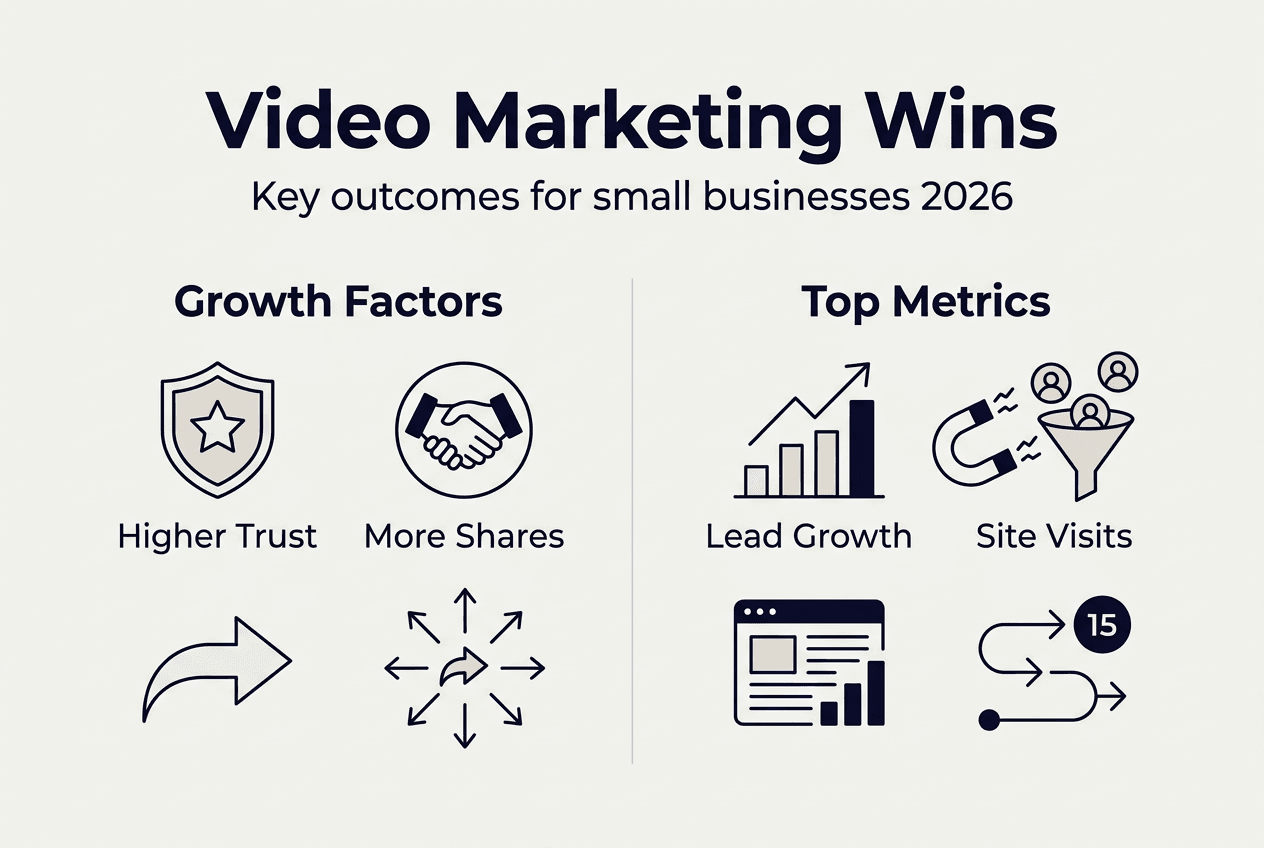
Organic search traffic provides another critical measurement dimension. Video content leads to 157% increase in organic search traffic, as search engines prioritise rich media in results and users engage longer with video-enhanced pages. This SEO benefit compounds over time, with older videos continuing to drive discovery months or years after publication. The cumulative effect of consistent video publishing creates an ever-expanding library of searchable, rankable content assets.
Metric Category | Key Indicators | What It Reveals | Optimisation Actions |
Engagement | Views, likes, shares, comments | Content resonance and shareability | Adjust topics, hooks, calls-to-action |
Retention | Average watch time, completion rate | Content relevance and pacing | Refine length, improve editing, strengthen openings |
Conversion | Click-through rate, form submissions, purchases | Business impact and ROI | Test CTAs, landing page alignment, offer clarity |
SEO Performance | Rankings, organic traffic, backlinks | Discoverability and authority | Optimise titles, descriptions, transcripts, thumbnails |
Best practises for maximising video results centre on consistency, quality, and platform optimisation. Establish a realistic publishing schedule you can maintain long-term rather than sporadic bursts followed by silence. Quality standards should meet audience expectations for your niche, whether that means professional production or authentic smartphone content. Platform optimisation ensures each video is formatted, captioned, and presented according to where it will be consumed.
Pro Tip: Analyse your top-performing videos to identify patterns in topic, format, length, and style. Double down on what resonates rather than constantly experimenting with unproven approaches.
Founder or ambassador-led videos build emotional brand connections that faceless corporate content cannot achieve. Putting a human face to your business creates relatability and trust, particularly for small businesses where personal relationships drive customer loyalty. These videos need not be perfectly polished, in fact, some authenticity and personality often outperforms sterile professionalism in building genuine audience connection.
Implementing video effectively requires systematic approach:
Define clear objectives for each video before production begins
Research platform-specific best practises and audience preferences
Create content calendars ensuring consistent publishing momentum
Invest in basic production quality meeting audience expectations
Optimise technical elements like compression, captions, and thumbnails
Promote videos across multiple channels to maximise initial reach
Monitor performance metrics and identify improvement opportunities
Iterate based on data rather than assumptions about what works
Your digital marketing strategy should position video as a core component rather than experimental add-on. The businesses seeing transformational results from video treat it as strategic priority, allocating appropriate resources and maintaining focus through the learning curve. This commitment pays dividends as skills improve, content libraries grow, and cumulative benefits compound over time.
Video shortens sales cycles by preemptively addressing questions and objections that might otherwise require multiple interactions. Prospects who engage with video content arrive at sales conversations more educated, qualified, and ready to move forward. This efficiency benefit multiplies across your customer base, effectively scaling your sales capacity without proportional increases in team size.
How M50 Media supports your video marketing journey
Navigating video marketing’s complexities becomes significantly easier with expert guidance tailored to small business realities. M50 Media’s business coaching services help you develop video strategies that align with your specific goals, audience, and resources. Rather than generic advice, you receive personalised frameworks addressing your unique challenges and opportunities in leveraging video for business growth.

Our digital coaching services provide ongoing support as you implement video marketing initiatives, troubleshoot obstacles, and optimise performance based on real results. Whether you’re just starting with video or looking to scale existing efforts, expert coaching accelerates your progress whilst avoiding costly mistakes. For immediate guidance on pressing challenges, our free marketing SOS call offers quick expert input when you need it most.
Frequently asked questions
How can small businesses measure video marketing success?
Track engagement rates including views, watch time, and social interactions to gauge content resonance. Monitor conversion metrics like click-through rates, lead generation, and sales attribution to measure business impact. Use platform analytics on social media and website hosting to access basic performance data before investing in advanced tracking tools. Compare organic traffic improvements and search rankings to assess SEO benefits from video content. Your digital marketing strategy should define success metrics aligned with specific business objectives rather than vanity metrics.
What are the best video formats for social media platforms?
Short-form videos under 60 seconds perform best on TikTok and Instagram where rapid consumption dominates user behaviour. Longer tutorial and storytelling formats suit YouTube and website embeds where audiences expect detailed content. Vertical video optimises for mobile-first platforms whilst horizontal formats work better for desktop viewing. Match video length and style to platform norms and audience expectations rather than forcing one format across all channels.
How does user-generated content improve video marketing results?
UGC videos increase customer trust by showcasing authentic product experiences from real users rather than scripted brand messages. These videos demonstrate practical product applications in genuine contexts that prospects can relate to directly. User-generated content carries implicit social proof that influences purchase decisions more powerfully than traditional advertising. The authenticity factor resonates particularly strongly with younger demographics who distrust obvious marketing messages.
What are common pitfalls to avoid with video marketing?
Ignoring video optimisation leads to slow page loads that frustrate users and damage SEO performance. Posting inconsistently reduces audience growth potential as algorithms favour accounts maintaining regular publishing schedules. Using poor video quality damages brand trust, with 91% of consumers reporting production value influences their perception of business credibility. Failing to include captions excludes the 85% of viewers watching social video without sound. Creating content without clear objectives wastes resources on videos that don’t advance business goals.
Recommended
Comments